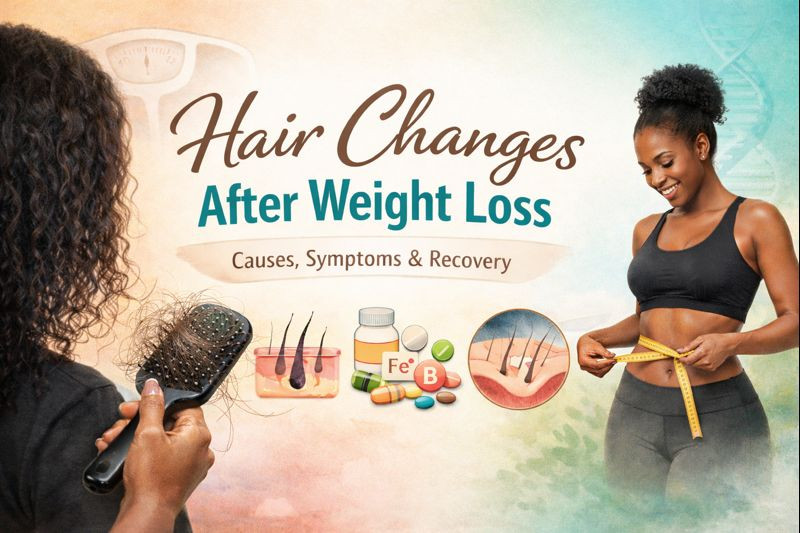
Losing weight can feel like a major win—more energy, better mobility, improved confidence. But for many people, especially women, the celebration comes with an unexpected side effect: noticeable changes in hair. Suddenly your hair feels thinner, sheds more in the shower, looks drier than usual, or refuses to grow like it used to.
If you’ve experienced hair changes after weight loss, you’re not imagining things—and you’re definitely not alone.
Weight loss, especially when it happens quickly or through strict calorie restriction, places real stress on the body. And hair, while important to us emotionally, is biologically considered “non-essential.” When resources get tight, the body prioritizes survival first—hair growth comes later.
This article breaks down why hair changes after weight loss happen, which changes are temporary, which ones need attention, and how to support your hair as your body adjusts.
Why Weight Loss Affects Hair in the First Place
Hair growth is deeply connected to your body’s internal environment. Hormones, nutrient availability, inflammation levels, stress hormones, and blood flow all play a role. Weight loss can influence every single one of those factors—sometimes all at once.
Here’s what’s happening behind the scenes.
The Body Interprets Rapid Weight Loss as Stress
From a biological standpoint, rapid or significant weight loss can look like a crisis. Whether the weight loss comes from dieting, illness, surgery, or intense exercise, your body may interpret it as a signal that food and energy are scarce.
This triggers a stress response that shifts energy away from “non-essential” functions like hair growth.
Hair Growth Happens in Cycles—And Weight Loss Can Disrupt Them
Hair grows in a cycle with three main phases:
-
Growth phase (anagen) – Hair actively grows
-
Transition phase (catagen) – Growth slows
-
Shedding phase (telogen) – Hair rests and eventually sheds
Weight loss can push more hairs than normal into the shedding phase at the same time, leading to noticeable thinning or excessive shedding several months later.
This is why hair loss after weight loss often appears 2–4 months after the weight change, not immediately.
Common Hair Changes After Weight Loss
Not everyone experiences hair changes the same way. Some people notice shedding. Others see texture changes. Some experience both.
Here are the most common hair-related changes reported after weight loss.
1. Increased Hair Shedding
This is the most talked-about symptom—and the one that causes the most panic.
You may notice:
-
More hair in the shower drain
-
Hair covering your hands when you shampoo
-
Thinner ponytails
-
More shedding during detangling
This type of shedding is often diffuse, meaning it happens across the scalp rather than in one specific spot.
The good news? In many cases, this shedding is temporary.
2. Hair Appearing Thinner (Even Without Bald Spots)
Even if you don’t see clumps falling out, your hair may look less full overall.
This can happen because:
-
Individual strands become finer
-
Hair density decreases slightly
-
Growth slows while shedding increases
Hair can feel “flat,” limp, or harder to style during this phase.
3. Slower Hair Growth
After weight loss, many people notice that their hair:
-
Takes longer to grow
-
Doesn’t retain length as easily
-
Breaks more frequently
When nutrients and energy are limited, hair follicles slow down production to conserve resources.
4. Dryness and Loss of Shine
Weight loss—especially from restrictive diets—can reduce intake of healthy fats, protein, and key vitamins. Hair that once felt soft may now feel:
-
Dry
-
Rough
-
Brittle
-
Less shiny
This isn’t just cosmetic. It’s a signal that the hair shaft isn’t receiving enough internal support.
5. Texture Changes
Some people notice that their hair texture changes after weight loss. Hair may become:
-
More fragile
-
Frizzier
-
Less elastic
-
Harder to retain moisture
Curly and coily hair types often feel these changes more intensely because they rely heavily on internal moisture balance.
What Causes Hair Changes After Weight Loss?
Several overlapping factors contribute to hair changes during and after weight loss.
1. Calorie Deficit
Hair growth requires energy. When calories drop significantly, the body reallocates energy to vital organs instead of hair follicles.
Very low-calorie diets are one of the biggest triggers for post-weight-loss hair shedding.
2. Protein Intake Drops Too Low
Hair is made primarily of keratin, a protein structure. When protein intake is too low, the body prioritizes muscles and organs over hair.
Even people who are “eating enough” calories may still be under-consuming protein, especially during weight loss.
3. Nutrient Deficiencies
Weight loss can reduce absorption or intake of essential nutrients like:
-
Iron
-
Zinc
-
Biotin
-
B vitamins
-
Vitamin D
-
Essential fatty acids
Hair follicles are extremely sensitive to nutrient shortages.
4. Hormonal Shifts
Weight loss can alter hormones such as:
-
Thyroid hormones
-
Estrogen
-
Insulin
-
Cortisol (stress hormone)
Even positive changes in hormones can temporarily disrupt hair growth cycles while the body recalibrates.
5. Physical and Emotional Stress
Dieting itself can be stressful—especially when paired with intense exercise, lifestyle changes, or emotional pressure to maintain results.
Chronic stress increases cortisol, which interferes with healthy hair cycling and scalp health.
Is Hair Loss After Weight Loss Permanent?
This is the question most people really want answered.
In most cases, hair changes after weight loss are temporary.
If the cause is:
-
Rapid weight loss
-
Calorie restriction
-
Temporary nutrient deficiency
-
Stress
…then hair usually begins to recover once the body stabilizes.
However, recovery depends on how quickly internal balance is restored.
When Hair Changes Might Last Longer
Hair loss or thinning may persist if:
-
Weight loss was extreme or prolonged
-
Nutrient deficiencies are ongoing
-
Hormonal imbalances remain unaddressed
-
The scalp environment becomes inflamed or unhealthy
In these cases, hair doesn’t just “bounce back” on its own—it needs targeted support.
How Long Does Hair Recovery Take After Weight Loss?
Hair recovery isn’t instant.
Typical timeline:
-
0–3 months after weight loss: Hair shedding may increase
-
3–6 months: Shedding slows if nutrition improves
-
6–12 months: Regrowth becomes noticeable
-
12+ months: Density and length gradually return
Patience matters. Hair grows slowly, and consistency is more important than quick fixes.
How to Support Hair After Weight Loss
You don’t need to undo your weight loss to restore your hair—but you do need to support your body properly.
1. Eat Enough Calories for Maintenance
Once weight loss goals are reached, shifting to a maintenance level of calories helps signal safety to the body. This reduces stress hormones and allows hair follicles to return to growth mode.
2. Prioritize Protein at Every Meal
Aim for steady protein intake throughout the day rather than large amounts at once. This gives hair follicles consistent access to building materials.
3. Don’t Eliminate Healthy Fats
Hair thrives on fats like:
-
Omega-3s
-
Monounsaturated fats
-
Natural oils from whole foods
Extremely low-fat diets often lead to dry, brittle hair.
4. Address Micronutrients
Hair depends on a wide range of vitamins and minerals. If your diet became very limited during weight loss, replenishing nutrients is essential.
Blood tests can help identify deficiencies, but even without testing, focusing on nutrient-dense foods supports recovery.
5. Reduce Stress on the Scalp
Hair that’s already vulnerable doesn’t tolerate aggressive styling well.
Avoid:
-
Tight hairstyles
-
Excessive heat
-
Rough detangling
-
Frequent chemical processing
Gentle handling protects regrowth during recovery.
6. Support the Scalp Directly
The scalp is living tissue. If circulation is poor or inflammation is high, hair growth struggles—even with perfect nutrition.
Scalp massage, consistent cleansing, and lightweight nourishment help create an environment where hair can recover.
Hair Regrowth After Weight Loss: What to Expect
Regrowth often looks different at first.
You may notice:
-
Short flyaways around the hairline
-
Thinner baby hairs
-
Uneven density
This is normal. New hair takes time to thicken and catch up with existing strands.
The key is consistency, not panic.
Myths About Hair Loss After Weight Loss
“Cutting my hair will make it grow faster”
Hair growth happens at the scalp, not the ends. Trimming helps with breakage, not growth speed.
“Shedding means my hair is permanently damaged”
Not true. Shedding often reflects a temporary cycle shift—not follicle death.
“Supplements alone will fix it”
Supplements can help, but they don’t replace adequate calories, protein, and stress management.
When to Seek Extra Help
If hair loss continues beyond a year, worsens, or is accompanied by:
-
Fatigue
-
Cold sensitivity
-
Irregular cycles
-
Scalp pain or inflammation
…it may be time to investigate deeper hormonal or nutritional issues.
The Bottom Line
Hair changes after weight loss are common—and in many cases, temporary. Your body isn’t betraying you; it’s adjusting.
Weight loss changes your internal environment. Hair responds slowly, but it does respond when the body feels safe, nourished, and balanced again.
Instead of chasing quick fixes, focus on restoring stability:
-
Eat enough
-
Nourish consistently
-
Reduce stress
-
Treat your scalp and hair gently
Hair recovery is a process—but with the right support, it’s absolutely possible.