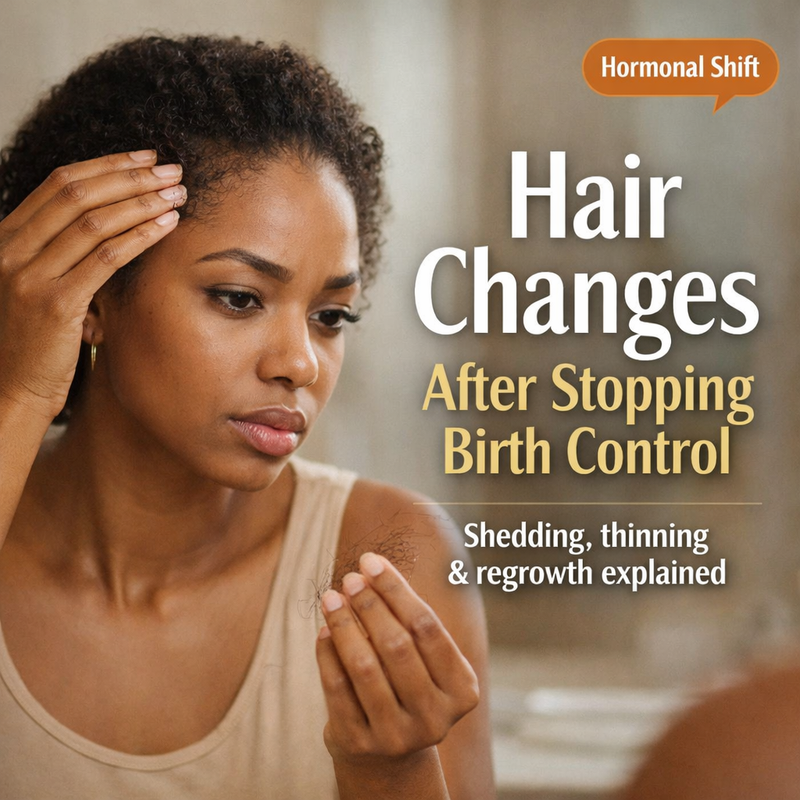
Stopping birth control can feel like reclaiming control over your body—but for many women, the months that follow come with unexpected changes. One of the most alarming? Hair changes. From sudden shedding to dryness, breakage, thinning edges, or even changes in curl pattern, post-birth-control hair issues are incredibly common.
If you’ve stopped hormonal birth control and your hair doesn’t feel like your hair anymore, you’re not imagining things—and you’re definitely not alone.
In this article, we’ll break down why hair changes after stopping birth control, what’s considered normal, how long it lasts, and most importantly, what you can do to help your hair recover and thrive again.
Why Birth Control Affects Hair in the First Place
Hormonal birth control works by altering your natural hormone levels, particularly estrogen and progesterone. These hormones don’t just regulate ovulation—they also play a major role in the hair growth cycle.
Hair grows in three main phases:
-
Anagen (growth phase) – Hair actively grows
-
Catagen (transition phase) – Growth slows
-
Telogen (resting/shedding phase) – Hair sheds
Estrogen helps keep hair in the growth phase longer, which is why many women notice fuller, thicker hair while on birth control. When you stop taking it, estrogen levels drop—and hair that was being “held” in the growth phase may suddenly shift into shedding.
This process is known as telogen effluvium.
Common Hair Changes After Stopping Birth Control
1. Increased Hair Shedding (The Most Common Change)
Many women experience excessive shedding 2–4 months after stopping birth control. This can feel terrifying—especially when hair seems to come out in clumps during washing or detangling.
What’s happening:
Your body is recalibrating hormone levels. Hair follicles that were supported by higher estrogen levels enter the resting phase all at once, leading to noticeable shedding.
Good news:
This type of shedding is usually temporary, not permanent hair loss.
2. Hair Thinning (Especially at the Crown or Edges)
You may notice:
-
A wider part
-
Thinner ponytail
-
Sparse edges or temples
This is often linked to:
-
Post-pill hormone shifts
-
Temporary androgen sensitivity
-
Nutrient depletion caused by long-term birth control use
Birth control can reduce levels of iron, zinc, biotin, magnesium, and B vitamins—all critical for hair thickness.
3. Dry, Brittle, or Straw-Like Hair
After stopping birth control, many women notice their hair becomes:
-
Drier than usual
-
More prone to breakage
-
Hard to moisturize
This happens because hormonal changes can reduce sebum (natural scalp oil) production, leaving both scalp and strands dehydrated.
4. Changes in Curl Pattern or Texture
Some women notice:
-
Looser curls becoming tighter
-
Straight hair becoming wavy
-
Coarse texture replacing softness
Hormones influence the shape of the hair follicle, so changes in estrogen and androgen levels can temporarily alter texture.
This can feel frustrating—but it’s often part of the adjustment phase.
5. Slower Hair Growth
Hair may seem stuck at the same length for months. This happens when more follicles remain in the resting phase while the body stabilizes hormone levels.
How Long Do Hair Changes Last After Stopping Birth Control?
This is one of the most searched questions—and understandably so.
Typical timeline:
-
0–2 months: Hormones begin shifting, hair still feels normal
-
2–4 months: Shedding increases (telogen effluvium phase)
-
4–6 months: Shedding peaks, texture changes become noticeable
-
6–9 months: Shedding slows, regrowth begins
-
9–12 months: Hair growth cycle stabilizes
For most women, hair returns to normal within 6–12 months—as long as no other underlying issues are present.
When Hair Changes Might NOT Be Normal
While post-birth-control hair changes are common, there are situations where hair loss may signal something deeper.
Red flags include:
-
Shedding lasting longer than 9–12 months
-
Bald patches or scarring
-
Severe thinning at the hairline only
-
Acne, excess facial hair, or irregular periods returning
These symptoms may point to:
-
Hormonal imbalances (like PCOS)
-
Thyroid dysfunction
-
Iron deficiency
-
Chronic stress or inflammation
If hair loss feels extreme or prolonged, blood work and professional guidance are worth considering.
How to Support Hair Recovery After Stopping Birth Control
1. Focus on Scalp Health First
Healthy hair starts at the scalp. Hormonal shifts can trigger inflammation, dryness, or oil imbalance that slows regrowth.
What helps:
-
Gentle scalp massages to boost circulation
-
Lightweight scalp oils or serums
-
Avoiding heavy buildup that clogs follicles
Think of your scalp like soil—nothing grows well in unhealthy ground.
2. Replenish Nutrients Birth Control Depletes
Birth control can lower levels of:
-
Iron
-
Zinc
-
Biotin
-
Folate
-
Vitamin B12
-
Magnesium
Focus on nutrient-dense foods like:
-
Leafy greens
-
Fatty fish
-
Eggs
-
Nuts and seeds
-
Legumes
Hair recovery is slower when the body is nutrient-deficient.
3. Reduce Hair Stress (This Is Huge)
During hormonal recovery, hair is more fragile.
Avoid:
-
Tight styles
-
Excessive heat
-
Aggressive detangling
-
Over-washing
Protective, low-manipulation routines allow new growth to stay on your head.
4. Be Careful With “Growth Products”
Many women panic and jump into aggressive growth treatments. This can backfire.
Look for products that:
-
Support scalp circulation
-
Reduce inflammation
-
Strengthen the hair shaft
-
Encourage a healthy growth environment
Consistency matters more than intensity.
5. Manage Stress (Yes, Really)
Hormonal shifts already stress the body. Add emotional stress, poor sleep, or undereating—and hair recovery slows.
Chronic stress increases cortisol, which directly disrupts the hair growth cycle.
Sleep, hydration, and nervous system regulation are underrated hair growth tools.
Will Hair Grow Back After Stopping Birth Control?
In the vast majority of cases: yes.
As long as:
-
Hair follicles aren’t damaged
-
Underlying conditions are addressed
-
The scalp environment is healthy
Regrowth typically appears as:
-
Short baby hairs along the hairline
-
Thicker roots before longer length
-
Reduced shedding over time
Patience is key—hair grows on biological time, not emotional urgency.
How to Tell If Regrowth Is Happening
Signs your hair is recovering:
-
Less hair shedding during wash days
-
Short, wispy hairs along edges or part
-
Improved moisture retention
-
Stronger strands that snap less
Regrowth often starts before shedding fully stops, so don’t panic if both happen at once.
FAQs About Hair After Stopping Birth Control
Can stopping birth control cause permanent hair loss?
Rarely. Permanent loss usually involves genetics, scarring, or untreated medical conditions—not temporary hormonal shifts.
Does everyone experience shedding?
No. Some women experience minimal changes, especially if their hormone levels rebalance quickly.
Can you prevent post-birth-control hair loss?
You can’t always prevent it—but you can reduce severity by supporting scalp health, nutrition, and stress management.
Final Thoughts: Give Your Hair Grace
Stopping birth control is a major hormonal transition—your hair is simply reflecting what your body is working through internally.
The shedding, dryness, or texture changes you see aren’t a failure—they’re part of recalibration.
With time, care, and the right routine, your hair can come back just as strong—if not stronger—than before.
If you’re in the middle of this journey, be gentle with yourself—and your hair. ?