Staying active is one of the best things you can do for your overall health. Exercise improves circulation, reduces stress, supports healthy hormones, and even promotes better scalp health. But if you have natural hair, regular workouts often come with a frustrating question:
How can I exercise without ruining my hairstyle?
Whether your hair is Type 3 curls, Type 4 coils, twists, braids, locs, or an afro, sweat can leave your hair feeling dry, frizzy, tangled, and difficult to manage. Many people even avoid working out because they're worried about having to restyle their hair afterward.
The good news is that you don't have to choose between healthy hair and a healthy body.
With the right gym hair routine, you can:
- Maintain moisture
- Reduce breakage
- Protect your edges
- Prevent excessive frizz
- Keep your scalp healthy
- Extend wash days
- Retain length
- Support stronger hair growth
This guide explains exactly how to care for natural hair before, during, and after every workout.
Does Working Out Damage Natural Hair?
The workout itself doesn't damage hair.
Instead, problems usually come from:
- Sweat drying on the scalp
- Salt buildup
- Frequent manipulation
- Tight hairstyles
- Overwashing
- Skipping moisture
- Poor nighttime care
Natural hair is naturally drier because scalp oils have difficulty traveling down curly strands. Add frequent sweating, and moisture can disappear even faster.
Without a routine, this may lead to:
- Dry curls
- Split ends
- Knots
- Excess shedding
- Breakage
- Frizz
- Itchy scalp
Fortunately, all of these issues are preventable.
Why Sweat Isn't the Enemy
Many people believe sweat is bad for natural hair.
That isn't exactly true.
Sweat is mostly water with small amounts of:
- Sodium
- Potassium
- Calcium
- Magnesium
Sweat itself isn't harmful.
The problem begins when sweat:
- Dries repeatedly on the scalp
- Mixes with styling products
- Traps dirt
- Creates buildup
- Causes itching
The goal isn't avoiding sweat.
The goal is managing it properly.
Benefits of Exercise for Hair Growth
Working out consistently actually supports healthier hair.
Benefits include:
Better Blood Flow
Exercise increases circulation throughout the body.
Improved blood flow helps deliver oxygen and nutrients to hair follicles.
Healthy follicles are better equipped to produce stronger strands.
Lower Stress Levels
Stress is linked to excessive shedding.
Regular exercise helps lower cortisol levels, reducing one of the common triggers for temporary hair loss.
Better Sleep
Deep sleep is essential for healthy hair growth.
Exercise often improves sleep quality, giving your body more time to repair itself overnight.
Improved Hormonal Balance
Hormones influence every stage of the hair growth cycle.
Exercise supports healthier hormone regulation, which benefits both scalp health and hair density.
The Biggest Challenges for Natural Hair at the Gym
Sweat Buildup
Sweat mixes with oils and styling products.
This combination can clog follicles and leave your scalp feeling dirty.
Frizz
Humidity and perspiration can cause curls to swell.
This leads to:
- Puffy roots
- Lost definition
- Flyaways
Dry Ends
Sweat evaporates quickly.
As moisture leaves the hair shaft, ends often become brittle.
Edge Damage
Tight ponytails are one of the biggest causes of thinning edges.
Many gym hairstyles pull excessively around the hairline.
Breakage
Hair becomes weaker when repeatedly stretched into tight styles before workouts.
The Perfect Pre-Gym Hair Routine
Preparing your hair before exercising makes the biggest difference.
Step 1: Moisturize Lightly
Dry hair tangles more easily.
Before your workout, apply a lightweight moisturizer.
Focus on:
- Ends
- Hairline
- Dry sections
Avoid heavy products that can mix with sweat and create buildup.
Step 2: Seal Moisture
If your hair loses moisture quickly, apply a small amount of lightweight oil to seal hydration.
Too much oil can attract dirt, so use it sparingly.
Step 3: Choose a Protective Style
The best gym hairstyles reduce manipulation while minimizing tension.
Excellent options include:
- Pineapple puff
- Loose high bun
- Flat twists
- Two-strand twists
- Braids
- Cornrows
- Low puff
- Loose braided ponytail
Avoid styles that pull tightly around the edges.
Step 4: Wear a Satin-Lined Headband
A satin-lined workout headband helps:
- Absorb sweat
- Reduce friction
- Protect edges
- Minimize frizz
Cotton headbands can absorb too much moisture from the hair, making satin-lined options a better choice.
Step 5: Protect Your Edges
Apply a lightweight edge-friendly moisturizer rather than heavy gels before exercising.
Heavy gels mixed with sweat often flake and leave buildup.
Best Hairstyles for Working Out
Pineapple
Perfect for:
- Wash-and-go styles
- Curly hair
- Medium-length curls
Flat Twists
Excellent for:
- Type 4 hair
- Moisture retention
- Stretching curls
Cornrows
Ideal for:
- Daily workouts
- Cardio
- Weightlifting
Cornrows minimize daily manipulation and can last for several days with proper care.
Two-Strand Twists
One of the healthiest options for natural hair.
Benefits include:
- Less tangling
- Less shrinkage
- Better moisture retention
Loose Puff
A low-tension puff keeps curls contained while protecting the scalp and edges.
What to Do Immediately After Your Workout
The first 15–30 minutes after your workout can make a big difference in how your hair looks and feels. Letting sweat dry on your scalp repeatedly may contribute to product buildup, itching, dryness, and frizz over time.
Instead of immediately removing your hairstyle or washing your hair every day, follow these simple post-workout steps.
Step 1: Let Your Scalp Cool Down
Don't immediately cover your head with a hat or bonnet while your scalp is still wet.
Instead:
- Remove your workout headband.
- Shake out your roots gently if your style allows.
- Sit in a cool area for 10–15 minutes.
- Allow sweat to evaporate naturally.
Using a fan on a cool setting can help speed up the drying process.
Avoid using high heat from a blow dryer directly on sweaty hair.
Step 2: Blot Sweat Instead of Rubbing
One of the biggest mistakes people make is rubbing their scalp vigorously with a towel.
This creates friction that can disturb curl patterns and increase frizz.
Instead:
- Use a clean microfiber towel.
- Or use a soft cotton T-shirt.
- Gently press around the scalp.
- Absorb moisture without rubbing.
This simple habit helps preserve your hairstyle while reducing unnecessary manipulation.
Step 3: Refresh Your Hair with Moisture
Sweat contains salt, and repeated sweating can leave hair feeling dry.
Once your scalp has cooled, lightly refresh your hair with a water-based moisturizing spray.
Focus on:
- Hairline
- Crown
- Ends
- Dry sections
Avoid soaking the hair.
A light mist is usually enough to revive curls.
For those looking to maintain moisture between wash days, Hairobics Raaw Roots Moisturizer Spray can be used as part of a daily moisturizing routine. Its lightweight formula helps refresh dry natural hair, braids, and locs without weighing them down.
Step 4: Massage Your Scalp
Spend one to three minutes gently massaging your scalp.
Benefits include:
- Encouraging circulation
- Helping distribute natural oils
- Relaxing tight scalp muscles
- Supporting a healthy scalp environment
Use your fingertips—not your nails.
Should You Wash Your Hair After Every Workout?
Not necessarily.
Many people assume sweat means it's time for shampoo.
For most people with natural hair, washing daily may remove beneficial oils and contribute to dryness.
Instead, consider your workout intensity.
Light Workouts
Examples:
- Walking
- Yoga
- Stretching
- Light strength training
Usually, no wash is needed.
Simply:
- Dry your scalp.
- Refresh with a moisturizing spray.
- Continue your style.
Moderate Workouts
Examples:
- Weight training
- Cycling
- Moderate cardio
Refresh the scalp as needed.
You may only need to shampoo once each week if your scalp stays comfortable.
Heavy Sweating
Examples:
- HIIT
- Running
- Boot camps
- Sports
A weekly wash combined with one co-wash or gentle rinse during the week may help keep the scalp feeling fresh without over-drying the hair.
How Often Should Active Women Wash Natural Hair?
There isn't one schedule that works for everyone.
Here are general guidelines.
Workout Frequency: 2–3 Days Per Week
Wash:
- Every 7–10 days
Refresh:
- As needed after workouts
Workout Frequency: 4–5 Days Per Week
Wash:
- Every 5–7 days
Refresh:
- After each workout
Daily Exercise
Wash:
- Once weekly with a gentle shampoo
Optional:
- One co-wash or water rinse midweek if your scalp feels heavily coated with sweat or product.
Weekly Gym Hair Schedule
Monday
Workout
Lightly mist hair afterward.
Massage scalp.
Protect hair overnight with a satin bonnet or pillowcase.
Tuesday
Workout
Refresh curls.
Moisturize ends.
Leave style intact.
Wednesday
Rest Day
Check moisture levels.
Light scalp massage.
Protective styling if needed.
Thursday
Workout
Refresh hair.
Reduce manipulation.
Sleep in satin protection.
Friday
Workout
Inspect ends.
Apply a lightweight moisturizer if needed.
Saturday
Wash Day
Cleanse scalp thoroughly.
Deep condition.
Detangle carefully.
Seal in moisture.
Sunday
Stretch hair if desired.
Install twists, braids, or another low-manipulation style for the week ahead.
Deep Conditioning Is Essential
Frequent exercise increases the need for consistent hydration.
Aim to deep condition at least once each week.
Benefits include:
- Better elasticity
- Softer curls
- Reduced breakage
- Improved moisture retention
- Easier detangling
Look for ingredients such as:
- Aloe vera
- Glycerin
- Shea butter
- Coconut oil
- Avocado oil
- Honey
Protecting Your Hair While Sleeping
Recovery doesn't stop after your workout.
Nighttime care is just as important.
Use:
- A satin bonnet
- Satin scarf
- Satin pillowcase
These reduce friction and help preserve moisture.
Loose twists or a pineapple style can also help maintain curl definition overnight.
Gym Hair Tips for Different Hairstyles
Wash-and-Go
- Pineapple before exercise.
- Refresh curls afterward.
- Avoid excessive touching while drying.
Twists
Twists are ideal for active lifestyles because they:
- Minimize tangles
- Retain moisture
- Last several days
- Require less daily styling
Braids
Braids are convenient for workouts, but remember to:
- Clean the scalp regularly.
- Moisturize exposed hair.
- Avoid installing braids too tightly around the edges.
Locs
Locs benefit from:
- Thorough drying after workouts
- Regular scalp cleansing
- Lightweight moisturizing products
- Avoiding prolonged dampness, which can lead to odor or mildew
Support Long-Term Hair Health
Healthy hair growth starts with consistent scalp care and minimizing breakage. Along with cleansing and moisturizing, many people include targeted scalp products in their routine.
The Hairobics Hair & Scalp Booster can be incorporated into a regular hair care regimen to help nourish the scalp and support healthier-looking hair. Applying it during scalp massages or on wash days can complement a routine focused on moisture retention and reducing breakage.
15 Gym Hair Mistakes That Can Lead to Breakage
Even with the best intentions, a few common habits can leave natural hair dry, tangled, or prone to breakage. Avoiding these mistakes can help you maintain healthier hair while staying active.
1. Wearing Tight Ponytails Every Day
A sleek, tight ponytail may seem convenient, but repeated tension around the hairline can contribute to thinning edges and traction-related hair loss.
Instead:
- Alternate hairstyles throughout the week.
- Wear low-tension buns or puffs.
- Loosen your hairstyle whenever possible.
2. Skipping Moisture
Sweat alone does not moisturize your hair.
When sweat evaporates, hair can feel even drier than before.
Make hydration part of every workout routine.
3. Washing Too Frequently
Daily shampooing may remove natural oils that help protect curly and coily hair.
Unless your scalp is heavily soiled, many people with natural hair do well with shampooing about once a week, adjusting based on activity level and scalp needs.
4. Ignoring Sweat Buildup
Repeated sweat mixed with styling products can leave the scalp feeling itchy and coated.
Clean your scalp regularly and refresh it between wash days when needed.
5. Using Heavy Oils Before Exercise
Applying thick oils before a workout can attract sweat, dirt, and product buildup.
Instead, use lightweight moisturizers before exercise and reserve heavier oils for wash day or overnight treatments if they work well for your hair.
6. Constantly Restyling
Every time hair is manipulated, there is an opportunity for breakage.
Choose hairstyles that can last several workouts.
7. Sleeping Without Satin Protection
Cotton pillowcases absorb moisture and create friction.
Sleeping on satin or silk helps preserve moisture and reduces tangles.
8. Forgetting Your Ends
Hair ends are the oldest and most fragile part of the strand.
Give them extra attention with regular moisturizing and gentle handling.
9. Using Excessive Heat
Frequent blow-drying or flat ironing after every workout can gradually weaken the hair shaft.
Whenever possible, allow hair to air dry or use the lowest effective heat setting.
10. Wearing Hats for Hours After Sweating
Keeping a sweaty scalp covered for long periods can trap moisture and make the scalp feel uncomfortable.
Allow your scalp to dry before covering it again.
11. Scratching Your Scalp
If your scalp feels itchy after exercising, avoid scratching with your fingernails.
Instead:
- Cleanse when appropriate.
- Massage gently with your fingertips.
- Address product buildup if needed.
12. Forgetting to Deep Condition
Natural hair benefits from consistent conditioning, especially if you exercise several times each week.
Deep conditioning helps improve softness, elasticity, and manageability.
13. Using Dirty Headbands
Workout accessories collect sweat, oils, and bacteria.
Wash your headbands regularly to help keep your scalp clean.
14. Wearing the Same Protective Style Too Long
Protective styles should still allow for scalp care.
Moisturize, cleanse your scalp as needed, and avoid leaving styles in beyond the recommended timeframe.
15. Neglecting Overall Wellness
Hair health is influenced by more than products.
Healthy habits such as:
- Drinking enough water
- Eating a balanced diet
- Managing stress
- Getting enough sleep
- Staying physically active
all support healthier hair over time.
Expert Tips for Growing Natural Hair While Working Out
If your goal is longer, healthier natural hair, consistency matters more than perfection.
Focus on:
- Keeping your scalp clean.
- Moisturizing regularly.
- Limiting unnecessary manipulation.
- Wearing low-tension styles.
- Protecting your hair while sleeping.
- Trimming damaged ends when needed.
- Maintaining a balanced diet with adequate protein and essential nutrients.
- Staying consistent with your routine.
Length retention is often about reducing breakage rather than making hair grow faster.
Frequently Asked Questions
Does sweating help hair grow?
Sweat itself does not make hair grow. However, regular exercise improves circulation and supports overall health, which may contribute to a healthy environment for hair growth.
Can I work out every day with natural hair?
Yes. The key is having a routine that includes moisture, gentle handling, scalp care, and protective styling.
Is it okay to wear braids to the gym?
Yes.
Braids are a convenient workout style as long as they are not installed too tightly and your scalp is kept clean and moisturized.
How do I stop frizz after exercising?
- Allow sweat to dry naturally.
- Blot rather than rub.
- Refresh with a lightweight moisturizing spray.
- Avoid excessive touching while hair dries.
Should I oil my scalp every day?
Not everyone benefits from daily oiling. If you choose to use oils, apply them based on your scalp's needs rather than on a fixed schedule. Some people prefer using them a few times each week, especially during scalp massages.
Can exercise cause hair loss?
Exercise itself does not cause hair loss.
Hair loss associated with workouts is more commonly related to tight hairstyles, excessive heat styling, poor nutrition, or underlying medical conditions—not the exercise itself.
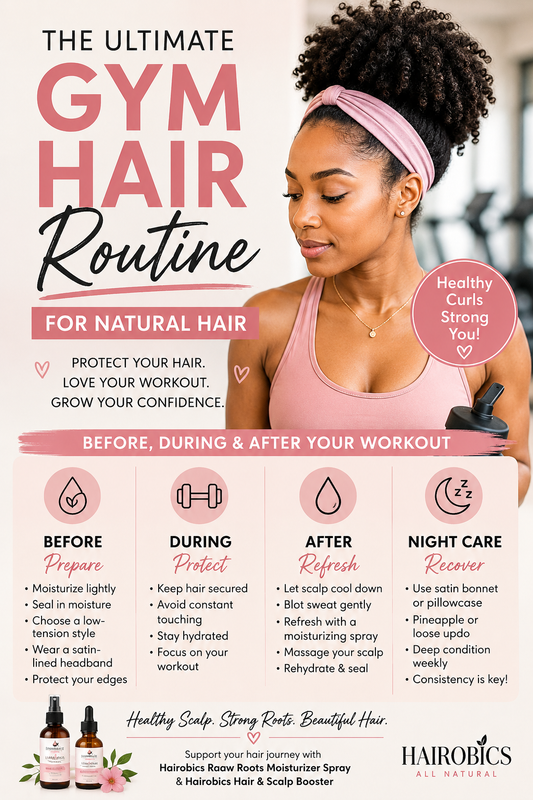
Recommended Gym Hair Care Routine
Before Your Workout
- Lightly moisturize your hair.
- Choose a low-tension protective style.
- Wear a satin-lined headband.
- Avoid heavy styling products.
During Your Workout
- Leave your hair alone.
- Avoid repeatedly tightening your hairstyle.
- Stay hydrated.
After Your Workout
- Allow your scalp to cool.
- Blot sweat gently.
- Refresh with a lightweight moisturizer if needed.
- Massage your scalp for a minute or two.
- Protect your hair overnight with satin.
Supporting Your Hair Care Routine with Hairobics
A consistent routine is the foundation of healthy natural hair, and the products you choose can help support that routine.
Hairobics Raaw Roots Moisturizer Spray is designed to refresh natural hair, braids, twists, and locs between wash days. Its lightweight formula helps replenish moisture without leaving heavy buildup, making it a practical choice after workouts or anytime your hair feels dry.
For scalp care, the Hairobics Hair & Scalp Booster can be incorporated into your weekly regimen. Applying it during a gentle scalp massage or after cleansing can complement a routine focused on maintaining a healthy-looking scalp and minimizing breakage.
Remember that no single product can guarantee hair growth, but consistent scalp care, moisture retention, and gentle hair practices can contribute to stronger, healthier-looking hair over time.
Final Thoughts
You should never feel like you have to choose between fitness and healthy natural hair.
With the right routine, you can enjoy both. Protecting your hair before workouts, refreshing it afterward, and maintaining a consistent wash and moisture schedule can help reduce breakage, preserve your hairstyle, and support long-term length retention.
Healthy natural hair is built through daily habits—not shortcuts. Every workout is an opportunity to strengthen your body while caring for your curls, coils, braids, or locs.
Whether you're lifting weights, practicing yoga, running outdoors, or attending your favorite fitness class, your hair can thrive right alongside your active lifestyle.