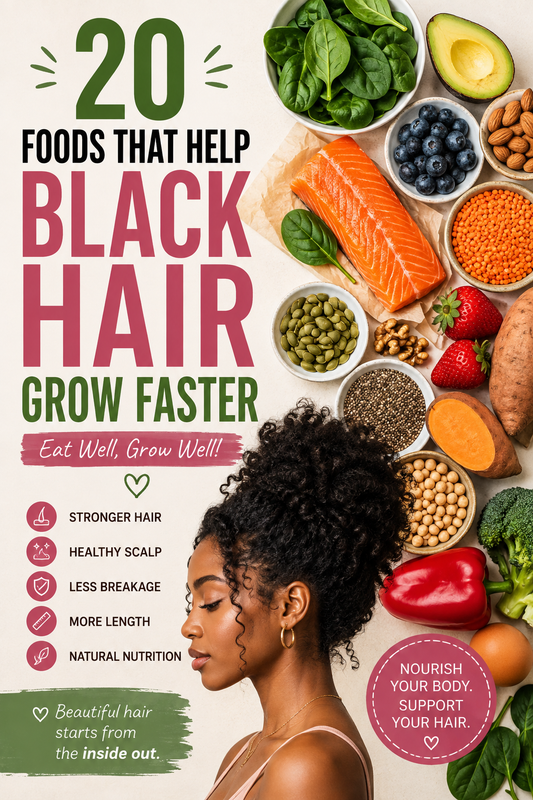
Growing longer, stronger, healthier Black hair is not only about the products you apply to your scalp and strands. What you eat can also play an important role in supporting healthy hair growth.
Black hair is naturally beautiful and versatile, but its tightly curled or coiled structure can make it more vulnerable to dryness, tangling, knots, and breakage. Sometimes it may seem like your hair isn't growing when the real problem is that you're having difficulty retaining the length you grow.
Your diet cannot magically make your hair grow several inches overnight. However, giving your body adequate protein, vitamins, minerals, essential fatty acids, and calories can help support the biological processes involved in normal hair growth.
Foods containing nutrients such as protein, iron, zinc, vitamin C, vitamin D, vitamin E, biotin, omega-3 fatty acids, and B vitamins can be valuable parts of a balanced diet for healthy hair.
In this complete guide, we'll explore some of the best foods that help support Black hair growth, what nutrients your hair needs, foods that may help reduce breakage, and how nutrition can work alongside a good natural hair routine.
Why Nutrition Matters for Black Hair Growth
Hair grows from follicles located beneath the skin. Although the strands you see are made primarily of keratinized cells, producing new hair requires nutrients and energy.
This means healthy hair begins long before you apply your favorite leave-in conditioner, oil, moisturizer, or styling product.
Your body needs adequate nutrition to support normal follicle function.
A balanced diet can provide nutrients involved in:
- Hair formation
- Keratin production
- Normal cell division
- Oxygen delivery
- Scalp health
- Protein synthesis
- Maintaining healthy skin
- Supporting normal hair-growth cycles
Severe nutritional deficiencies can sometimes contribute to excessive shedding or changes in hair quality.
For most people, however, the goal shouldn't be consuming huge amounts of one particular "hair growth food."
The better strategy is to eat a balanced and varied diet consistently.
Does Black Hair Actually Grow Slower?
A common misconception is that Black hair simply doesn't grow.
It does.
Human scalp hair commonly grows around half an inch per month on average, although actual growth rates vary considerably between individuals.
Genetics, age, hormones, health, nutrition, medications, stress, hair-care practices, and other factors can influence what you experience.
With tightly curled and coily Black hair, another major factor is length retention.
Imagine your hair grows six inches during a year but four inches gradually break from the ends.
You may only notice two inches of additional length.
This creates the impression that your hair isn't growing.
That's why a successful Black hair growth routine needs to focus on two things:
1. Supporting healthy growth from the scalp
and
2. Protecting existing hair from unnecessary breakage
Nutrition primarily supports the first, while your hair-care routine can dramatically influence the second.
20 Foods That Help Support Black Hair Growth
There isn't one food that guarantees faster hair growth. Instead, certain nutrient-dense foods provide nutrients your body uses to maintain healthy hair.
Here are some excellent choices.
1. Eggs
Eggs are one of the most popular foods associated with healthy hair because they're an excellent source of high-quality protein.
Hair is primarily composed of a protein called keratin.
Your body therefore needs sufficient dietary protein to maintain normal hair production.
Eggs also contain nutrients including:
- Protein
- Biotin
- Selenium
- Vitamin B12
- Vitamin D
- Healthy fats
Biotin frequently appears in hair-growth supplements, but most people who eat a varied diet obtain enough biotin through food.
Rather than immediately reaching for high-dose supplements, consider incorporating nutrient-rich foods such as eggs into your diet.
Easy ways to eat more eggs
Try:
- Scrambled eggs with vegetables
- Hard-boiled eggs
- Vegetable omelets
- Eggs with avocado toast
- Egg breakfast bowls
Pair eggs with vegetables and whole grains for an even more nutrient-dense meal.
2. Salmon
Salmon is another excellent food to include in a hair-supportive diet.
It contains high-quality protein along with omega-3 fatty acids.
Salmon also provides nutrients including:
- Protein
- Omega-3 fatty acids
- Vitamin D
- Selenium
- B vitamins
Healthy fats are particularly valuable because they're part of an overall diet that supports healthy skin and scalp.
Try grilled or baked salmon with vegetables, brown rice, quinoa, or sweet potatoes.
3. Spinach
Leafy green vegetables deserve a regular place on your plate.
Spinach provides several nutrients involved in overall health, including:
- Folate
- Iron
- Vitamin C
- Vitamin A
- Magnesium
Iron deserves particular attention when discussing hair.
Iron helps your body produce hemoglobin, which allows red blood cells to transport oxygen throughout your body.
Iron deficiency can be associated with hair shedding in some people.
However, you should not take high-dose iron supplements unless a healthcare professional determines that you need them, because excessive iron can be harmful.
Food sources are an excellent starting point.
Add spinach to:
- Omelets
- Smoothies
- Salads
- Soups
- Pasta
- Rice dishes
4. Sweet Potatoes
Sweet potatoes are packed with beta-carotene, which your body can convert into vitamin A.
Vitamin A contributes to normal skin and immune function and plays roles in cell growth.
Sweet potatoes also provide fiber and other beneficial nutrients.
Try:
- Baked sweet potatoes
- Sweet potato wedges
- Mashed sweet potatoes
- Roasted sweet potato bowls
One important point: more vitamin A isn't necessarily better.
Excessive vitamin A supplementation can actually contribute to hair loss, so focus primarily on obtaining nutrients from a balanced diet unless your healthcare provider recommends supplementation.
5. Avocados
Avocados are an excellent source of healthy fats and vitamin E.
They also contain:
- Folate
- Potassium
- Fiber
- B vitamins
Vitamin E functions as an antioxidant and contributes to protecting cells from oxidative damage.
Avocados are easy to add to your diet.
Use them in:
- Toast
- Salads
- Smoothies
- Sandwiches
- Burrito bowls
- Breakfast bowls
They can also make meals more satisfying because of their fat and fiber content.
6. Greek Yogurt
Greek yogurt provides substantial amounts of protein.
Depending on the variety, it may also provide:
- Calcium
- Vitamin B12
- Riboflavin
- Vitamin D
Protein is especially important when you're trying to support strong, healthy hair.
A simple breakfast might include:
Greek yogurt + blueberries + walnuts + chia seeds
That combination gives you protein, healthy fats, fiber, and several vitamins and minerals in one meal.
Choose lower-added-sugar varieties when possible and sweeten them naturally with fruit.
7. Blueberries
Blueberries are rich in vitamin C and various antioxidant compounds.
Vitamin C is particularly interesting for hair nutrition because it helps your body absorb non-heme iron, the form of iron found primarily in plant foods.
Try pairing vitamin-C-rich foods with plant-based sources of iron.
For example:
Spinach + strawberries
or
Beans + bell peppers
or
Oatmeal + berries
This simple combination can help improve iron absorption from plant foods.
Other vitamin-C-rich fruits include:
- Strawberries
- Kiwi
- Guava
- Oranges
- Grapefruit
8. Lentils
Lentils are an excellent option, especially for people who eat little or no meat.
They provide:
- Plant protein
- Iron
- Folate
- Fiber
- Zinc
You can use lentils in:
- Soups
- Stews
- Curries
- Salads
- Grain bowls
Because plant-based iron isn't absorbed as efficiently as iron from animal sources, combine lentils with foods containing vitamin C.
Try lentils with tomatoes, peppers, broccoli, or citrus-based dressings.
9. Beans
Black beans, kidney beans, chickpeas, navy beans, and other legumes can all contribute valuable nutrients to a healthy hair diet.
Beans provide varying amounts of:
- Protein
- Iron
- Zinc
- Folate
- Magnesium
- Fiber
They're also affordable and easy to incorporate into everyday meals.
Try:
- Black bean bowls
- Bean chili
- Chickpea salads
- Bean soups
- Hummus
- Beans and brown rice
The combination of protein and minerals makes beans particularly useful for plant-based diets.
10. Chicken
Chicken is an accessible source of complete protein.
A protein-rich diet doesn't automatically make hair grow faster, but adequate protein is necessary for normal tissue maintenance and hair production.
Chicken also provides several B vitamins and minerals.
For a balanced meal, combine chicken with:
- Brown rice
- Quinoa
- Sweet potatoes
- Broccoli
- Spinach
- Mixed vegetables
Rather than focusing exclusively on protein, aim for meals containing protein, vegetables, healthy fats, and quality carbohydrates.
11. Sardines
Sardines don't get as much attention as salmon, but they're extremely nutrient dense.
They can provide:
- Protein
- Omega-3 fatty acids
- Vitamin D
- Vitamin B12
- Selenium
Sardines are also convenient because canned versions require little preparation.
Add them to salads, whole-grain toast, crackers, pasta, or rice bowls.
12. Almonds
Almonds make an excellent nutrient-dense snack.
They contain:
- Vitamin E
- Magnesium
- Protein
- Healthy fats
- Fiber
Instead of snacks that provide mostly refined carbohydrates and added sugar, a handful of almonds can provide protein, fat, and micronutrients.
You can also add sliced almonds to oatmeal, yogurt, smoothies, and salads.
13. Walnuts
Walnuts are another useful addition to a hair-supportive eating pattern.
They contain healthy fats, including alpha-linolenic acid (ALA), a plant-based omega-3 fatty acid.
They're easy to add to:
- Oatmeal
- Yogurt
- Salads
- Smoothies
- Homemade trail mix
Keep portions reasonable because nuts are calorie dense.
14. Pumpkin Seeds
Pumpkin seeds are small but nutrient packed.
They provide varying amounts of:
- Zinc
- Magnesium
- Iron
- Protein
- Healthy fats
Zinc participates in numerous biological processes, including normal protein synthesis and cell division.
Severe zinc deficiency can contribute to hair problems, but excessive zinc supplementation can also create health problems.
Again, obtaining zinc through a balanced diet is usually the safer approach unless supplementation has been recommended professionally.
15. Oatmeal
Oats provide complex carbohydrates, fiber, protein, and minerals.
A bowl of oatmeal can become an excellent hair-supportive breakfast when you add:
- Blueberries
- Strawberries
- Walnuts
- Chia seeds
- Pumpkin seeds
- Greek yogurt
Instead of thinking about individual miracle foods, think about building nutrient combinations.
One meal can provide protein, iron, zinc, healthy fats, vitamin C, and antioxidants.
16. Bell Peppers
Bell peppers are an excellent source of vitamin C.
Vitamin C supports collagen formation and improves absorption of plant-based iron.
Try adding peppers to:
- Eggs
- Salads
- Stir-fries
- Chicken dishes
- Burrito bowls
- Fajitas
Red, yellow, orange, and green peppers can all contribute to a varied, colorful diet.
17. Broccoli
Broccoli provides vitamin C, folate, fiber, and numerous plant compounds.
It's easy to pair with protein-rich foods.
For example:
Salmon + broccoli + sweet potato
creates a meal containing protein, omega-3 fats, vitamin C, beta-carotene, fiber, and numerous minerals.
Healthy hair nutrition doesn't need to be complicated.
Simple whole-food meals can provide an impressive range of nutrients.
18. Lean Beef
Lean beef provides highly bioavailable iron as well as protein, zinc, and vitamin B12.
This can make it a useful food for people who include red meat in their diets.
Choose appropriate portions and combine beef with vegetables and whole grains.
Examples include:
- Beef and broccoli
- Lean beef tacos with peppers
- Beef vegetable soup
- Beef with brown rice and spinach
People who don't eat beef can obtain these nutrients from other animal or plant sources.
19. Chia Seeds
Chia seeds contain:
- Fiber
- Plant-based omega-3 fatty acids
- Protein
- Magnesium
- Calcium
They're incredibly easy to incorporate into meals.
Add them to:
- Smoothies
- Oatmeal
- Yogurt
- Overnight oats
- Chia pudding
A tablespoon or two can add valuable nutrients without dramatically changing the taste of your meal.
20. Oranges
Oranges are well known for vitamin C.
Vitamin C helps support collagen formation and enhances absorption of non-heme iron.
Try eating an orange alongside an iron-containing breakfast or lunch.
Other good sources of vitamin C include:
- Kiwi
- Strawberries
- Guava
- Bell peppers
- Broccoli
- Grapefruit
- Tomatoes
The Most Important Nutrients for Black Hair Growth
Instead of searching for one miracle ingredient, it helps to understand the nutrients involved in maintaining healthy hair.
Protein
Hair fibers consist primarily of keratin, a protein.
Good protein sources include:
- Eggs
- Chicken
- Fish
- Greek yogurt
- Beans
- Lentils
- Tofu
- Lean beef
- Nuts
- Seeds
Most people can meet their protein requirements through a balanced diet.
Iron
Iron is essential for oxygen transport throughout your body.
Foods containing iron include:
- Beef
- Chicken
- Lentils
- Beans
- Spinach
- Pumpkin seeds
- Fortified cereals
Combine plant-based iron sources with vitamin C to improve absorption.
If you're experiencing unexplained excessive shedding, fatigue, or other concerning symptoms, speak with a healthcare professional rather than assuming you need iron supplements.
Zinc
Zinc supports normal cellular processes throughout the body.
Food sources include:
- Meat
- Shellfish
- Beans
- Pumpkin seeds
- Nuts
- Dairy products
Getting enough is important, but excessive supplementation isn't better.
Vitamin C
Vitamin C supports collagen production and helps your body absorb non-heme iron.
Good sources include:
- Oranges
- Strawberries
- Kiwi
- Guava
- Bell peppers
- Broccoli
Vitamin D
Vitamin D plays numerous roles throughout the body.
Food sources include:
- Fatty fish
- Egg yolks
- Fortified milk
- Fortified plant milks
- Certain fortified cereals
Your body can also produce vitamin D following sun exposure.
Because vitamin D deficiency can occur, a healthcare professional can order a blood test if there is concern about your levels.
Vitamin E
Vitamin E is an antioxidant nutrient found in foods such as:
- Almonds
- Sunflower seeds
- Avocados
- Peanuts
- Spinach
Eating these foods also provides healthy fats and other valuable nutrients.
Biotin
Biotin has become practically synonymous with hair-growth supplements.
However, biotin deficiency is relatively uncommon in people eating varied diets.
Food sources include:
- Eggs
- Nuts
- Seeds
- Salmon
- Sweet potatoes
- Legumes
More biotin does not automatically mean faster hair growth.
Very high-dose biotin supplements can also interfere with certain laboratory tests.
Omega-3 Fatty Acids
Omega-3 fatty acids are essential fats.
Sources include:
- Salmon
- Sardines
- Mackerel
- Chia seeds
- Flaxseeds
- Walnuts
Including healthy fats in your diet contributes to overall nutrition and healthy skin.
Best Breakfast for Black Hair Growth
Breakfast provides an easy opportunity to combine several hair-supportive nutrients.
Option 1: Hair-Supporting Oatmeal
Combine:
- Oatmeal
- Blueberries
- Strawberries
- Walnuts
- Chia seeds
- Greek yogurt
This meal contains protein, vitamin C, healthy fats, fiber, and minerals.
Option 2: Egg and Avocado Breakfast
Try:
- Two eggs
- Avocado
- Whole-grain toast
- Spinach
- Bell peppers
This gives you protein, healthy fats, iron, folate, vitamin C, and other nutrients.
Option 3: Greek Yogurt Bowl
Combine:
- Greek yogurt
- Blueberries
- Pumpkin seeds
- Walnuts
- Chia seeds
Simple, quick, and nutrient dense.
Best Lunch for Healthy Black Hair
A balanced lunch might look like:
Salmon Bowl
Use:
- Grilled salmon
- Brown rice or quinoa
- Spinach
- Broccoli
- Avocado
- Bell peppers
This combination provides protein, omega-3 fatty acids, iron, vitamin C, healthy fats, and fiber.
Another option is a chicken and avocado salad containing leafy greens, tomatoes, peppers, pumpkin seeds, and a citrus-based dressing.
Best Dinner for Black Hair Growth
Try building your dinner around four components:
Protein + vegetables + quality carbohydrate + healthy fat
For example:
Dinner Option 1
Baked salmon
Sweet potato
Broccoli
Avocado
Dinner Option 2
Chicken
Brown rice
Spinach
Bell peppers
Dinner Option 3
Lean beef
Quinoa
Broccoli
Mixed vegetables
Dinner Option 4
Lentils
Brown rice
Spinach
Tomatoes
Avocado
The exact combination matters less than consistently eating a varied diet.
Best Snacks for Healthy Hair
Snacks can contribute meaningful nutrients too.
Try:
- Greek yogurt
- Almonds
- Walnuts
- Pumpkin seeds
- Hard-boiled eggs
- Fresh fruit
- Hummus and vegetables
- Apple with peanut butter
You don't need to eliminate every dessert or processed snack.
Focus on what you eat consistently.
Foods for Black Hair Growth and Thickness
Many people specifically search for foods that make Black hair thicker.
It's important to understand that the natural diameter and density of your hair are strongly influenced by genetics.
Food cannot transform naturally fine strands into genetically thick strands.
However, poor nutrition may negatively affect hair health.
Ensuring adequate intake of:
- Protein
- Iron
- Zinc
- Essential fatty acids
- Vitamin D
- B vitamins
helps support normal hair production.
You should also remember that hair can look thinner because of breakage.
If the ends constantly snap, your hair may become progressively thinner toward the bottom.
That's where nutrition and hair care need to work together.
Foods That Help Reduce Hair Breakage
No food can instantly repair a strand that has already split.
Once hair has suffered significant structural damage, nutrition cannot physically reconnect the broken fiber.
But a nutrient-rich diet can support the production of healthy new hair.
Combine good nutrition with hair-care practices such as:
- Regular conditioning
- Deep conditioning when needed
- Gentle detangling
- Limiting excessive heat
- Avoiding overly tight hairstyles
- Sleeping with satin or silk protection
- Keeping hair appropriately moisturized
- Protecting your ends
For Black hair, length retention is just as important as growth.
Can Drinking Water Make Black Hair Grow Faster?
Water is essential for overall health, but drinking excessive amounts won't suddenly accelerate hair growth.
The goal is simply to stay adequately hydrated.
Your individual fluid requirements depend on factors including:
- Body size
- Physical activity
- Climate
- Diet
- Health
- Pregnancy or breastfeeding
Drink regularly and pay attention to thirst rather than forcing extreme quantities of water because of online hair-growth claims.
Can You Eat Your Way to Longer Black Hair?
Nutrition is only one part of the equation.
Think about growing long Black hair as a system.
You need:
Healthy growth + length retention = longer hair
Your scalp produces new hair.
Then your hair-care routine has to preserve that hair.
This becomes increasingly important as hair gets longer because the oldest ends may have been exposed to years of:
- Washing
- Styling
- Detangling
- Heat
- Sun
- Friction
- Manipulation
Protecting those ends can make an enormous difference in how much length you retain.
A Simple 7-Day Hair Growth Meal Plan
Here's an example of how hair-supportive foods could fit into a normal week.
Day 1
Breakfast: Eggs, spinach, avocado, and whole-grain toast
Lunch: Chicken salad with peppers and pumpkin seeds
Dinner: Salmon, sweet potatoes, and broccoli
Snack: Greek yogurt with blueberries
Day 2
Breakfast: Oatmeal with strawberries, chia seeds, and walnuts
Lunch: Lentil soup with vegetables
Dinner: Chicken, brown rice, spinach, and avocado
Snack: Orange and almonds
Day 3
Breakfast: Greek yogurt with blueberries and pumpkin seeds
Lunch: Salmon and quinoa bowl
Dinner: Lean beef with broccoli and brown rice
Snack: Apple with peanut butter
Day 4
Breakfast: Eggs with spinach and peppers
Lunch: Chickpea and avocado salad
Dinner: Baked chicken, sweet potato, and broccoli
Snack: Greek yogurt and strawberries
Day 5
Breakfast: Oatmeal with chia seeds, blueberries, and almonds
Lunch: Chicken and quinoa salad
Dinner: Salmon, brown rice, and mixed vegetables
Snack: Orange and walnuts
Day 6
Breakfast: Egg and avocado toast
Lunch: Black bean bowl with peppers and spinach
Dinner: Lean beef, sweet potato, and broccoli
Snack: Greek yogurt with berries
Day 7
Breakfast: Greek yogurt, walnuts, chia seeds, and fruit
Lunch: Lentil and spinach bowl
Dinner: Salmon, quinoa, avocado, and broccoli
Snack: Pumpkin seeds and fresh fruit
Foods for Hair Growth on a Vegan Diet
You don't have to eat meat to support healthy hair.
People following vegan diets can obtain many hair-supportive nutrients from:
- Lentils
- Chickpeas
- Black beans
- Kidney beans
- Tofu
- Tempeh
- Quinoa
- Pumpkin seeds
- Chia seeds
- Flaxseeds
- Walnuts
- Almonds
- Spinach
- Broccoli
- Sweet potatoes
- Avocados
However, vitamin B12 requires particular attention because reliable natural plant sources are limited.
People following vegan diets typically need fortified foods or B12 supplementation.
Iron, zinc, iodine, vitamin D, omega-3 fats, calcium, and protein may also deserve additional planning depending on the diet.
A registered dietitian can help ensure a vegan diet meets your nutritional needs.
Should You Take Hair Growth Vitamins?
Hair vitamins are heavily marketed, but they're not automatically necessary.
Supplements work best when they're correcting an actual nutritional deficiency or meeting a specific nutritional need.
Taking excessive amounts of certain nutrients can be ineffective or potentially harmful.
More isn't always better.
For example, excessive amounts of certain nutrients, including vitamin A and selenium, can contribute to hair loss.
High-dose biotin can interfere with some medical laboratory tests.
If you're concerned that a deficiency is affecting your hair, speak with your doctor or a registered dietitian.
Depending on your symptoms and medical history, they may determine whether testing is appropriate.
Why Your Hair May Not Be Growing Even With a Healthy Diet
Suppose you're eating salmon, eggs, vegetables, fruit, nuts, and plenty of protein but your hair still seems stuck at the same length.
The issue may not be your diet.
Your hair could be growing normally but breaking at approximately the same rate.
Look at your routine.
Ask yourself:
- Do I frequently use high heat?
- Are my hairstyles extremely tight?
- Do I detangle aggressively?
- Do I sleep without protecting my hair?
- Are my ends constantly dry?
- Do I wear the same high-tension style repeatedly?
- Am I experiencing excessive shedding rather than ordinary breakage?
If your ends are breaking constantly, improving length retention may produce more visible progress than chasing faster growth.
The Importance of Scalp Care
Nutrition supports your body internally, while good scalp care supports a healthy environment externally.
A basic scalp routine doesn't need to be complicated.
Keep your scalp reasonably clean based on your hair type, lifestyle, and styling routine.
Avoid allowing excessive product buildup to accumulate indefinitely.
Pay attention to symptoms such as persistent:
- Itching
- Burning
- Pain
- Redness
- Scaling
- Sores
- Sudden thinning
Those symptoms shouldn't automatically be treated with oils.
Persistent scalp problems may require evaluation by a dermatologist.
Protective Styling and Nutrition
Protective hairstyles such as:
- Braids
- Twists
- Cornrows
- Wigs
- Buns
can help reduce daily manipulation when used correctly.
But a hairstyle is only protective if it actually protects your hair.
Extremely tight braids or repeated tension around the hairline can damage hair.
Good nutrition cannot compensate for constant mechanical damage.
The strongest growth strategy combines internal and external care.
Think:
Eat well + maintain your scalp + moisturize your hair + reduce breakage + protect your ends.
How Fast Can Black Hair Grow in a Year?
Average scalp hair growth is often estimated around half an inch per month.
That would equal approximately:
0.5 inch × 12 months = about 6 inches per year
But this is only a rough average.
Some people grow more quickly and others more slowly.
The bigger question is:
How much of that growth will you retain?
Imagine two people both grow approximately six inches.
Person A loses four inches through breakage.
Person B loses only one inch.
Person B ends the year with substantially more visible length despite having a similar biological growth rate.
This is why successful natural hair growth is so heavily dependent on length retention.
How to Build a Black Hair Growth Routine
A practical routine can include several simple habits.
1. Eat Enough Protein
Include protein throughout the day from foods such as eggs, fish, poultry, yogurt, beans, lentils, tofu, nuts, and seeds.
2. Eat Fruits and Vegetables Daily
Different colors generally provide different combinations of nutrients.
Try rotating:
- Leafy greens
- Berries
- Citrus fruits
- Sweet potatoes
- Broccoli
- Peppers
- Tomatoes
- Avocados
3. Include Healthy Fats
Choose foods such as:
- Salmon
- Sardines
- Avocados
- Walnuts
- Chia seeds
- Flaxseeds
4. Stay Hydrated
Drink fluids regularly throughout the day.
5. Clean Your Scalp
Use a cleansing schedule that works for your scalp, hairstyle, and lifestyle.
6. Condition Your Hair
Conditioning improves manageability and can help reduce friction during detangling.
7. Detangle Carefully
Work in sections and avoid ripping through knots.
8. Protect Your Hair at Night
A satin bonnet, scarf, or pillowcase can reduce friction between your hair and bedding.
9. Limit Excessive Heat
Frequent high-temperature styling can weaken the hair fiber.
10. Protect Your Ends
The ends are the oldest part of your hair and often need the most protection.
Foods to Limit for Better Overall Health
There isn't a specific food that automatically stops Black hair from growing.
You also don't need to eliminate every food you enjoy.
However, a diet dominated by highly processed foods can make it harder to obtain the range of nutrients your body needs.
Aim for moderation with foods high in:
- Added sugars
- Excess sodium
- Saturated fat
- Highly refined carbohydrates
Rather than thinking in terms of "good foods" and "bad foods," focus on making nutrient-dense foods the foundation of your diet.
Can Certain Foods Make Hair Grow Overnight?
No.
Hair growth is a biological process that occurs gradually.
No fruit, vegetable, oil, drink, supplement, or recipe can realistically produce several inches of new hair overnight.
Be skeptical of claims such as:
"Grow 3 inches in one week."
or
"Eat this food and double your hair growth."
Healthy hair growth requires consistency.
Think in terms of months rather than days.
Signs Your Hair Growth Routine May Be Working
Instead of constantly measuring your hair, look for several indicators.
You may notice:
- New growth at your roots
- Increasing length over several months
- Less breakage
- Fuller-looking ends
- Better moisture retention
- Easier detangling
- Reduced excessive shedding
- Improved overall hair condition
Take progress photos every month or two under similar lighting and with your hair in a similar state.
That gives you a more objective way to track changes.
Frequently Asked Questions About Foods for Black Hair Growth
What food makes Black hair grow the fastest?
There isn't one food proven to dramatically accelerate Black hair growth. A balanced diet containing adequate protein, iron, zinc, essential fatty acids, vitamin D, vitamin C, and other nutrients is more important than any individual food.
Eggs, salmon, leafy greens, beans, lentils, nuts, seeds, berries, sweet potatoes, and avocados are excellent foods to include.
Are eggs good for Black hair growth?
Eggs provide high-quality protein along with biotin, selenium, vitamin B12, and other nutrients. Because hair is primarily made of protein, eggs can be part of a balanced diet that supports normal hair production.
Is salmon good for natural hair?
Salmon provides protein, omega-3 fatty acids, vitamin D, selenium, and B vitamins, making it a nutrient-dense food to include in a healthy diet.
Which fruit is best for hair growth?
There isn't one best fruit.
Vitamin-C-rich fruits can be especially useful because vitamin C helps with non-heme iron absorption.
Examples include:
- Oranges
- Strawberries
- Kiwi
- Guava
- Grapefruit
Berries also provide various antioxidant compounds.
Are avocados good for hair?
Avocados provide healthy fats, vitamin E, folate, fiber, and potassium.
They're a nutritious addition to an overall healthy diet.
Do nuts help hair grow?
Nuts contain varying combinations of protein, vitamin E, minerals, and healthy fats.
Almonds and walnuts are particularly easy to incorporate into a balanced eating pattern.
How much protein should I eat for hair growth?
Protein requirements vary based on body weight, age, activity level, health, and other factors.
Instead of consuming excessive protein specifically for hair growth, aim to meet your normal nutritional requirements.
A registered dietitian can calculate individualized protein requirements when needed.
Does drinking milk help hair grow?
Milk contains protein and several vitamins and minerals, but it isn't a magical hair-growth drink.
If you consume dairy, milk can contribute to your overall nutrient intake.
Fortified plant milks can provide alternatives for people who don't consume dairy.
Can rice help Black hair grow?
Rice provides carbohydrates, which are an important source of energy, but eating rice itself isn't a special hair-growth treatment.
Brown rice also provides fiber and minerals.
Pair rice with protein and vegetables for a more balanced meal.
Does peanut butter help hair grow?
Peanut butter provides protein, healthy fats, vitamin E, magnesium, and other nutrients.
It can be part of a nutrient-rich diet, but it won't independently make your hair grow dramatically faster.
When Hair Loss May Need Professional Attention
Not every hair problem is nutritional or cosmetic.
Consider speaking with a dermatologist or healthcare professional if you experience:
- Sudden significant shedding
- Bald patches
- Progressive thinning
- Hairline recession
- Scalp pain
- Persistent itching
- Burning
- Significant scaling
- Sores or inflammation
- Hair loss that continues despite improving your routine
Several medical conditions can cause hair loss, and early evaluation can sometimes make a major difference.
Don't assume every form of hair loss can be solved by eating more protein or applying oil.
The Best Diet for Long, Healthy Black Hair
You don't need an expensive "hair growth diet."
A sustainable approach is much simpler.
Build most meals around:
Protein
Eggs, salmon, chicken, Greek yogurt, beans, lentils, tofu, or lean meats.
Vegetables
Spinach, broccoli, peppers, tomatoes, and other colorful vegetables.
Fruit
Berries, oranges, kiwi, bananas, apples, and other fruits you enjoy.
Healthy fats
Avocados, nuts, seeds, salmon, and similar foods.
Quality carbohydrates
Oats, potatoes, sweet potatoes, quinoa, brown rice, whole grains, beans, and lentils.
Variety matters.
Instead of eating salmon every single day because you heard it's good for hair, rotate foods throughout the week.
This provides a wider range of nutrients.
Final Thoughts: Foods That Help Black Hair Grow Faster
The best foods for Black hair growth aren't secret ingredients hidden in an expensive supplement.
They're everyday nutrient-dense foods.
Eggs provide protein and biotin.
Salmon provides protein and omega-3 fatty acids.
Spinach provides iron and folate.
Oranges and berries provide vitamin C.
Avocados provide healthy fats and vitamin E.
Beans and lentils provide plant protein, iron, zinc, and folate.
Nuts and seeds provide healthy fats, protein, vitamin E, and minerals.
Together, these foods can contribute to a balanced diet that gives your body the nutritional building blocks it needs to support healthy hair.
But remember one of the most important lessons in Black hair care:
Growing hair and keeping hair are two different things.
Your hair may already be growing normally.
If you're struggling to see length, improving your moisture routine, reducing breakage, protecting your ends, avoiding excessive tension, and treating your hair gently may be just as important as improving your diet.
Combine good nutrition with consistent hair care.
Give your routine time.
Track your progress over months rather than days.
Healthy Black hair growth isn't about finding one miracle food. It's about creating healthy habits that support your hair from the inside out while protecting every inch you grow.