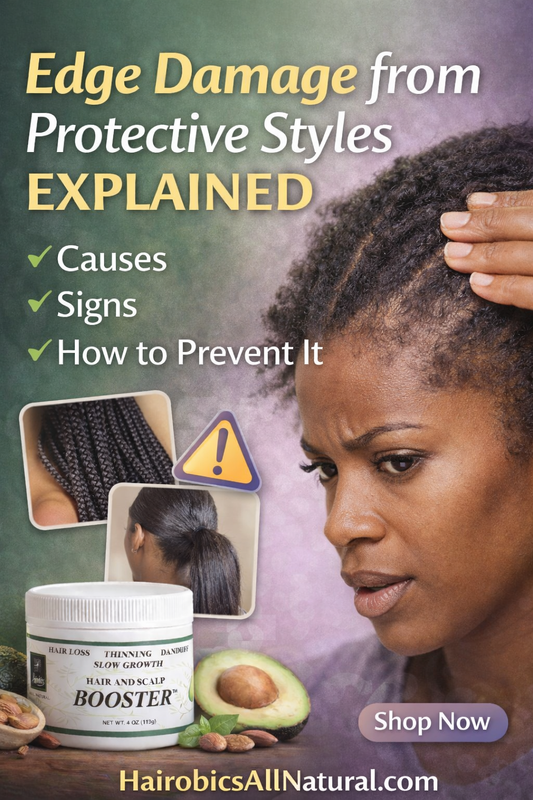
Protective styles are meant to protect your hair, help retain length, and reduce daily manipulation. But for many women, especially those with natural or textured hair, protective styles can quietly do the opposite — causing thinning edges, breakage, and permanent hairline damage.
If your edges look thinner after braids, wigs, ponytails, or sew-ins, you’re not alone.
And the truth is, edge damage from protective styles is far more common than most people realize.
This guide breaks down exactly why protective styles damage edges, how to spot early warning signs, and what you can do to protect, repair, and regrow your edges safely.
What Are Edges (and Why Are They So Fragile)?
Your edges are the fine, delicate hairs along your hairline, including:
-
Temples
-
Forehead hairline
-
Nape (for some people)
Edges are naturally:
-
Thinner than the rest of your hair
-
More fragile
-
More prone to breakage
Unlike the hair at the crown of your head, edges:
-
Experience constant tension
-
Are manipulated more often
-
Are exposed to friction from scarves, wigs, and styling tools
Because of this, edges are usually the first area to show damage when something goes wrong.
What Is Edge Damage from Protective Styles?
Edge damage occurs when repeated tension, friction, or stress weakens the hair follicles along the hairline. Over time, this leads to:
-
Thinning edges
-
Breakage
-
Bald patches
-
Receding hairline
-
In severe cases, permanent follicle damage
This condition is often referred to as traction alopecia, a form of hair loss caused by prolonged pulling on the hair.
The Biggest Causes of Edge Damage from Protective Styles
1. Styles That Are Too Tight
Tight protective styles are the #1 cause of edge damage.
This includes:
-
Braids pulled tightly at the hairline
-
Sleek ponytails
-
Tight cornrows
-
Over-tight lace front wigs
If your scalp:
-
Feels sore
-
Pulsates
-
Has bumps or redness
That’s your hair follicles telling you the style is too tight.
? Rule of thumb:
If it hurts, it’s damaging.
2. Repeated Tension in the Same Area
Even if a style isn’t tight, wearing the same style repeatedly can still damage edges.
Examples:
-
Always parting your hair in the same place
-
Wearing ponytails in the same position
-
Gluing or clipping wigs in the same area
Hair follicles need breaks. Constant tension in one area weakens them over time.
3. Heavy Extensions and Added Weight
Protective styles with heavy hair pull on your edges, even if the style feels comfortable at first.
Common offenders:
-
Long box braids
-
Extra-thick knotless braids
-
Crochet styles with heavy hair
-
Long wigs without proper support
Weight + gravity = silent edge damage.
4. Excessive Edge Control and Styling Products
Edge control gels can:
-
Dry out edges
-
Cause buildup
-
Lead to breakage when brushed daily
When edges are slicked back every single day, the hair never gets a chance to rest or recover.
Edges need moisture — not constant brushing and gel.
5. Lack of Moisture and Scalp Care
Dry hair breaks easily.
Edges that aren’t moisturized are far more likely to snap under tension.
Protective styles don’t protect dry hair — they hide it.
Without regular moisturizing:
-
Hair becomes brittle
-
Follicles weaken
-
Breakage accelerates
6. Wearing Protective Styles for Too Long
Leaving styles in too long can cause:
-
Matting
-
Excessive shedding
-
Breakage at the hairline
Recommended timelines:
-
Braids: 4–6 weeks
-
Wigs/sew-ins: remove nightly or weekly
-
Cornrows: 2–4 weeks
Longer than that increases the risk of edge damage significantly.
Early Signs of Edge Damage You Shouldn’t Ignore
Catching edge damage early makes regrowth much more likely.
Watch for:
-
Thinning hairline
-
Broken baby hairs
-
Hairline itching or soreness
-
Small bumps around the edges
-
Uneven hairline
If you notice these signs, it’s time to pause protective styling and focus on recovery.
Can Edge Damage from Protective Styles Be Reversed?
Yes — in many cases.
But it depends on how early the damage is caught.
Temporary Damage (Reversible):
-
Breakage
-
Thinning edges
-
Weak follicles
Permanent Damage (Harder to Reverse):
-
Smooth, shiny scalp with no hair growth
-
Long-term traction alopecia
-
Scarred follicles
The key is early intervention.
How to Prevent Edge Damage from Protective Styles
1. Choose Low-Tension Protective Styles
Healthier options include:
-
Loose twists
-
Medium-sized braids
-
Wigs worn without glue
-
Styles that avoid the hairline
Your edges should feel relaxed, not stretched.
2. Moisturize Edges Regularly
Edges need consistent hydration.
Use:
-
Lightweight leave-in treatments
-
Natural oils (castor, peppermint-infused blends)
-
Scalp treatments that nourish follicles
Moisturized edges are more elastic and less prone to breakage.
3. Give Your Edges Breaks Between Styles
After removing a protective style:
-
Let edges rest for 1–2 weeks
-
Wear loose styles
-
Avoid gels and tight pulling
Recovery time is essential for regrowth.
4. Limit Edge Control Usage
Instead of daily edge slicking:
-
Use edge control sparingly
-
Try soft styles that don’t require brushing
-
Embrace natural baby hairs when possible
Your edges don’t need to be laid every day to be healthy.
5. Sleep Protection Matters
At night:
-
Wear satin or silk scarves
-
Avoid cotton pillowcases
-
Make sure wigs are removed when possible
Friction at night causes slow, silent edge breakage.
How to Regrow Edges After Damage
If your edges are thinning or broken, focus on scalp health and consistency.
Step-by-Step Edge Recovery Routine
-
Stop tight styles immediately
-
Cleanse the scalp gently
-
Apply growth-supporting scalp treatments
-
Massage edges 2–3 minutes daily
-
Moisturize consistently
-
Be patient
Regrowth takes time — usually 3–6 months with proper care.
Common Myths About Edge Damage
“My Edges Are Just Naturally Thin”
False.
While some hairlines are finer, sudden thinning is usually damage.
“Protective Styles Always Help Hair Grow”
False.
Protective styles only help when done correctly.
“If My Hair Grows Everywhere Else, My Edges Will Grow Too”
Not always.
Edges require targeted care.
Final Thoughts: Protective Styles Should Protect — Not Punish — Your Edges
Protective styles aren’t the enemy.
Improper protective styling is.
When done right, protective styles:
-
Retain length
-
Reduce breakage
-
Support healthy growth
When done wrong, they:
-
Thin edges
-
Damage follicles
-
Cause long-term hairline issues
Your edges are delicate — treat them like it.
Healthy hairlines come from:
✔️ Low tension
✔️ Moisture
✔️ Scalp care
✔️ Consistency