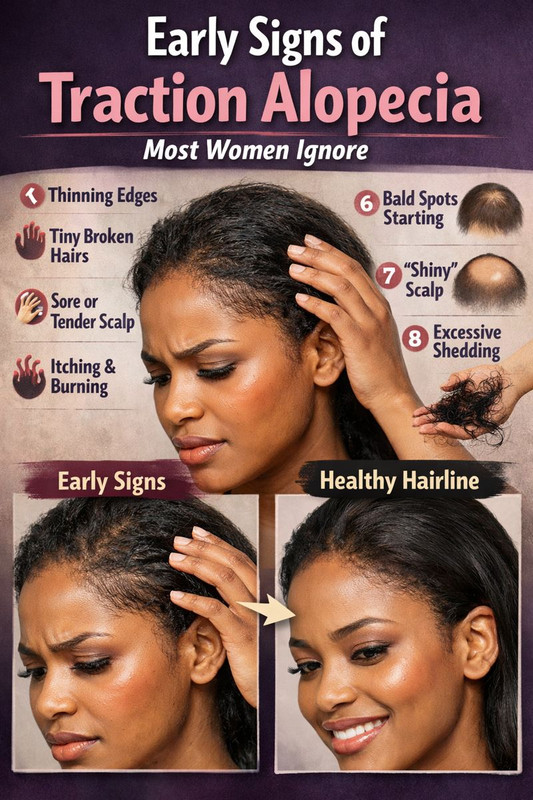
Traction alopecia is one of the most misunderstood—and most ignored—forms of hair loss affecting women today. It doesn’t start with dramatic bald patches or sudden shedding. Instead, it creeps in slowly, quietly, and often painlessly, disguising itself as “normal breakage,” “postpartum changes,” or “edges just not growing back.”
By the time many women realize what’s happening, permanent follicle damage has already begun.
This article breaks down the earliest warning signs of traction alopecia, why so many women overlook them, and—most importantly—how to stop and reverse it before it becomes permanent.
What Is Traction Alopecia? (And Why It’s So Common in Women)
Traction alopecia is hair loss caused by repeated tension and pulling on the hair follicles over time. Unlike genetic hair loss or medical conditions, traction alopecia is entirely mechanical—meaning it’s caused by styling habits.
The reason it disproportionately affects women is simple:
-
Tight hairstyles are socially normalized
-
“Neat” edges are often prioritized over scalp health
-
Protective styles are worn for extended periods
-
Hair pain is often ignored or minimized
Over time, constant tension inflames the follicle, disrupts the growth cycle, and eventually causes permanent follicle shutdown.
Why Most Women Don’t Catch Traction Alopecia Early
Here’s the dangerous part: traction alopecia doesn’t announce itself loudly.
There’s rarely sudden shedding.
There’s rarely pain once damage sets in.
There’s rarely obvious baldness at first.
Instead, it shows up as subtle changes—changes many women dismiss for years.
Early Sign #1: Your Edges Feel Tender or Sore After Styling
If your scalp feels sore, tight, or “bruised” after getting your hair done—even if the style looks amazing—that’s inflammation.
Tenderness is not normal.
This is your scalp signaling that follicles are under stress. Repeated inflammation weakens the follicle’s anchoring ability, making it easier for hair to shed prematurely.
? Red flag:
If tenderness lasts more than 24–48 hours after styling, damage is already starting.
Early Sign #2: Tiny, Short Hairs That Never Get Longer
Many women mistake this for “baby hair.”
But real baby hairs grow.
Traction-damaged hairs:
-
Stay the same length for months or years
-
Break off repeatedly at the same spot
-
Appear thin, wispy, or uneven
This happens because tension disrupts the anagen (growth) phase, shortening how long the hair actively grows before shedding.
? Red flag:
If your edges have looked the same for years, this is not genetics—it’s mechanical damage.
Early Sign #3: Hairline Looks “Fuzzy” Instead of Full
A healthy hairline has density, even if the hairs are fine.
Early traction alopecia causes:
-
Gaps between hairs
-
A see-through appearance
-
Loss of density without full bald spots
This stage is often overlooked because there’s still some hair present.
? Red flag:
If your scalp becomes more visible at the hairline under bright light, pay attention.
Early Sign #4: Breakage That Only Happens at the Hairline
If your hair retains length everywhere except:
-
Temples
-
Nape
-
Around the ears
That’s not coincidence.
Those areas experience the most tension from ponytails, braids, wigs, and headbands.
? Red flag:
Breakage isolated to high-tension zones is one of the earliest traction alopecia clues.
Early Sign #5: Thinning at the Temples (Especially One Side)
Traction alopecia is often asymmetrical.
Why?
-
Parting hair the same way daily
-
Sleeping on one side
-
Habitual ponytail placement
One temple thinning before the other is extremely common.
? Red flag:
Uneven hairlines are a strong indicator of repetitive tension.
Early Sign #6: Itching or Burning Along the Hairline
Inflammation doesn’t always hurt—it often itches.
Persistent itching along the hairline or around braids indicates:
-
Follicle irritation
-
Reduced circulation
-
Micro-inflammation
Scratching worsens the problem by damaging fragile follicles further.
? Red flag:
Chronic itching without dandruff or product buildup should never be ignored.
Early Sign #7: “Shiny” Scalp in Small Sections
Healthy scalp has visible pores.
Early traction alopecia causes:
-
Smooth, shiny skin
-
Reduced follicle visibility
-
Slight discoloration
This means follicles are becoming inactive.
? Red flag:
Once shine replaces texture, reversal becomes harder—but not impossible.
Early Sign #8: Styles Feel Tighter Than They Used To
If styles that once felt comfortable now feel painful, your follicles may already be weakened.
As follicles weaken, they tolerate less tension.
? Red flag:
Needing looser styles to avoid pain is a sign your scalp is asking for relief.
Early Sign #9: Excessive Shedding After Removing Styles
Some shedding is normal—but traction alopecia causes:
-
Clumps from the hairline
-
Broken hairs mixed with shed hairs
-
Prolonged shedding after takedown
This happens because follicles were pushed into early shedding phases.
? Red flag:
If shedding continues for weeks post-style, damage is present.
Early Sign #10: Hairline Doesn’t “Bounce Back” After Rest
Healthy hair rebounds.
If you:
-
Stop wearing tight styles
-
Avoid wigs or braids
-
Reduce manipulation
…and your hairline doesn’t improve after 2–3 months, follicles may be compromised.
? Red flag:
Lack of recovery is one of the most important warning signs.
Why Protective Styles Can Still Cause Traction Alopecia
Protective doesn’t mean tension-free.
Common culprits:
-
Braids that start too tight
-
Lace fronts glued repeatedly
-
Ponytails pulled daily
-
Cornrows worn back-to-back
Duration matters as much as tightness.
Even moderate tension becomes damaging when applied consistently.
Can Early Traction Alopecia Be Reversed?
Yes—but timing is everything.
Reversible Stage
-
Follicles still present
-
Hair may be thin or slow growing
-
Scalp texture remains visible
Permanent Stage
-
Follicles destroyed
-
Smooth, shiny scalp
-
No regrowth without medical intervention
The goal is to intervene before follicles shut down completely.
How to Stop Traction Alopecia in Its Tracks
1. Eliminate Constant Tension
-
Rotate styles weekly
-
Avoid tight edges entirely
-
Choose low-manipulation styles
2. Restore Scalp Circulation
-
Daily scalp massage
-
Oils that stimulate blood flow
-
Gentle brushing at the hairline
3. Reduce Inflammation
-
Avoid heavy gels on edges
-
Clean scalp regularly
-
Use soothing botanical ingredients
4. Give the Hairline Real Rest
-
No wigs or braids for at least 6–8 weeks
-
Silk scarves instead of tight headbands
Why Oils Matter for Traction Alopecia Recovery
Oils don’t regrow hair magically—but the right oils:
-
Reduce inflammation
-
Improve circulation
-
Strengthen fragile follicles
Consistent scalp oiling paired with massage has been shown to extend the growth phase, especially in traction-related thinning.
How Long Does Recovery Take?
-
4–6 weeks: Reduced shedding & irritation
-
8–12 weeks: Visible baby hairs in early cases
-
3–6 months: Density improvement if follicles are alive
Consistency matters more than products.
When to See a Professional
Seek a dermatologist or trichologist if:
-
Hairline continues receding
-
Shiny scalp areas expand
-
No regrowth after 6 months of rest
Early diagnosis prevents permanent loss.
Final Thoughts: Traction Alopecia Is Preventable
Traction alopecia isn’t inevitable.
It isn’t genetic.
And it isn’t something you should accept as “just part of styling.”
Your scalp gives warnings long before permanent damage sets in.
Listening early can save your edges, temples, and confidence.
If your hairline is whispering, now is the time to act—before it starts screaming.