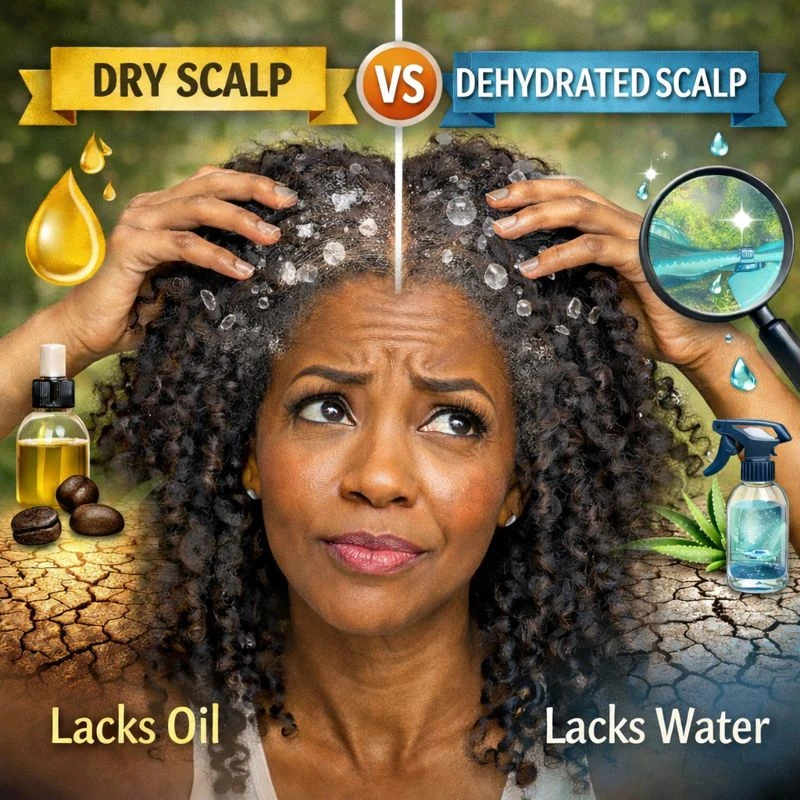
If your scalp feels itchy, flaky, tight, or irritated, you may automatically assume you have a dry scalp. But here’s the truth many people don’t realize:
? Dry scalp and dehydrated scalp are not the same thing.
Confusing the two can lead to using the wrong products, worsening flakes, and even slowing hair growth. In this guide, we’ll clearly break down the difference between dry scalp vs. dehydrated scalp, explain the causes of each, show you how to identify which one you have, and give you practical solutions to restore a healthy, balanced scalp.
Why Scalp Health Matters for Hair Growth
Your scalp is the foundation of your hair. When it’s unhealthy, hair growth suffers—no matter how good your routine or products are.
An unhealthy scalp can lead to:
-
Slower hair growth
-
Excessive shedding
-
Breakage at the root
-
Thinning edges
-
Chronic itch and flakes
-
Poor moisture retention
That’s why understanding what your scalp actually needs—oil or water—is critical.
What Is a Dry Scalp?
A dry scalp is a scalp that lacks oil (sebum).
Sebum is the natural oil produced by your sebaceous glands. It lubricates the scalp, protects the skin barrier, and helps keep hair flexible and strong.
When your scalp doesn’t produce enough oil, it becomes dry.
Common Signs of a Dry Scalp
-
Small, white, dry flakes
-
Tight or uncomfortable scalp
-
Itchiness without redness
-
Hair feels dry at the roots
-
Flakes fall easily from the scalp
What Causes a Dry Scalp?
Dry scalp is often caused by:
-
Genetics (naturally low oil production)
-
Cold or dry weather
-
Over-washing the scalp
-
Harsh shampoos or sulfates
-
Aging (oil production decreases with age)
-
Certain skin conditions like eczema
A dry scalp is essentially an oil deficiency.
What Is a Dehydrated Scalp?
A dehydrated scalp lacks water, not oil.
Yes—you can have an oily scalp that is still dehydrated.
Dehydration means the scalp skin cells don’t have enough water to function properly, which disrupts the skin barrier and causes irritation.
Common Signs of a Dehydrated Scalp
-
Tightness even after moisturizing
-
Flakes that look larger or patchy
-
Itchiness with irritation or redness
-
Greasy roots but dry feeling scalp
-
Scalp feels worse after washing
What Causes a Dehydrated Scalp?
Dehydration is often caused by:
-
Not drinking enough water
-
Overuse of clarifying shampoos
-
Excessive heat styling
-
Stress and high cortisol levels
-
Hard water
-
Product buildup blocking moisture
A dehydrated scalp is a water deficiency, not an oil problem.
Dry Scalp vs. Dehydrated Scalp: Key Differences
Here’s a simple way to tell them apart:
| Feature | Dry Scalp | Dehydrated Scalp |
|---|---|---|
| Lacks | Oil | Water |
| Flakes | Small, powdery, dry | Larger, uneven, sometimes sticky |
| Scalp Feel | Rough, tight | Tight but may feel oily |
| Oil Production | Low | Normal or high |
| Washing Effect | Feels better after oiling | Feels worse without hydration |
Understanding this difference is the key to fixing your scalp issues permanently.
Why Using the Wrong Products Makes It Worse
One of the biggest mistakes people make is oiling a dehydrated scalp without hydrating it first.
What Happens If You Oil a Dehydrated Scalp?
-
Oil seals in dryness instead of moisture
-
Flakes become worse
-
Scalp irritation increases
-
Follicles become blocked
Oil is a sealant, not a moisturizer. It locks in whatever is already there—good or bad.
On the flip side, if you only hydrate a dry scalp without adding oil, the moisture evaporates quickly, leaving the scalp even drier.
How to Identify Which One You Have (Simple Test)
Try this easy test:
-
Wash your hair with a gentle shampoo
-
Do not apply oils or products
-
Let your scalp air dry
After 30–60 Minutes:
-
If your scalp feels tight, itchy, and flaky → likely dry scalp
-
If it feels tight but slightly oily or irritated → likely dehydrated scalp
Many people actually have both, which requires a layered approach.
How to Treat a Dry Scalp (Oil Deficiency)
If your scalp is dry, your goal is to replenish and protect oil levels.
Best Practices for Dry Scalp
-
Use gentle, sulfate-free shampoos
-
Avoid daily washing
-
Massage oils into the scalp regularly
-
Protect scalp from cold air
-
Avoid alcohol-heavy products
Oils That Help Dry Scalp
-
Jojoba oil (closest to natural sebum)
-
Castor oil (thick, sealing)
-
Avocado oil
-
Olive oil
A nourishing scalp oil like Hairobics Scalp Rejuvenator Oil helps restore the scalp’s oil balance while calming irritation and supporting follicles.
How to Treat a Dehydrated Scalp (Water Deficiency)
If your scalp is dehydrated, your focus should be hydration first, oil second.
Best Practices for Dehydrated Scalp
-
Drink adequate water daily
-
Use water-based scalp products
-
Avoid over-clarifying
-
Reduce heat styling
-
Remove buildup regularly
Ingredients That Help Dehydrated Scalp
-
Aloe vera
-
Glycerin
-
Panthenol (Vitamin B5)
-
Botanical hydrosols
-
Water-based leave-ins
After hydrating, seal in moisture with a lightweight oil to prevent evaporation.
Can You Have Both Dry and Dehydrated Scalp?
Yes—and many people do.
This is common if:
-
You have natural or textured hair
-
You wash infrequently
-
You use heavy oils without hydration
-
You live in a dry climate
How to Treat Both:
-
Cleanse gently
-
Hydrate the scalp with water-based products
-
Seal with nourishing oils
-
Massage regularly to stimulate circulation
This layered method supports both scalp health and hair growth.
How Scalp Imbalance Affects Hair Growth
Whether dry or dehydrated, an unhealthy scalp can:
-
Block follicles
-
Reduce oxygen flow
-
Slow the anagen (growth) phase
-
Increase shedding
-
Cause breakage at the root
Healthy hair doesn’t just come from length retention—it starts at the scalp.
That’s why a balanced scalp routine using products like the Hairobics Hair & Scalp Booster can make a noticeable difference over time.
Common Scalp Myths (Debunked)
Myth: Flakes always mean dandruff
? Many flakes are from dryness or dehydration, not dandruff.
Myth: Oil equals moisture
? Oil seals moisture but does not hydrate.
Myth: Oily scalp can’t be dry
? You can have oily roots and a dehydrated scalp at the same time.
How Long Does It Take to Fix a Dry or Dehydrated Scalp?
With consistency:
-
1–2 weeks: Reduced itch and tightness
-
3–4 weeks: Fewer flakes and irritation
-
6–8 weeks: Healthier scalp environment
-
3+ months: Improved hair growth and retention
Scalp health improves faster than hair length—stay patient and consistent.
Final Thoughts: Know Your Scalp, Grow Your Hair
Dry scalp and dehydrated scalp may look similar, but they require very different solutions.
-
Dry scalp needs oil
-
Dehydrated scalp needs water
-
Healthy scalp needs balance
Once you identify what your scalp is truly lacking, everything—from your routine to your results—starts to change.
Healthy scalp = healthy hair growth. Always.