If your scalp flakes, itches, feels tight, or just won’t behave no matter what products you use, you’re not alone. One of the most common reasons people struggle to fix scalp issues is because they’re treating the wrong problem.
Here’s the truth most blogs don’t explain clearly enough:
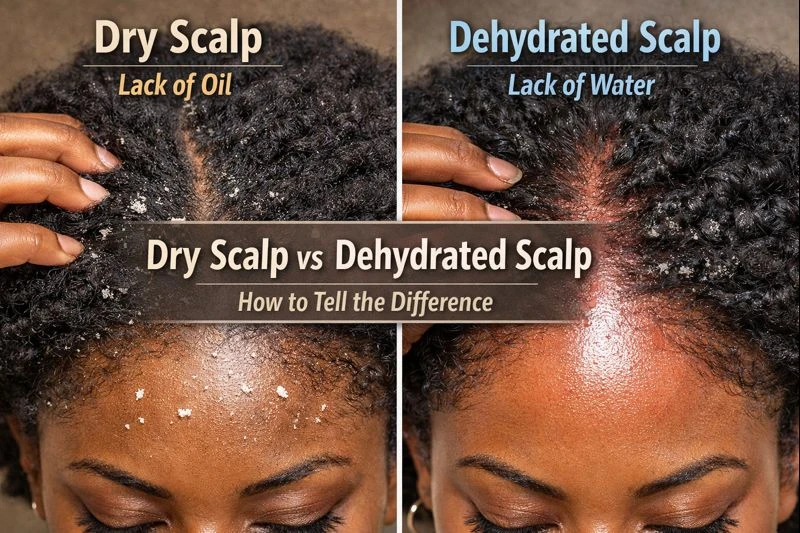
Dry scalp and dehydrated scalp are NOT the same thing.
They look similar. They feel similar. But they have very different causes—and they need completely different solutions.
In this deep-dive guide, you’ll learn:
-
The real difference between dry scalp and dehydrated scalp
-
How to diagnose your scalp at home (no guesswork)
-
Why oils sometimes make flakes worse
-
Exactly how to repair your scalp barrier
-
The correct routines for natural hair, locs, braids, waves, and protective styles
-
How long it actually takes to fix each condition
Let’s break it all the way down.
Why So Many People Confuse Dry Scalp and Dehydrated Scalp
Both conditions can cause:
-
Flaking
-
Itching
-
Irritation
-
Tightness
-
White flakes on shoulders or in hair
So people assume they’re the same—and immediately reach for oils.
But here’s where things go sideways.
Dry scalp = lack of oil (lipids)
Dehydrated scalp = lack of water (hydration)
Oil and water are not interchangeable.
Using oil on a dehydrated scalp is like putting lotion on skin that needs water—you may get temporary shine, but the problem underneath stays.
What Is Dry Scalp?
The Simple Definition
Dry scalp occurs when your scalp does not produce enough natural oils (sebum).
Sebum is essential. It:
-
Protects the scalp barrier
-
Prevents moisture loss
-
Reduces irritation
-
Supports healthy hair growth
When oil production is low, the scalp becomes fragile and flaky.
Common Causes of Dry Scalp
-
Genetics (naturally low sebum production)
-
Cold or dry weather
-
Aging (oil production slows over time)
-
Over-washing
-
Harsh shampoos with sulfates
-
Scalp conditions like eczema or psoriasis
-
Excessive heat styling
How Dry Scalp Looks and Feels
-
Small, white, dry flakes
-
Flakes fall easily
-
Scalp may look dull or ashy
-
Minimal redness
-
Itchiness is mild to moderate
-
Scalp feels comfortable after oiling
The Key Clue
? Dry scalp feels better after applying oil.
If oil helps almost immediately, dryness is likely the issue.
What Is Dehydrated Scalp?
The Simple Definition
Dehydrated scalp occurs when your scalp lacks water—not oil.
Your scalp can be oily and dehydrated at the same time.
This happens when the scalp barrier is damaged and cannot retain moisture.
Common Causes of Dehydrated Scalp
-
Not using water-based products
-
Heavy oils and butters blocking hydration
-
Infrequent washing
-
Product buildup
-
Hard water
-
Excessive sweating without cleansing
-
Protective styles without proper scalp care
-
High heat exposure
-
Stress and dehydration in the body
How Dehydrated Scalp Looks and Feels
-
Large flakes or patches
-
Tight, uncomfortable feeling
-
Itchiness that doesn’t stop
-
Scalp may look shiny, red, or irritated
-
Flakes can feel waxy or sticky
-
Oil makes it itchier
The Key Clue
? Oil does NOT help—and often makes it worse.
That’s because oil seals in dryness instead of fixing hydration.
Dry Scalp vs Dehydrated Scalp: Side-by-Side Comparison
| Feature | Dry Scalp | Dehydrated Scalp |
|---|---|---|
| Root cause | Lack of oil | Lack of water |
| Flake type | Small, dry, powdery | Larger, irregular |
| Oil reaction | Helps | Makes worse |
| Tight feeling | Mild | Strong |
| Shine | Dull | Sometimes shiny |
| Itch | Occasional | Persistent |
| Needs | Oils + gentle moisture | Water + humectants |
The At-Home Scalp Test (2 Minutes)
Step 1: Clean Scalp
Wash your hair and scalp. Do not apply products.
Step 2: Wait 30–60 Minutes
Let your scalp settle naturally.
Step 3: Observe
-
Does your scalp feel tight and itchy immediately? → Likely dehydrated
-
Does it feel fine but look ashy? → Likely dry
Step 4: Test Oil
Apply a small amount of lightweight oil to one section.
-
Relief = dry scalp
-
More itch = dehydrated scalp
You now have your answer.
Why Oil Alone Is NOT a Scalp Solution
This is where most routines fail.
Oil:
-
Does NOT hydrate
-
Does NOT add water
-
Only seals what’s already there
If your scalp lacks moisture, oil traps the problem underneath.
That’s why so many people say:
“I oil my scalp every day but it’s still flaky.”
They’re sealing dehydration.
How to Fix Dry Scalp (The Right Way)
Step 1: Wash Gently
Use a sulfate-free shampoo. Over-stripping makes dryness worse.
Frequency:
-
Every 7–10 days for most people
-
Weekly if active or sweating heavily
Step 2: Moisturize Lightly
Use a light water-based scalp mist or leave-in.
Step 3: Seal with Oil
Choose oils that mimic natural sebum:
-
Jojoba oil
-
Argan oil
-
Sweet almond oil
-
Grapeseed oil
Massage gently.
Step 4: Protect the Scalp Barrier
-
Avoid daily washing
-
Limit heat
-
Wear satin or silk at night
Timeline for Improvement
✔ Relief: 1–2 weeks
✔ Flakes reduced: 2–4 weeks
✔ Balanced scalp: 4–6 weeks
How to Fix Dehydrated Scalp (The Game Changer)
This requires a mindset shift.
Step 1: Clean the Scalp Properly
You must remove buildup.
Wash weekly or every 5–7 days.
Clarify once a month if heavy product use.
Step 2: Hydrate with Water-Based Products
Look for:
-
Aloe vera
-
Glycerin
-
Panthenol
-
Botanical waters
Use directly on the scalp, not just hair.
Step 3: Lightly Seal (Optional)
Only AFTER hydration:
-
Use minimal oil
-
Avoid heavy butters
Step 4: Maintain Moisture Balance
-
Mist scalp between washes
-
Avoid over-oiling
-
Drink water
-
Manage stress
Timeline for Improvement
✔ Tightness relief: 7–14 days
✔ Reduced flakes: 2–3 weeks
✔ Scalp reset: 4–8 weeks
Can You Have Both Conditions?
Yes—and many people do.
This is called a compromised scalp barrier.
Signs:
-
Dry patches AND greasy areas
-
Flaking that changes week to week
-
Oil helps sometimes, hurts other times
Solution:
-
Clean consistently
-
Hydrate first
-
Seal lightly
-
Avoid extremes
Balance is the goal.
Dry vs Dehydrated Scalp in Protective Styles
Braids, Locs, Twists
Most scalp issues in protective styles are dehydration, not dryness.
Why?
-
Scalp isn’t cleansed often enough
-
Sweat builds up
-
Oil is overused
-
Water is ignored
Rule: If your scalp itches in braids, add water—not oil.
Signs Your Scalp Is Finally Healthy
You’ll know you’ve fixed the problem when:
-
Flakes stop returning
-
Itch disappears
-
Scalp feels calm, not tight
-
Hair grows more consistently
-
Styles last longer
-
Oil lasts longer between applications
A healthy scalp regulates itself.
Common Mistakes to Avoid
❌ Oiling daily without cleansing
❌ Skipping shampoo for weeks
❌ Heavy butters on the scalp
❌ Treating flakes without diagnosing the cause
❌ Assuming all flakes = dry scalp
Final Thoughts: Stop Guessing, Start Observing
Dry scalp and dehydrated scalp look similar—but they behave very differently.
Once you understand:
-
Oil ≠ moisture
-
Water comes first
-
Balance beats overload
Your scalp issues stop being mysterious—and start being manageable.
If your scalp has been “acting up” for months or even years, chances are you weren’t failing…
You were just treating the wrong condition.