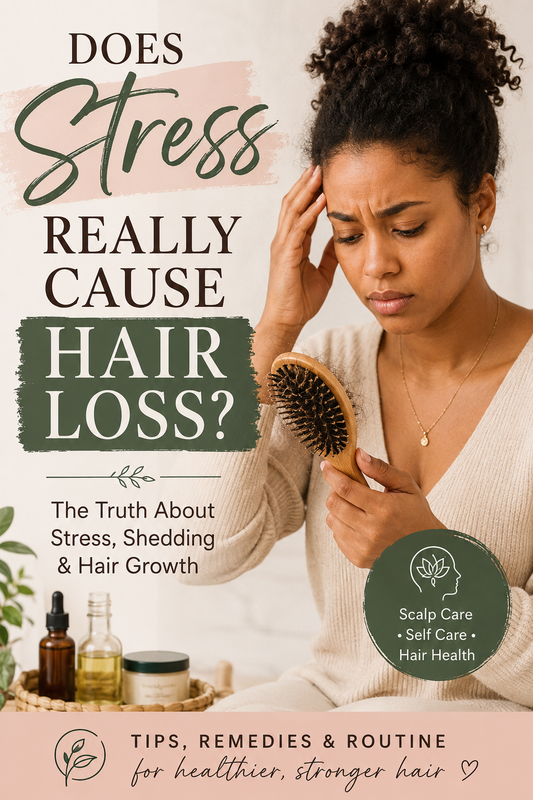
Hair loss can feel frustrating, emotional, and confusing—especially when it seems to happen suddenly. Many people notice increased shedding during stressful periods in life and immediately ask the same question: Does stress really cause hair loss?
The short answer is yes. Stress can absolutely contribute to hair loss. In fact, chronic stress is one of the most common hidden causes of excessive shedding, thinning edges, scalp problems, and stalled hair growth. But stress-related hair loss is often misunderstood. Some people think stress makes hair fall out instantly, while others believe stress has nothing to do with hair health at all.
The reality is more complex.
Stress affects the body in multiple ways, including hormone production, inflammation levels, sleep quality, scalp circulation, digestion, immune function, and the hair growth cycle itself. When stress becomes chronic, your body may prioritize survival functions over non-essential functions like hair growth. This can push large numbers of hair follicles into the shedding phase at the same time.
The good news is that stress-related hair loss is often reversible once the root cause is addressed.
In this guide, we’ll cover:
- How stress affects the hair growth cycle
- The different types of stress-related hair loss
- Signs your shedding may be caused by stress
- The connection between cortisol and hair thinning
- How emotional stress affects the scalp
- Whether anxiety can cause hair loss
- The relationship between stress and alopecia
- How to recover from stress-related shedding
- The best hair care routine during stressful periods
- Natural remedies that may help support healthy growth
If you’ve been losing more hair than usual and wondering whether stress could be the reason, this article will help you understand what’s happening—and what you can do about it.
What Happens to Hair During Stress?
Hair grows in cycles. Every strand on your scalp goes through different phases over time.
The main phases are:
- Anagen (Growth Phase)
Hair actively grows from the follicle. - Catagen (Transition Phase)
Hair growth slows and the follicle shrinks. - Telogen (Resting Phase)
The hair rests before shedding. - Exogen (Shedding Phase)
Old hairs fall out so new ones can grow.
Normally, most hairs stay in the growth phase for years. But stress can disrupt this cycle.
When the body experiences physical or emotional stress, it may shift a larger number of hairs into the resting and shedding phases too early. This leads to increased hair fall weeks or months after the stressful event.
That’s why many people notice hair shedding after:
- Emotional trauma
- Divorce or breakups
- Job stress
- Financial stress
- Surgery
- Illness
- Rapid weight loss
- Lack of sleep
- Anxiety or depression
- Pregnancy or postpartum stress
- Grief or loss
Stress doesn’t usually make hair fall out overnight. Instead, it gradually interrupts normal hair cycling until shedding becomes noticeable.
Can Emotional Stress Really Cause Hair Loss?
Yes. Emotional stress can absolutely contribute to hair loss.
The body doesn’t separate emotional stress from physical stress as much as people think. When you’re overwhelmed emotionally, your nervous system still activates stress responses throughout the body.
This may increase:
- Cortisol levels
- Inflammation
- Muscle tension
- Oxidative stress
- Poor sleep
- Hormonal imbalance
- Scalp tightness
- Reduced blood circulation
All of these can negatively affect healthy hair growth.
Many people experience increased shedding after emotionally difficult periods. In some cases, hair loss may not begin until 2–3 months after the stressful event because of how the hair cycle works.
This delayed shedding is one reason stress-related hair loss often feels mysterious.
Types of Stress-Related Hair Loss
There are several forms of hair loss linked to stress.
1. Telogen Effluvium
Telogen effluvium is the most common type of stress-related hair loss.
This condition happens when stress pushes large numbers of hairs into the resting phase prematurely. After a few months, those hairs begin shedding excessively.
Signs include:
- Sudden excessive shedding
- Hair all over pillows or clothing
- More hair in the shower drain
- Thinning throughout the scalp
- Reduced hair density
- Thinner ponytail
Telogen effluvium usually causes diffuse thinning rather than bald patches.
The positive side is that this condition is often temporary once the stress trigger is resolved.
2. Alopecia Areata
Severe stress may trigger or worsen autoimmune conditions like alopecia areata in some individuals.
This condition causes the immune system to attack hair follicles, leading to round bald patches on the scalp or body.
Stress alone may not directly cause alopecia areata, but it can contribute to flare-ups in people who are genetically predisposed.
3. Trichotillomania
This is a stress-related condition where individuals compulsively pull out their hair.
It may affect:
- Scalp hair
- Eyebrows
- Eyelashes
- Beard hair
Trichotillomania is often linked to anxiety, tension, emotional distress, or obsessive-compulsive tendencies.
The Connection Between Cortisol and Hair Loss
Cortisol is known as the body’s primary stress hormone.
When stress levels rise, cortisol increases. While cortisol is important for survival, chronically elevated cortisol may negatively affect the hair and scalp.
High cortisol may contribute to:
- Inflammation around hair follicles
- Disruption of hair growth cycles
- Slower follicle regeneration
- Increased shedding
- Scalp irritation
- Oil imbalance
- Poor sleep quality
Long-term elevated cortisol may also interfere with hormones involved in healthy hair growth.
This is one reason chronic stress often leads to visible thinning over time.
Does Anxiety Cause Hair Loss?
Anxiety and chronic worry can absolutely contribute to hair problems.
People with ongoing anxiety may experience:
- Excessive shedding
- Scalp tension
- Hair breakage
- Increased scalp sensitivity
- Compulsive scratching or pulling
- Sleep disruption
- Nutritional deficiencies from poor eating habits
Anxiety can also worsen habits that indirectly damage hair, including:
- Skipping meals
- Poor hydration
- Overstyling
- Stress scratching
- Picking at the scalp
- Neglecting hair care routines
The body thrives on balance and consistency. Chronic anxiety can disrupt both.
How Stress Affects the Scalp
Stress doesn’t only affect the hair—it affects the scalp too.
During stressful periods, many people notice:
- Itchy scalp
- Tender scalp
- Increased dandruff
- Oiliness
- Dryness
- Burning sensations
- Tight scalp muscles
Stress can increase inflammation and alter oil production. It may also worsen scalp conditions like:
- Seborrheic dermatitis
- Psoriasis
- Eczema
- Dandruff
A healthy scalp environment is essential for healthy growth.
Can Stress Stop Hair Growth?
In some cases, yes.
Stress may slow growth by disrupting the follicle environment. Hair may remain stuck in resting phases longer than normal, causing growth to appear stalled.
This is especially common when stress combines with:
- Poor sleep
- Nutritional deficiencies
- Hormonal imbalance
- Chronic inflammation
- Severe anxiety
- Overworking
- Exhaustion
Many people notice their hair stops retaining length during stressful periods because of increased breakage and slower growth.
Signs Your Hair Loss May Be Stress-Related
You may be experiencing stress-related hair loss if:
- Shedding increased after a stressful event
- Hair loss began 2–3 months after stress
- Hair is thinning diffusely across the scalp
- You notice more hair during washing
- Your scalp feels tense or irritated
- You’ve experienced emotional burnout
- Your sleep quality has declined
- You feel constantly anxious or overwhelmed
Stress-related shedding is often temporary, but chronic stress can prolong the problem.
How Long Does Stress Hair Loss Last?
This depends on the individual and the cause.
Mild stress shedding may improve within:
- 3–6 months
More severe or chronic stress-related shedding may take:
- 6–12 months or longer
Hair regrowth takes patience because follicles need time to return to normal cycles.
The key is reducing the underlying stress while supporting scalp and hair health consistently.
Can Hair Grow Back After Stress Hair Loss?
In many cases, yes.
Hair follicles are often still alive during stress shedding. They simply shift into inactive phases temporarily.
Once stress levels improve, follicles can gradually return to normal growth patterns.
However, recovery depends on:
- Stress management
- Nutrition
- Sleep quality
- Scalp health
- Hormone balance
- Overall health
The earlier you address chronic stress, the better your chances of recovery.
The Role of Sleep in Hair Growth
Sleep is one of the most underrated factors in healthy hair growth.
During deep sleep, the body repairs tissues, balances hormones, and regenerates cells—including hair follicle cells.
Poor sleep may increase:
- Cortisol
- Inflammation
- Shedding
- Hormonal imbalance
Lack of sleep may also reduce the body’s ability to recover from stress.
Aim for:
- 7–9 hours of quality sleep nightly
Improving sleep habits alone may help reduce stress-related shedding over time.
Nutritional Deficiencies and Stress Hair Loss
Stress can affect eating habits and nutrient absorption.
This may lead to deficiencies linked to hair thinning, including:
- Iron
- Vitamin D
- Zinc
- Protein
- Biotin
- Omega-3 fatty acids
- B vitamins
When the body lacks essential nutrients, hair growth may slow significantly.
Eating balanced meals rich in protein, healthy fats, fruits, and vegetables can help support stronger hair.
Does Stress Cause Gray Hair Too?
Research suggests chronic stress may contribute to premature graying.
Stress may affect melanocyte stem cells, which help produce pigment in hair follicles.
Over time, severe stress may accelerate the depletion of these pigment-producing cells.
While genetics still play the biggest role in graying, stress may speed up the process in some people.
How to Reduce Stress-Related Hair Loss
1. Improve Sleep Quality
Sleep is critical for hormone regulation and recovery.
Tips include:
- Maintain a consistent bedtime
- Reduce screen time before bed
- Keep your room cool and dark
- Limit caffeine late in the day
2. Reduce Tight Hairstyles
Tight styles can worsen shedding and scalp tension.
Avoid excessive:
- Tight braids
- Tight ponytails
- Tight buns
- Heavy extensions
Choose low-tension styles whenever possible.
3. Massage the Scalp
Scalp massages may help:
- Increase circulation
- Reduce tension
- Relax scalp muscles
- Improve product absorption
Using natural oils during massage may also help moisturize the scalp.
4. Use Gentle Hair Products
Stress already places strain on the scalp.
Avoid harsh products with excessive:
- Sulfates
- Drying alcohols
- Heavy fragrances
Gentle moisturizing products may help maintain scalp balance.
Products like the Hairobics Hair & Scalp Booster, Scalp Rejuvenator Oil, and Raaw Roots Moisturizing Spray may help support moisture and scalp comfort during stressful periods.
5. Focus on Nutrition
Hair is made primarily of protein.
Make sure your diet includes:
- Lean proteins
- Healthy fats
- Iron-rich foods
- Leafy greens
- Fruits and vegetables
- Water
Hydration is also essential for scalp health.
6. Exercise Regularly
Exercise may help reduce stress hormones and improve circulation.
Even moderate activity like walking can support:
- Better sleep
- Reduced anxiety
- Improved mood
- Healthier stress responses
7. Practice Stress Management
Managing stress may help protect both mental and physical health.
Helpful practices include:
- Meditation
- Deep breathing
- Journaling
- Prayer
- Therapy
- Time outdoors
- Relaxation techniques
Reducing chronic stress often improves hair health over time.
Best Oils for Stress-Related Hair Loss
Some oils may help support scalp health and relaxation.
Popular options include:
- Rosemary oil
- Peppermint oil
- Lavender oil
- Jamaican black castor oil
- Tea tree oil
- Moringa oil
These oils may help:
- Moisturize the scalp
- Reduce dryness
- Improve scalp comfort
- Support healthy-looking hair
Always dilute essential oils properly before use.
Can Chronic Stress Cause Permanent Hair Loss?
Sometimes chronic stress can worsen underlying conditions that lead to long-term thinning.
For example:
- Chronic inflammation
- Hormonal imbalance
- Nutrient depletion
- Autoimmune flare-ups
Long-term unmanaged stress may also accelerate hereditary hair thinning in genetically predisposed individuals.
This is why addressing stress early matters.
Hair Care Routine for Stressful Periods
Here’s a simple stress-friendly routine:
Step 1: Cleanse Gently
Wash the scalp regularly to remove buildup without over-drying.
Step 2: Moisturize
Use hydrating leave-ins and lightweight oils.
Step 3: Protect Hair at Night
Sleep with:
- Satin bonnet
- Silk pillowcase
- Satin scarf
This helps reduce breakage and moisture loss.
Step 4: Avoid Excess Heat
Limit flat irons and excessive blow drying.
Step 5: Keep Styles Low Manipulation
Protective styles should not feel painful or tight.
Myths About Stress and Hair Loss
Myth 1: Stress Causes Instant Baldness
Hair loss from stress usually takes weeks or months to appear.
Myth 2: Stress Hair Loss Is Always Permanent
Many people recover fully once stress levels improve.
Myth 3: Only Extreme Stress Causes Shedding
Even moderate chronic stress can affect hair over time.
Myth 4: Stress Is the Only Cause
Hair loss is often multifactorial. Stress may combine with:
- Genetics
- Hormones
- Nutrition
- Scalp conditions
- Styling habits
When to See a Doctor
You should consider professional evaluation if you experience:
- Sudden severe shedding
- Bald patches
- Scalp pain
- Persistent thinning
- Hair loss lasting over 6–12 months
- Signs of hormonal imbalance
A healthcare provider can help identify underlying causes.
Final Thoughts: Does Stress Really Cause Hair Loss?
Yes—stress really can cause hair loss.
Chronic emotional or physical stress may disrupt the hair growth cycle, increase inflammation, elevate cortisol, worsen scalp conditions, and trigger excessive shedding.
The good news is that stress-related hair loss is often reversible.
By improving sleep, managing stress, supporting scalp health, eating nutrient-rich foods, and using gentle hair care practices, many people can help their hair recover over time.
Healthy hair growth starts from within. Your scalp, mind, and body are deeply connected.
If you’ve been under pressure lately and your hair has started thinning or shedding more than usual, your body may be asking for rest, balance, and recovery.
Consistency, patience, and healthy habits can go a long way toward restoring stronger, healthier hair.