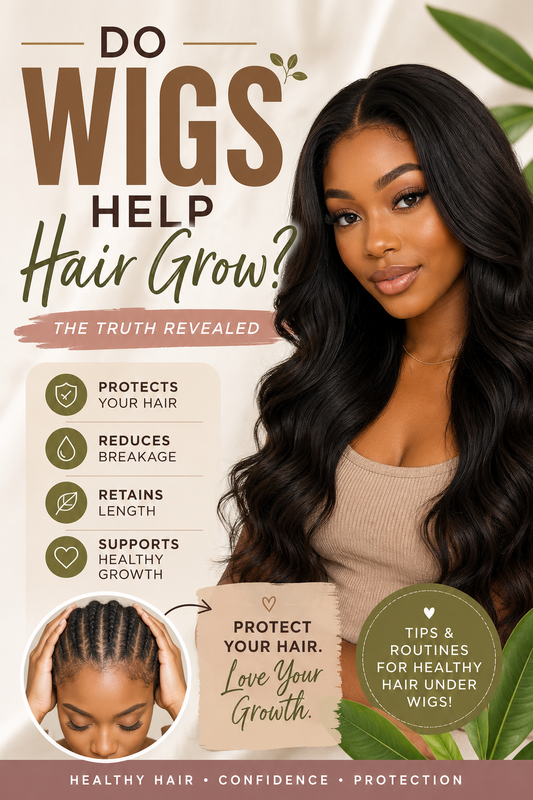
Wigs have become one of the most popular protective styling options among women seeking longer, healthier hair. From lace front wigs to glueless wigs and full wigs, millions of women use wigs to change their look while protecting their natural hair underneath.
But one question continues to come up:
Do wigs actually help hair grow?
The short answer is yes—and no.
Wigs do not magically make hair grow faster. However, when worn correctly, wigs can create the perfect environment for retaining length, preventing breakage, and protecting the hair from daily damage. Because hair retains more length when it breaks less, many women experience significant growth while regularly wearing wigs.
On the other hand, improper wig use can cause thinning edges, scalp irritation, traction alopecia, dryness, and even hair loss.
In this complete guide, we'll explore exactly how wigs affect hair growth, the benefits and risks of wig wearing, and the best practices for growing healthy hair under wigs.
Understanding Hair Growth
Before discussing wigs, it's important to understand how hair actually grows.
Hair grows from follicles located beneath the scalp. The average person grows approximately:
- ½ inch per month
- 6 inches per year
Hair growth occurs in three phases:
Anagen Phase
The active growth stage.
This phase can last anywhere from 2 to 7 years depending on genetics and overall health.
Catagen Phase
A brief transitional phase where growth slows.
Telogen Phase
The resting phase before shedding occurs.
No hairstyle can change your genetics or dramatically increase growth speed. However, hairstyles can influence how much length you retain.
This distinction is critical.
Hair growth and length retention are not the same thing.
Many women believe their hair is not growing when, in reality, it is breaking off at the same rate it grows.
How Wigs Can Help Hair Grow
1. Wigs Reduce Daily Manipulation
One of the biggest causes of hair breakage is excessive handling.
Activities such as:
- Combing
- Brushing
- Detangling
- Styling
- Pulling hair into ponytails
all place stress on the hair shaft.
When wearing a wig, your natural hair remains tucked away underneath.
This means:
- Less combing
- Less brushing
- Less touching
- Less tension
Reduced manipulation often leads to reduced breakage.
Over time, this allows hair to retain more length.
2. Wigs Protect Hair From Environmental Damage
Natural hair faces constant exposure to:
- Sunlight
- Wind
- Pollution
- Dry air
- Humidity changes
These factors gradually weaken hair strands.
A properly worn wig acts as a protective shield.
The wig takes the environmental abuse instead of your natural hair.
This protection helps preserve moisture and reduce damage.
3. Wigs Help Prevent Heat Damage
Many women straighten, curl, or blow-dry their hair regularly.
Frequent heat styling can cause:
- Dryness
- Split ends
- Breakage
- Loss of curl pattern
Wearing wigs allows you to enjoy various hairstyles without applying heat to your real hair.
Instead of straightening your natural hair, you can wear a straight wig.
Instead of curling your hair, you can wear a curly wig.
This significantly reduces heat-related damage.
4. Wigs Support Length Retention
Length retention is the true secret behind long hair.
Imagine your hair grows six inches per year.
If breakage removes five inches each year, you'll only retain one inch.
However, if a protective style helps you reduce breakage dramatically, you may retain most of those six inches.
This is why many women notice dramatic growth after several months of protective styling.
5. Wigs Reduce Friction
Hair constantly rubs against:
- Clothing
- Jackets
- Sweaters
- Pillows
- Car seats
Friction causes wear and tear.
Under a wig, hair remains protected and tucked away.
Less friction often means fewer split ends and less breakage.
Do Wigs Make Hair Grow Faster?
The honest answer:
No.
Wigs do not increase the speed of hair growth.
Your growth rate is largely influenced by:
- Genetics
- Nutrition
- Hormones
- Scalp health
- Age
- Overall health
However, wigs help preserve the growth you already have.
Think of it this way:
A wig doesn't make the plant grow faster.
It simply protects the plant from damage.
The Best Wig Styles for Hair Growth
Glueless Wigs
Glueless wigs are among the healthiest options.
Benefits include:
- No adhesive damage
- Less tension
- Easier removal
- Better scalp access
These wigs are ideal for women focused on hair growth.
Headband Wigs
Headband wigs are beginner-friendly and gentle on edges.
Advantages:
- Easy installation
- Minimal tension
- No glue
- Quick styling
They are excellent for protective styling.
Full Wigs
Traditional full wigs can provide great protection when installed properly.
The key is ensuring the wig is not too tight.
U-Part Wigs
U-part wigs leave some natural hair exposed.
While versatile, exposed hair still requires maintenance and protection.
The Biggest Mistakes That Cause Hair Loss Under Wigs
Wearing Wigs Too Tight
This is one of the most common causes of wig-related hair loss.
Excess tension can damage follicles and lead to:
- Thinning edges
- Hairline recession
- Traction alopecia
A wig should feel secure but comfortable.
Ignoring Scalp Care
Many women neglect their scalp while wearing wigs.
A healthy scalp is essential for healthy hair growth.
Ignoring the scalp can lead to:
- Dryness
- Itching
- Flaking
- Inflammation
Regular scalp care remains essential.
Leaving Wigs On Too Long
Some people wear wigs continuously for weeks.
This can create problems such as:
- Product buildup
- Sweat accumulation
- Scalp irritation
Your scalp needs regular cleansing and attention.
Excessive Glue Use
Adhesives can damage delicate edges when improperly applied or removed.
Repeated glue use may contribute to:
- Edge thinning
- Hairline damage
- Scalp irritation
Always remove adhesives carefully.
Skipping Moisture
Hair hidden beneath a wig still requires hydration.
Many women mistakenly believe tucked-away hair doesn't need moisture.
Dry hair breaks easily.
How to Care for Hair Under a Wig
Cleanse Regularly
A clean scalp supports optimal hair growth.
Most people benefit from cleansing every:
- 1–2 weeks
depending on activity level and scalp condition.
Moisturize Consistently
Focus on:
- Water-based moisturizers
- Leave-in conditioners
- Hydrating sprays
Moisturized hair remains more flexible and resistant to breakage.
Seal in Moisture
After moisturizing, seal hydration with oils.
Popular choices include:
- Jojoba oil
- Castor oil
- Coconut oil
- Rosemary-infused oils
This helps prevent moisture loss.
Massage the Scalp
Gentle scalp massages may improve circulation.
Benefits include:
- Relaxation
- Improved scalp health
- Better distribution of natural oils
Even five minutes several times per week can be beneficial.
Protective Styling Under Wigs
Flat Twists
Flat twists provide:
- Low tension
- Easy access to scalp
- Minimal stress on strands
Excellent choice for wig wearers.
Cornrows
Cornrows remain one of the most popular foundations.
However:
- Avoid excessive tightness
- Protect edges
- Keep scalp moisturized
Large Braids
Large braids create less tension than tiny braids.
They also reduce manipulation.
Two-Strand Twists
Twists are gentle and easy to maintain.
Many women find twists ideal for long-term protective styling.
How Long Should You Wear a Wig?
There is no universal answer.
Many healthy wig wearers follow this schedule:
Daily Wear
Remove wig nightly.
Benefits:
- Scalp access
- Easier maintenance
- Better cleansing
Extended Wear
Some women wear wigs for several days.
If doing so:
- Monitor scalp health
- Maintain moisture
- Clean regularly
Most experts recommend giving the scalp periodic breaks.
Signs Your Wig Routine Is Helping Hair Grow
Positive signs include:
- Less shedding
- Reduced breakage
- Fuller edges
- Increased length retention
- Softer hair
- Healthier scalp
Take photos monthly to track progress.
Growth is often easier to see in pictures than in the mirror.
Signs Your Wig Routine Is Damaging Hair
Watch for:
- Thinning edges
- Scalp pain
- Excessive shedding
- Bald spots
- Itching
- Redness
These symptoms indicate adjustments are needed.
The Role of Scalp Health in Hair Growth
Healthy hair begins with a healthy scalp.
Think of your scalp as soil in a garden.
Without healthy soil, plants struggle to thrive.
Common scalp issues include:
- Dryness
- Product buildup
- Inflammation
- Excess oil
- Dandruff
Regular scalp maintenance remains critical even when wearing wigs.
Nutrition and Hair Growth
Hair growth starts internally.
A healthy diet supports strong strands.
Important nutrients include:
Protein
Hair is primarily made of protein.
Good sources:
- Eggs
- Fish
- Chicken
- Beans
Iron
Iron deficiency can contribute to hair shedding.
Sources include:
- Spinach
- Lean meats
- Lentils
Zinc
Supports follicle function.
Vitamins A, C, D, and E
Help support overall scalp health.
Omega-3 Fatty Acids
Support hydration and scalp health.
Can Wigs Help Recover Damaged Hair?
In many cases, yes.
Women recovering from:
- Heat damage
- Chemical damage
- Breakage
- Over-manipulation
often benefit from wig protective styling.
Wigs provide a break from daily stress while allowing damaged hair time to recover.
Are Wigs Better Than Braids for Hair Growth?
Both styles can support healthy hair growth.
However, wigs offer some unique advantages:
Wig Advantages
- Less tension
- Easier scalp access
- More versatility
- Reduced installation stress
Braid Advantages
- Longer wear time
- Lower daily maintenance
For women prone to edge damage, wigs are often the gentler option.
Do Lace Front Wigs Damage Edges?
They can.
The risk usually comes from:
- Tight application
- Excess glue
- Improper removal
To protect edges:
- Use minimal adhesive
- Remove carefully
- Avoid excessive tension
Healthy edges require gentle treatment.
The Best Hair Growth Routine While Wearing Wigs
Step 1
Cleanse scalp regularly.
Step 2
Apply a moisturizing leave-in treatment.
Step 3
Seal moisture with nourishing oils.
Step 4
Massage scalp several times weekly.
Step 5
Wear low-tension protective styles underneath.
Step 6
Sleep with a satin bonnet or satin pillowcase.
Step 7
Monitor hair health monthly.
Consistency matters more than perfection.
Common Wig Myths
Myth #1: Wigs Stop Hair Growth
False.
Hair continues growing beneath wigs.
Myth #2: Wigs Automatically Cause Hair Loss
False.
Improper use causes most wig-related damage.
Myth #3: Hair Doesn't Need Moisture Under Wigs
False.
Moisture remains essential.
Myth #4: Protective Styles Guarantee Growth
False.
Protective styles help, but overall hair care still matters.
Why Some Women Experience Massive Growth With Wigs
Many success stories come from women who:
- Reduced manipulation
- Protected ends
- Improved moisture retention
- Focused on scalp care
- Maintained consistency
The wig itself isn't magical.
The healthy habits surrounding wig use make the difference.
Final Verdict: Do Wigs Help Hair Grow?
The answer is yes—when used correctly.
Wigs do not directly increase hair growth speed. However, they can create the ideal environment for healthy hair by reducing manipulation, protecting strands from damage, minimizing heat exposure, and improving length retention.
The key is proper maintenance.
A healthy wig routine includes:
- Regular cleansing
- Consistent moisturizing
- Gentle installations
- Low tension
- Scalp care
When combined with healthy nutrition and quality hair care products, wigs can become one of the most effective protective styling tools available.
If your goal is longer, thicker, healthier hair, a well-maintained wig routine can absolutely help you reach that goal while protecting every inch of growth along the way.