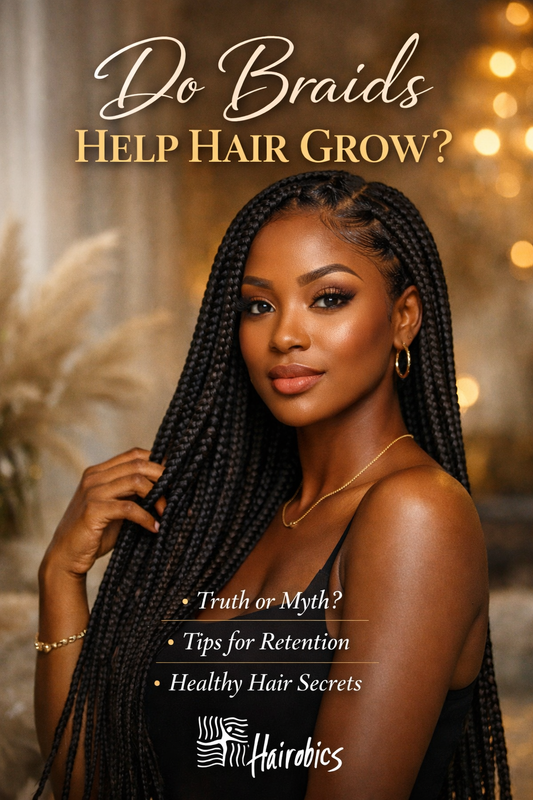
Braids have been a cornerstone of Black hair culture for centuries. From intricate cornrows to waist-length box braids, braided styles are more than fashion — they’re history, identity, protection, and strategy.
But one question continues to come up:
Do braids actually help hair grow?
If you wear braids regularly — or you’re considering them as part of your healthy hair journey — this article breaks down what’s really happening beneath the style. We’ll explore hair growth science, protective styling, scalp health, breakage, tension, and how to use braids the right way for longer, stronger natural hair.
The Short Answer: Do Braids Help Hair Grow?
Braids do not directly increase your hair growth rate.
However…
Braids can help you retain more length, which makes it appear that your hair is growing faster.
Hair growth happens at the scalp. Length retention happens at the ends. Braids influence retention — not the biological growth cycle itself.
Let’s break that down.
How Hair Actually Grows
Hair grows in cycles:
-
Anagen (Growth Phase) – Lasts 2–7 years
-
Catagen (Transition Phase) – A short resting period
-
Telogen (Shedding Phase) – Hair sheds and resets
On average, hair grows about:
-
½ inch per month
-
6 inches per year
That rate is largely determined by:
-
Genetics
-
Hormones
-
Overall health
-
Scalp condition
No hairstyle — including braids — changes your genetic growth rate.
But style choice absolutely affects whether you keep the length you grow.
How Braids Can Support Length Retention
1. Reduced Daily Manipulation
Natural hair, especially textured and coily hair, is more prone to breakage due to:
-
Bends in the hair shaft
-
Dryness
-
Shrinkage
-
Mechanical stress
When hair is braided:
-
You detangle less
-
You comb less
-
You brush less
-
You expose ends less
Less manipulation = less breakage.
That’s where the growth illusion comes from.
2. Protection From Environmental Damage
Braids shield your strands from:
-
Wind
-
Friction from clothing
-
Excess sun exposure
-
Constant touching
When your ends are tucked away, they aren’t splitting as quickly.
And healthy ends mean you don’t need frequent trims.
3. Moisture Retention (If Done Correctly)
Braids can help lock in moisture — if your hair is properly hydrated before installation.
Dry hair braided = dry hair hidden.
Moisturized hair braided = protected moisture.
The key difference is preparation.
When Braids Hurt Growth Instead
Braids can also cause serious damage when done incorrectly.
Here’s how:
1. Tension and Traction Alopecia
If braids are:
-
Too tight
-
Installed on fragile edges
-
Pulled aggressively at the roots
They can cause traction alopecia — a form of hair loss from chronic tension.
Early signs:
-
Scalp soreness
-
Small bumps around hairline
-
Thinning edges
-
Headaches after install
Long-term tension can permanently damage follicles.
Protective styling should never feel painful.
2. Neglected Scalp Health
Your scalp is where growth happens.
If you:
-
Don’t cleanse
-
Allow buildup
-
Ignore itching
-
Leave braids in too long
You create a clogged environment that disrupts healthy growth.
Healthy scalp = consistent growth.
Braids are not a “set it and forget it” style.
3. Keeping Braids In Too Long
The myth:
“Longer braids mean more growth.”
The truth:
Leaving braids in 8–12 weeks can lead to:
-
Severe tangling at roots
-
Excess shedding buildup
-
Breakage during takedown
-
Matting
Ideal timeframe:
4–6 weeks maximum for most hair types.
Do Braids Make Hair Grow Faster?
No.
But here’s what they do:
They protect the length you’re already growing.
If you normally grow ½ inch per month but break off ¼ inch due to daily styling…
You only see ¼ inch of progress.
If braids reduce that breakage…
You see the full ½ inch.
That feels like faster growth — but it’s actually better retention.
Best Types of Braids for Growth Retention
1. Knotless Braids
-
Less tension at the root
-
More scalp flexibility
-
Better for edges
2. Medium Box Braids
-
Not too heavy
-
Even weight distribution
-
Easier maintenance
3. Cornrows (Not Too Tight)
-
Great for low manipulation
-
Easy access to scalp
4. Goddess or Feed-In Styles
-
Lighter and more flexible
-
Lower stress on follicles
Avoid:
-
Micro braids (too much tension)
-
Extremely long, heavy braids
-
Tight installs on fine edges
How to Prepare Your Hair Before Braiding
This step determines everything.
Before installing braids:
-
Clarify your scalp
-
Deep condition
-
Trim split ends
-
Moisturize thoroughly
-
Seal with lightweight oil
Never braid dry, brittle hair.
Protective styling only works on healthy prepared strands.
How to Maintain Hair Growth While Wearing Braids
1. Cleanse Your Scalp
Use diluted shampoo or scalp cleansers every 1–2 weeks.
Healthy follicles require oxygen and cleanliness.
2. Moisturize Regularly
Focus on:
-
Scalp hydration
-
Lightweight leave-ins
-
Oil massages (gentle)
Dry scalp = inflammation risk.
3. Massage the Scalp
Light massages increase blood circulation.
More circulation = better nutrient delivery.
4. Protect at Night
-
Satin bonnet
-
Silk scarf
-
Satin pillowcase
Friction causes breakage — even in braids.
What Happens When You Take Braids Down?
You may notice what looks like “a lot of shedding.”
That’s normal.
You shed about:
-
50–100 hairs per day.
When hair is braided, those shed strands stay trapped until takedown.
Don’t panic.
The key is:
-
Detangle slowly
-
Add moisture before removing
-
Finger detangle first
-
Be patient
Rushing takedown ruins months of retention.
How Often Should You Wear Braids for Growth?
Healthy rotation looks like:
-
4–6 weeks braided
-
2–4 weeks break
-
Deep condition
-
Strengthen
-
Assess scalp health
Continuous back-to-back tight braids weaken follicles over time.
Your scalp needs rest.
Can Braids Grow Edges Back?
If thinning is caused by breakage — yes, protective styling can help.
If thinning is caused by chronic traction or follicle damage — regrowth depends on how early you intervene.
Key steps:
-
Stop tight styling immediately
-
Reduce tension
-
Massage gently
-
Avoid heavy products on edges
Edges are delicate. Treat them like fine silk.
Braids and Hair Thickness: Myth or Truth?
Braids do not make hair thicker.
But they can prevent thinning from:
-
Over-manipulation
-
Heat styling
-
Constant tension
Thickness retention is about reducing breakage — not changing strand diameter.
Who Should Avoid Braids?
Braids may not be ideal if you:
-
Have extremely fine strands
-
Are experiencing active hair loss
-
Have scalp inflammation
-
Have severe traction alopecia
-
Recently had chemical damage
In these cases, focus on scalp healing first.
The Psychological Growth Boost
There’s also a mental component.
When your hair is braided:
-
You stop obsessing over daily styling
-
You reduce stress
-
You leave your hair alone
Stress reduction itself can support healthy growth cycles.
Protective styles protect your mind too.
The Real Secret: Braids + Healthy Scalp = Results
If your scalp is inflamed, dry, clogged, or neglected — braids won’t fix that.
Growth thrives in:
-
Clean scalp environment
-
Balanced moisture
-
Reduced tension
-
Proper nutrition
-
Low inflammation
Braids are a tool — not magic.
Final Verdict: Do Braids Help Hair Grow?
Braids:
✔ Do not increase growth speed
✔ Do reduce breakage
✔ Do protect ends
✔ Do help retain length
✔ Can damage hair if installed incorrectly
They are powerful when used strategically.
The difference between growth and breakage often comes down to how you treat your hair before, during, and after the style.
Healthy Braid Routine Checklist
Before:
-
Cleanse
-
Deep condition
-
Trim
-
Moisturize
During:
-
Clean scalp
-
Hydrate regularly
-
Avoid heavy buildup
-
Protect at night
After:
-
Take down gently
-
Detangle slowly
-
Deep condition again
-
Trim if needed
-
Let scalp rest
If Your Goal Is Longer Natural Hair…
Focus on:
-
Scalp health
-
Moisture balance
-
Reduced manipulation
-
Tension awareness
-
Consistent routine
Braids can absolutely support your journey — when done properly.
They don’t grow your hair.
They help you keep what you grow.
And retention is where real length shows up.