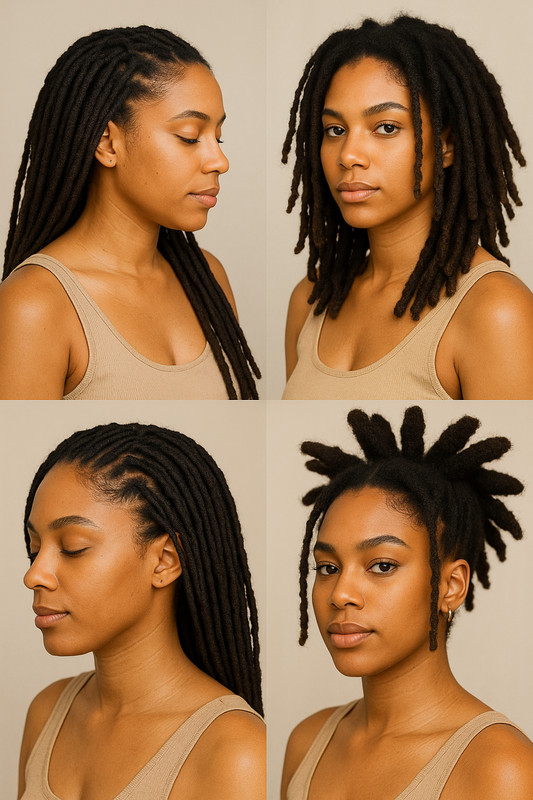
Locs are more than just a hairstyle — they’re a reflection of culture, patience, and self-expression. From freeform to sisterlocks, each type of loc tells a unique story about the person wearing them. Whether you’re new to the loc journey or looking to switch up your style, understanding the different types of locs will help you choose the method that best fits your lifestyle, texture, and aesthetic.
In this in-depth guide, we’ll cover everything you need to know — from the various loc styles and installation methods to how to care for each type using Hairobics All Natural products.
? What Are Locs?
Locs, also known as dreadlocks or dreads, are rope-like strands of hair that form when hair naturally mats and intertwines over time. They can be created through different techniques — some more structured and uniform, others more natural and free.
Locs have deep roots in African, Rastafarian, and spiritual traditions, but today they’re embraced globally as a symbol of authenticity, freedom, and beauty. The way your locs look and behave depends largely on how they’re started and how they’re maintained.
? Main Types of Locs
Let’s break down the most common types of locs, their unique features, and what makes each special.
1. Traditional Locs (Classic Locs)
Best for: Medium to thick natural hair
Installation: Palm-rolling, comb coils, or twisting
Look: Uniform, medium-sized locs with consistent shape
Traditional locs are the most recognizable type — thick, rope-like strands that mature beautifully over time. They can be started with two-strand twists, coils, or interlocking, depending on your texture and desired look.
Maintenance Tips:
-
Retwist every 4–6 weeks to maintain neat roots.
-
Cleanse with a gentle, sulfate-free shampoo.
-
Keep your scalp hydrated with Hairobics Hair & Scalp Booster to prevent dryness and flaking.
-
Use Raaw Roots Soft Pomade on roots for natural shine and frizz control.
Why people love them: They’re easy to style into updos, buns, or ponytails and can be worn neat or semi-freeform for a more natural vibe.
2. Sisterlocks
Best for: Fine to medium hair textures
Installation: Patented grid pattern using a special tool
Look: Very small, uniform locs with flexible styling
Sisterlocks are a microlocking method developed by Dr. JoAnne Cornwell in the early 1990s. They use a precise parting grid and interlocking tool, creating small, lightweight locs that resemble tiny braids.
Maintenance Tips:
-
Retighten every 4–8 weeks (best done professionally).
-
Avoid heavy oils — instead, use Hairobics Leave-In Treatment for lightweight moisture that won’t cause buildup.
-
Protect your hairline by sleeping with a satin scarf or bonnet.
Why people love them: Sisterlocks offer styling versatility — they can be curled, crimped, or worn free like loose natural hair.
3. Microlocs
Best for: Those who love the Sisterlocks look but prefer DIY
Installation: Two-strand twists, braids, or interlocking
Look: Small, flexible locs similar to Sisterlocks but less uniform
Microlocs give a similar appearance to Sisterlocks but can be installed and maintained without a certified consultant. They’re perfect for people who enjoy hands-on hair care.
Maintenance Tips:
-
Keep scalp moisturized with Hairobics Scalp Rejuvenator Oil between retightenings.
-
Wash gently using a mild, residue-free shampoo.
-
Separate locs regularly to prevent merging.
Why people love them: They’re cost-effective and customizable, offering both neatness and freedom.
4. Freeform Locs
Best for: Low-maintenance lifestyles and self-expression
Installation: No manipulation — hair is allowed to loc naturally
Look: Organic, varied shapes and sizes
Freeform locs form without twisting or sectioning — you simply let your hair grow and mat naturally. This style emphasizes spiritual and natural authenticity, often worn by people who view hair as a reflection of inner peace and natural beauty.
Maintenance Tips:
-
Wash and condition regularly to keep scalp healthy.
-
Massage your scalp with Hairobics Hair & Scalp Booster to stimulate growth and circulation.
-
Use Raaw Roots Moisturizer Spray for hydration and to soften your locs naturally.
Why people love them: They celebrate individuality — no two freeform locs look alike.
5. Two-Strand Twist Locs
Best for: Beginners or those starting their loc journey
Installation: Twisting two strands of hair together
Look: Rope-like texture that gradually locks over time
This is one of the most common starter methods because it’s simple and looks great even before the hair fully locks. As your hair matures, the twists compact and evolve into solid locs.
Maintenance Tips:
-
Avoid over-twisting — let the hair set naturally.
-
Keep twists moisturized with Hairobics Leave-In Treatment to prevent unraveling.
-
Refresh scalp between washes with Raaw Roots Moisturizer Spray.
Why people love them: They offer a defined, uniform look and are easy to transition into mature locs.
6. Comb Coil Locs
Best for: Short, tightly coiled hair types
Installation: Hair is coiled tightly around a rat-tail comb
Look: Small, springy coils that lock into uniform locs
Comb coils are one of the cleanest ways to start locs. Over time, they grow into sleek and consistent strands that are easy to maintain.
Maintenance Tips:
-
Recoil every 3–4 weeks as they mature.
-
Use Hairobics Scalp Rejuvenator Oil after washing to nourish roots.
-
Mist regularly with Raaw Roots Moisturizer Spray to keep locs hydrated.
Why people love them: They produce a neat, uniform look from the very start — ideal for professionals and first-timers.
7. Interlocs (Interlocked Locs)
Best for: Active lifestyles, swimmers, or those avoiding retwisting
Installation: Hair is looped and “locked” using a tool
Look: Cylindrical, compact locs that don’t easily unravel
Interlocking is a technique (not a type of loc per se) that can be used to start or maintain locs. It creates a tighter root that holds up well to moisture and exercise.
Maintenance Tips:
-
Retighten every 6–8 weeks.
-
Avoid over-tightening — it can cause tension on the scalp.
-
Keep scalp supple with Hairobics Hair & Scalp Booster to avoid breakage.
Why people love them: They’re very low-maintenance and water-friendly — perfect for people with busy schedules.
8. Wick Locs
Best for: Thick, coarse textures
Installation: Crochet method or merging smaller locs into thick ones
Look: Large, chunky locs — bold and eye-catching
Wick locs originated in South Florida and are known for their thick, cylindrical appearance. They’re a cultural favorite among artists and people who love statement styles.
Maintenance Tips:
-
Keep locs clean and residue-free.
-
Use Raaw Roots Soft Pomade to add shine and tame frizz.
-
Oil scalp weekly with Hairobics Scalp Rejuvenator Oil for hydration.
Why people love them: They’re powerful, expressive, and low-maintenance once formed.
9. Braid Locs
Best for: Long or medium-length hair
Installation: Braiding hair into individual plaits
Look: Rope-like locs that form over several months
Braid locs take time to mature, but they offer a defined pattern in the early stages. As the hair locks, the braid texture fades into a smooth loc.
Maintenance Tips:
-
Wash every 2–3 weeks using a lightweight cleanser.
-
Avoid heavy waxes — stick with Hairobics Leave-In Treatment and Scalp Rejuvenator Oil.
-
Retighten or palm roll as needed for neatness.
Why people love them: They allow for a seamless transition from braids to fully locked hair.
10. Instant Locs
Best for: Anyone wanting mature-looking locs immediately
Installation: Crochet hook method that instantly forms locs
Look: Mature, compact locs from day one
Instant locs are created using a small crochet hook to mat and tangle hair immediately. It’s perfect if you want the loc look without waiting months for maturity.
Maintenance Tips:
-
Be gentle after installation — avoid manipulation for a few weeks.
-
Keep locs soft with Raaw Roots Moisturizer Spray.
-
Oil your scalp regularly with Hairobics Hair & Scalp Booster.
Why people love them: They deliver the instant gratification of mature locs without the wait.
? How to Choose the Right Type of Locs for You
Consider these factors before choosing your method:
| Factor | What to Consider |
|---|---|
| Hair Texture | Fine hair may favor smaller locs (like Sisterlocks), while thicker hair suits chunkier styles. |
| Maintenance Time | Freeform and interlocked locs require less upkeep than twisted styles. |
| Lifestyle | Active or swimming often? Interlocking is best. Prefer salon visits? Try Sisterlocks. |
| Aesthetic Preference | Want uniform and neat? Choose comb coils or two-strand twists. Love individuality? Go freeform or wicks. |
? Daily Loc Care Routine
Healthy locs require consistent care — no matter the type.
1. Cleanse Gently:
Use a sulfate-free shampoo every 1–2 weeks to remove buildup. Massage your scalp with Hairobics Hair & Scalp Booster afterward to stimulate growth.
2. Moisturize Regularly:
Hydration keeps locs soft and prevents brittleness. Spray Raaw Roots Moisturizer Spray daily, especially on ends.
3. Protect at Night:
Use a satin scarf, bonnet, or pillowcase to reduce friction.
4. Nourish the Scalp:
Use Hairobics Scalp Rejuvenator Oil or Leave-In Treatment 2–3 times a week to prevent dryness and itchiness.
5. Style with Care:
Avoid tight styles that pull at your roots. For edge control and shine, use Raaw Roots Soft Pomade sparingly.
? Final Thoughts: Embrace Your Loc Journey
Locs are more than a hairstyle — they’re a journey of patience, identity, and self-love. Whether you choose Sisterlocks, Freeform, Traditional, or Instant Locs, your crown tells your story. Each twist and coil is a testament to your growth and individuality.
Remember, healthy locs start with a healthy scalp. With Hairobics All Natural products — like the Hair & Scalp Booster, Leave-In Treatment, Raaw Roots Moisturizer Spray, and Soft Pomade — you can nourish your roots, lock in moisture, and let your locs flourish beautifully from start to finish.