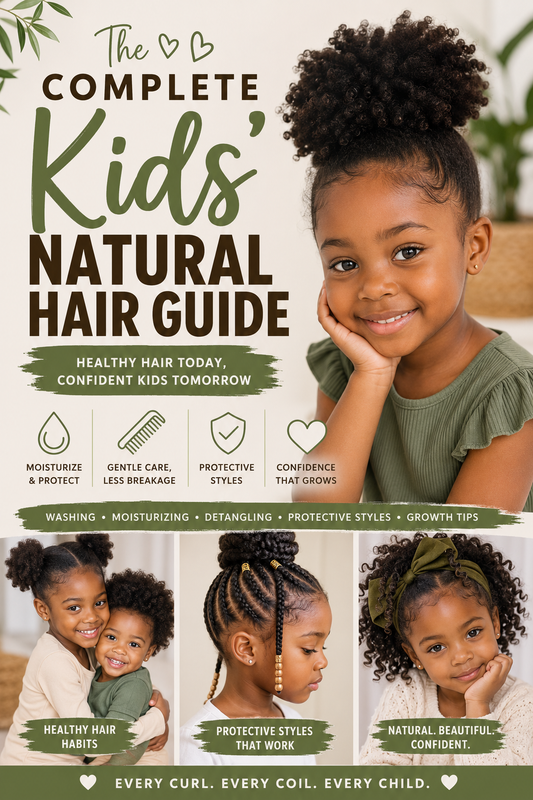
Healthy natural hair begins with healthy habits, and those habits are easiest to build during childhood. Whether your child has soft curls, tight coils, springy ringlets, or thick 4C hair, proper care can help keep their hair moisturized, manageable, and strong while encouraging healthy growth.
Many parents believe children's hair is difficult to manage, but most problems come from dryness, rough handling, or inconsistent routines—not from the hair itself.
This complete guide explains everything parents need to know about caring for kids' natural hair, including washing, moisturizing, detangling, protective styling, nutrition, scalp care, and building a simple routine that works.
Understanding Kids' Natural Hair
Children's natural hair is often:
- Softer than adult hair
- More delicate
- Less dense
- More prone to dryness
- Easier to damage through rough styling
The curlier the hair, the harder it is for natural scalp oils to travel from the roots to the ends.
This is why many children with curly or coily hair experience:
- Dry ends
- Tangles
- Shrinkage
- Breakage
- Knotting
Fortunately, these issues are manageable with consistent care.
Hair Types in Children
Type 2 (Wavy)
Characteristics:
- Loose waves
- Minimal shrinkage
- Easier to comb
- Can become oily
Needs:
- Lightweight moisture
- Gentle shampoo
- Light leave-in conditioner
Type 3 (Curly)
Characteristics:
- Ringlets
- Medium shrinkage
- Can become frizzy
Needs:
- Moisture
- Curl cream
- Satin bonnet
- Gentle detangling
Type 4A
Characteristics:
- Tight curls
- Good definition
- High shrinkage
Needs:
- Weekly deep moisture
- Leave-in conditioner
- Protective styles
Type 4B
Characteristics:
- Zig-zag curls
- Less definition
- Dry quickly
Needs:
- Frequent moisturizing
- Gentle handling
- Protective styling
Type 4C
Characteristics:
- Tightest coils
- Maximum shrinkage
- Extremely delicate
Needs:
- Rich moisture
- Low manipulation
- Protective styles
- Consistent hydration
Why Moisture Is Everything
Moisture is the foundation of healthy children's hair.
Dry hair becomes:
- Brittle
- Rough
- Hard to comb
- More likely to break
Signs your child's hair needs moisture include:
- Dull appearance
- Rough texture
- Excessive tangles
- Snapping while combing
- White flakes on strands
The Best Washing Schedule
Most children do well with washing every:
Every 7–10 Days
Ideal for:
- Thick curls
- Coily hair
- Protective styles
Every Week
Best for:
- Active children
- Sweaty scalps
- Heavy product users
Every 10–14 Days
Works for:
- Very dry hair
- Protective styles
- Cold winter months
Choosing the Right Shampoo
Avoid harsh cleansers that strip moisture.
Look for shampoos that are:
- Sulfate-free
- Gentle
- Moisturizing
- pH balanced
Beneficial ingredients include:
- Aloe vera
- Coconut-derived cleansers
- Glycerin
- Chamomile
- Oat extract
Never Skip Conditioner
Conditioner restores softness after shampooing.
Benefits include:
- Easier detangling
- Less breakage
- Better moisture retention
- Softer curls
- Reduced frizz
Leave conditioner on for 3–5 minutes before rinsing.
Deep Conditioning
Deep conditioning helps replenish moisture lost through washing, sun exposure, swimming, and daily styling.
Aim for:
- Every two weeks
- Weekly for very dry hair
How to Detangle Without Tears
Detangling should never be painful.
Step 1
Start with damp hair.
Step 2
Apply leave-in conditioner.
Step 3
Separate into sections.
Step 4
Finger detangle first.
Step 5
Use a wide-tooth comb.
Step 6
Work from ends upward.
Never pull through knots.
Finger Detangling
Finger detangling helps preserve curls.
Benefits include:
- Less breakage
- Better curl definition
- Fewer split ends
- Less pain
Best Moisturizing Routine
A simple routine works best.
- Water
- Leave-in conditioner
- Natural oil
- Curl cream if needed
Moisturize 2–3 times weekly or whenever hair feels dry.
Oils That Help Seal Moisture
Natural oils help reduce moisture loss.
Popular choices include:
- Jamaican Black Castor Oil
- Avocado oil
- Sweet almond oil
- Grapeseed oil
- Jojoba oil
Remember:
Oil seals moisture.
It does not replace water.
Protective Styles for Kids
Protective styles reduce daily manipulation.
Popular options include:
- Two-strand twists
- Flat twists
- Box braids (not too tight)
- Cornrows
- Puff styles
- Chunky braids
Styles should never cause pain.
Hairstyles to Avoid
Avoid styles that create excessive tension.
Examples include:
- Tight ponytails
- Tiny tight braids
- Tight buns
- Heavy extensions
- Tight rubber bands
These styles may contribute to edge damage and breakage.
Sleeping With Healthy Hair
Night protection prevents friction.
Use:
- Satin bonnet
- Satin pillowcase
- Satin scarf
Cotton pillowcases absorb moisture and create friction.
Morning Hair Routine
Morning routine:
- Lightly mist with water.
- Apply leave-in conditioner if needed.
- Smooth with hands.
- Style gently.
- Avoid excessive brushing.
Swimming Hair Care
Before swimming:
- Wet hair with clean water.
- Apply conditioner.
After swimming:
- Rinse immediately.
- Shampoo if needed.
- Deep condition.
- Moisturize.
Scalp Care
Healthy hair starts with a healthy scalp.
Keep the scalp:
- Clean
- Moisturized
- Free from buildup
Massage gently using fingertips rather than nails.
How Often Should Kids Get Trims?
Trim every:
8–12 weeks
Benefits:
- Removes split ends
- Prevents breakage
- Improves manageability
- Supports healthier-looking hair
Hair Growth Expectations
Hair typically grows about ½ inch (1.25 cm) per month on average, though individual growth rates vary.
Healthy growth depends on:
- Nutrition
- Genetics
- Scalp health
- Low breakage
- Consistent moisture
The goal is not only growing hair but also retaining the length that grows.
Nutrition for Healthy Hair
Healthy hair starts from within.
Encourage a balanced diet that includes:
- Lean proteins
- Eggs
- Fish
- Beans
- Leafy greens
- Sweet potatoes
- Berries
- Citrus fruits
- Whole grains
- Healthy fats
- Plenty of water
Nutrients such as protein, iron, zinc, vitamin A, vitamin C, vitamin D, and omega-3 fatty acids all support normal hair growth and overall health.
Seasonal Hair Care
Summer
- Wash after frequent swimming.
- Increase moisture.
- Wear hats during prolonged sun exposure.
Winter
- Deep condition more often.
- Reduce heat styling.
- Protect hair with satin accessories.
Should Kids Use Heat?
Heat should be used sparingly.
If using heat:
- Apply a heat protectant.
- Use the lowest effective temperature.
- Avoid frequent flat ironing.
- Limit blow-drying.
Excessive heat can weaken curls over time.
Common Hair Problems
Dry Hair
Solution:
- Increase water-based moisture.
- Deep condition.
- Seal with oil.
Knots
Solution:
- Detangle more frequently.
- Sleep with satin.
- Keep ends moisturized.
Breakage
Solution:
- Reduce tight styles.
- Moisturize consistently.
- Handle hair gently.
Itchy Scalp
Solution:
- Cleanse regularly.
- Avoid heavy product buildup.
- Keep the scalp moisturized without over-applying products.
If itching, redness, scaling, or hair loss is severe or persistent, consult a pediatrician or dermatologist.
Building a Weekly Hair Routine
Sunday
- Shampoo
- Condition
- Detangle
- Moisturize
- Protective style
Tuesday
- Refresh with water
- Leave-in conditioner
Thursday
- Moisturize
- Massage scalp gently
Saturday
- Check ends
- Restyle if needed
Healthy Hair Habits to Teach Children
As children grow, involve them in caring for their own hair.
Teach them to:
- Sleep with a satin bonnet or pillowcase.
- Drink enough water.
- Be gentle while detangling.
- Avoid pulling or twisting their hair.
- Tell an adult if a hairstyle feels too tight.
- Understand that healthy hair comes in many textures and curl patterns.
Building confidence in their natural hair is just as important as building healthy routines.
Frequently Asked Questions
How often should kids wash natural hair?
For most children, every 7–10 days works well. Adjust based on activity level, scalp condition, and product buildup.
Can I moisturize my child's hair every day?
Light water-based refreshing can be done as needed, but most children only need a full moisturizing routine two or three times a week.
Is shrinkage unhealthy?
No. Shrinkage is a normal sign of healthy, elastic curls, especially in Type 4 hair.
Should children's hair be brushed every day?
Not necessarily. Curly and coily hair often benefits more from gentle finger detangling or using a wide-tooth comb on damp, conditioned hair.
Are protective styles good for kids?
Yes, when installed loosely and not left in for too long. Tight styles can lead to unnecessary tension and breakage.
Mistakes Parents Should Avoid
- Detangling dry hair
- Using harsh shampoos
- Styling hair too tightly
- Skipping conditioner
- Overusing heat tools
- Applying too much product
- Ignoring scalp health
- Forgetting nighttime protection
- Brushing aggressively
- Comparing one child's hair to another's
Final Thoughts
Healthy kids' natural hair doesn't require complicated routines or dozens of products. The keys are consistency, gentle handling, regular cleansing, moisture, and protective styling. By focusing on healthy habits rather than chasing perfect hair, parents can help children develop strong, manageable hair and a positive relationship with their natural texture.
A simple routine—washing every 7–10 days, conditioning thoroughly, moisturizing with water-based products, detangling gently, protecting hair at night, and avoiding excessive tension—can make a lasting difference. Over time, these habits support stronger strands, healthier scalps, improved length retention, and confident children who learn to love and care for their natural hair.