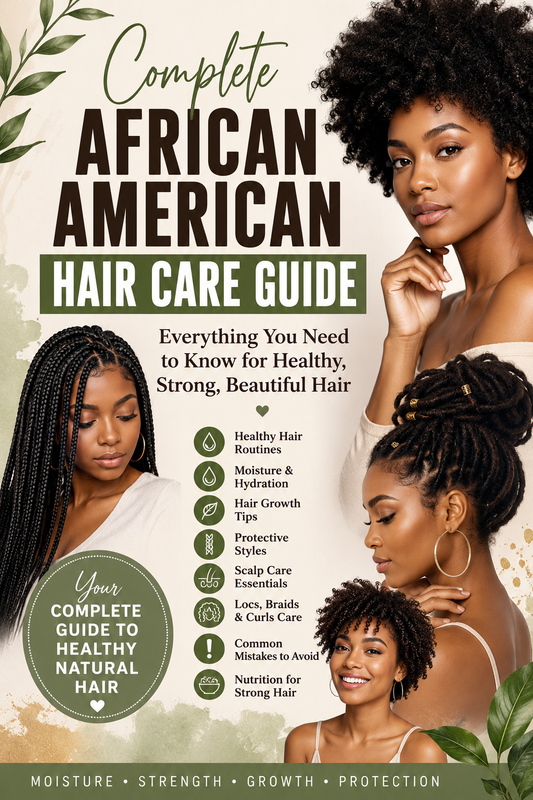
Healthy African American hair doesn't happen by accident—it happens through consistency, proper techniques, and understanding what your hair truly needs.
Whether your hair is relaxed, natural, transitioning, braided, locked, or curly, caring for Black hair requires a unique approach because its structure is unlike any other hair type.
This complete guide explains everything you need to know about caring for African American hair, including:
- Hair structure
- Daily maintenance
- Weekly routines
- Moisture retention
- Hair growth
- Scalp care
- Protective styling
- Braids
- Locs
- Curly hair
- Common mistakes
- Seasonal care
- Hair care products
- Long-term healthy hair habits
By the end of this guide, you'll know exactly how to build a routine that keeps your hair healthy year-round.
Understanding African American Hair
African American hair is naturally beautiful because of its unique curl pattern.
Hair textures range from:
- Loose curls
- Tight curls
- Coils
- Zig-zag strands
Most African American hair falls within Type 3 and Type 4 hair.
The tighter the curl pattern, the harder it is for natural scalp oils to travel from the roots to the ends.
That means Black hair naturally becomes dry much faster than straight hair.
This is why moisture—not oil alone—is the foundation of healthy hair.
Why African American Hair Gets Dry
Dryness is the number one complaint among people with natural hair.
Reasons include:
- Curly strands slow oil distribution
- Frequent heat styling
- Harsh shampoos
- Weather changes
- Product buildup
- Overwashing
- Under-moisturizing
- Hard water
- Chemical treatments
Healthy hair begins with solving dryness.
Building the Perfect Hair Care Routine
Consistency beats expensive products every time.
A simple routine usually includes:
Daily
- Moisturize if needed
- Protect hair from friction
- Massage scalp
- Wear satin bonnet at night
Weekly
- Cleanse scalp
- Deep condition
- Detangle gently
- Seal in moisture
Monthly
- Clarifying wash
- Trim split ends if necessary
- Evaluate scalp health
- Protein treatment if needed
Washing African American Hair
Many people wash either too often or not enough.
A healthy scalp grows healthy hair.
Generally:
Dry hair:
Every 10–14 days
Oily scalp:
Every 7 days
Heavy workouts:
Weekly
Heavy product use:
Every week
Braids:
Every 2–3 weeks
Locs:
Every 2–4 weeks
Choosing the Right Shampoo
Avoid shampoos containing harsh sulfates if they leave your hair feeling stripped.
Look for cleansers with:
- Aloe vera
- Coconut-derived cleansers
- Shea butter
- Glycerin
- Botanical extracts
Focus shampoo on the scalp—not the hair length.
Deep Conditioning
Deep conditioning restores moisture lost during washing.
Benefits include:
- Softer curls
- Less breakage
- Easier detangling
- Better elasticity
- Stronger strands
Most people benefit from deep conditioning every week.
Moisturizing African American Hair
Moisture is water.
Oil is a sealant.
Many people confuse the two.
A healthy moisturizing routine usually involves:
- Water
- Leave-in conditioner
- Cream (if desired)
- Oil or butter to help reduce moisture loss
Best Oils for Black Hair
Natural oils can help reduce moisture loss and improve shine.
Popular choices include:
- Jojoba oil
- Argan oil
- Jamaican Black Castor Oil
- Coconut oil (works well for some hair types but not all)
- Grapeseed oil
- Avocado oil
- Olive oil
Different hair types respond differently, so experiment to find what works best.
Hair Growth Basics
Hair grows from healthy follicles.
Average growth is approximately:
½ inch per month.
Growth cannot be dramatically accelerated overnight.
Instead, focus on retaining the hair you grow.
Hair retention is the secret.
Tips for Longer Hair
- Moisturize consistently
- Avoid excessive heat
- Sleep on satin
- Trim damaged ends
- Eat nutritious foods
- Stay hydrated
- Reduce stress
- Avoid tight hairstyles
- Protect ends
Healthy Scalp = Healthy Hair
Think of your scalp as the soil.
Healthy soil grows healthy plants.
Healthy scalp grows healthier hair.
Watch for:
- Excess flakes
- Redness
- Itching
- Soreness
- Heavy buildup
Keeping the scalp clean and moisturized supports an environment where hair can thrive.
Protective Styles
Protective styles reduce daily manipulation.
Popular choices include:
- Box braids
- Twists
- Cornrows
- Wigs
- Crochet styles
- Flat twists
- Bantu knots
Protective styles should never feel painful.
Caring for Braids
Braids still need maintenance.
Remember to:
- Clean scalp
- Moisturize roots
- Sleep with satin
- Avoid excessive tension
- Refresh edges gently
Never leave braids installed far beyond the recommended time for your hair and scalp.
Caring for Locs
Healthy locs require:
- Clean scalp
- Proper hydration
- Regular maintenance
- Gentle retwists
- Avoiding heavy buildup
Hydration keeps locs soft and flexible.
Caring for Curly Hair
Curly hair thrives when moisture is prioritized.
A simple curly routine includes:
- Cleanse
- Condition
- Leave-in
- Curl cream or gel (if desired)
- Air dry or diffuse on low heat
Avoid brushing curls when dry.
Heat Styling
Heat isn't always damaging.
Improper heat is.
Always:
- Use heat protectant
- Keep temperatures moderate
- Avoid daily flat ironing
- Limit repeated passes
Detangling Without Breakage
Always detangle with lubrication.
Use:
- Conditioner
- Leave-in conditioner
- Detangling spray
Start from the ends.
Work upward slowly.
Never rush.
Nighttime Hair Care
Night protection prevents unnecessary breakage.
Best options include:
- Satin bonnet
- Silk scarf
- Satin pillowcase
- Pineapple hairstyle for curls
- Loose braid
- Loose twists
Cotton absorbs moisture from hair.
Seasonal Hair Care
Summer
Increase hydration.
Protect from chlorine.
Protect from UV exposure.
Wash after swimming.
Winter
Moisturize more frequently.
Reduce excessive heat styling.
Wear satin-lined hats if possible.
Avoid overly hot water.
Nutrition for Healthy Hair
Hair health starts inside the body.
Focus on:
Protein
Iron
Vitamin D
Vitamin C
Omega-3 fats
Zinc
Biotin-rich foods
Drink plenty of water throughout the day.
Common Hair Mistakes
Many people unknowingly damage their hair.
Avoid:
Skipping conditioner
Using excessive heat
Sleeping without protection
Overwashing
Ignoring the scalp
Using tight hairstyles
Picking flakes
Applying heavy grease to dirty scalps
Not trimming damaged ends
Using dirty brushes
Hair Growth Myths
Myth:
Hair grease makes hair grow.
Truth:
Grease can help reduce moisture loss for some people, but it doesn't directly make hair grow faster.
Myth:
Cutting hair makes it grow faster.
Truth:
Trimming removes damaged ends.
Hair grows from the scalp.
Myth:
Natural hair doesn't need shampoo.
Truth:
A clean scalp supports healthy hair.
Myth:
More products equal healthier hair.
Truth:
Consistency matters more than quantity.
Creating a Weekly Routine
Monday
Moisturize.
Tuesday
Protective styling.
Wednesday
Scalp massage.
Thursday
Refresh curls.
Friday
Light moisture.
Saturday
Wash and deep condition.
Sunday
Protect overnight.
Signs Your Hair Is Healthy
Healthy hair usually feels:
Soft
Elastic
Moisturized
Shiny (without excess oil)
Easy to detangle
Minimal breakage
Comfortable scalp
Signs Your Hair Needs Attention
Watch for:
Constant dryness
Excess shedding
Breakage
Scalp irritation
Split ends
Loss of curl definition
Itching
Excessive tangling
Hair Care by Hair Type
Type 3 Hair
Needs:
Light moisture
Curl definition
Humidity protection
Type 4 Hair
Needs:
Frequent hydration
Gentle detangling
Protective styles
Low manipulation
Building Long-Term Healthy Hair Habits
Hair success comes from habits rather than quick fixes.
Build habits like:
- Washing consistently
- Moisturizing regularly
- Protecting hair overnight
- Handling strands gently
- Listening to your scalp's needs
- Avoiding unnecessary manipulation
- Eating a balanced diet
- Being patient with progress
Small, consistent actions over months often lead to the most noticeable improvements.
Frequently Asked Questions
How often should African American hair be washed?
Most people do well washing every 1–2 weeks, though the ideal schedule depends on scalp condition, lifestyle, and hairstyle.
How often should I moisturize?
Many people benefit from moisturizing several times a week or whenever the hair feels dry. The right frequency depends on your hair's needs.
Is oil enough to moisturize hair?
No. Water-based moisture is essential. Oils mainly help reduce moisture loss after hydration.
Are protective styles good for growth?
Protective styles can help retain length by reducing manipulation and breakage when installed and maintained properly.
Do I need deep conditioner?
Yes. Weekly deep conditioning helps improve softness, elasticity, and manageability for many people.
Is satin really important?
Yes. Satin bonnets, scarves, and pillowcases reduce friction and help preserve moisture overnight.
Final Thoughts
African American hair is incredibly versatile, resilient, and beautiful. The key to maintaining healthy hair isn't chasing every new trend or buying countless products—it's understanding your hair's unique needs and staying consistent with a routine that prioritizes moisture, gentle handling, scalp care, and protection.
Whether you're wearing an afro, curls, braids, twists, locs, or a silk press, healthy hair starts with healthy habits. Cleanse your scalp regularly, deep condition often, moisturize with water-based products, protect your hair while you sleep, and minimize unnecessary damage from heat and tension.
Remember that hair growth is a journey. Focus on retaining the length you grow by preventing breakage, nourishing your scalp, and treating your hair with patience and care. Over time, these small daily and weekly habits can lead to stronger, longer, and healthier hair.
With the right knowledge and a consistent routine, you can help your hair thrive in every season and enjoy the confidence that comes with healthy, well-cared-for hair.