Natural oils have been used for centuries to nourish hair and improve scalp health. Among the hundreds of oils available today, castor oil and coconut oil remain two of the most popular choices. But if you're trying to grow longer, stronger, healthier hair, which one should you choose?
The answer isn't as simple as picking one over the other.
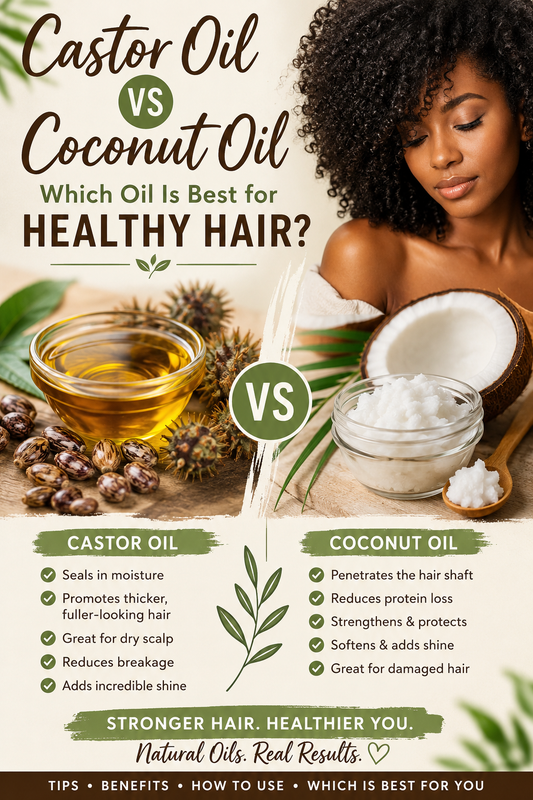
Each oil has unique properties that benefit different hair types and hair concerns. While coconut oil excels at preventing protein loss and moisturizing hair, castor oil is famous for sealing moisture, supporting a healthy scalp, and helping hair appear thicker and fuller.
In this complete guide you'll learn:
- What castor oil is
- What coconut oil is
- The biggest differences
- Which oil is best for hair growth
- Which oil works better for Black hair
- Which oil is better for locs
- Which oil works best for braids
- How to use each correctly
- Common mistakes people make
- Whether you should use both together
Whether you have natural hair, curls, coils, locs, twists, or protective styles, this guide will help you choose the right oil for healthier hair.
What Is Castor Oil?
Castor oil is extracted from the seeds of the castor plant (Ricinus communis).
Unlike lightweight oils, castor oil is extremely thick and rich in fatty acids.
The main fatty acid is ricinoleic acid, which makes up nearly 90% of the oil.
Because of its thickness, castor oil forms a protective layer around the hair shaft that helps reduce moisture loss.
Benefits include:
- Helps seal moisture
- Adds shine
- Softens hair
- Lubricates the scalp
- Reduces dryness
- Helps minimize breakage
- Makes hair appear thicker
What Is Coconut Oil?
Coconut oil is extracted from mature coconuts.
Unlike castor oil, coconut oil contains high amounts of lauric acid, a fatty acid with a unique molecular structure that allows it to penetrate deep into the hair shaft.
This is one reason coconut oil is heavily studied in hair care research.
Benefits include:
- Penetrates hair strands
- Reduces protein loss
- Helps prevent damage
- Softens hair
- Improves manageability
- Reduces split ends
- Adds shine
Castor Oil vs Coconut Oil: Quick Comparison
| Feature | Castor Oil | Coconut Oil |
|---|---|---|
| Thickness | Very thick | Lightweight |
| Hair penetration | Low | High |
| Seals moisture | Excellent | Good |
| Prevents protein loss | Moderate | Excellent |
| Adds shine | Excellent | Excellent |
| Best for dry hair | Excellent | Very good |
| Best for damaged hair | Good | Excellent |
| Best for scalp massage | Excellent | Good |
| Best for sealing ends | Excellent | Good |
Which Oil Is Better for Hair Growth?
One of the biggest myths online is that one oil magically makes hair grow faster.
Hair grows from the follicle.
No oil can instantly speed up your natural growth cycle.
However, oils can create healthier conditions that allow hair to retain more length.
Castor Oil Helps By
- Reducing breakage
- Keeping the scalp moisturized
- Protecting fragile strands
- Sealing moisture into hair
Coconut Oil Helps By
- Preventing protein loss
- Reducing breakage
- Strengthening damaged strands
- Protecting hair during washing
The winner?
Both help support healthier hair, but they work differently.
Which Oil Is Better for Black Hair?
Black hair naturally has more twists and bends along each strand.
These curves make it difficult for natural scalp oils to travel from the roots to the ends.
As a result, Black hair tends to become dry more easily.
Castor Oil Benefits
Ideal for:
- Dry coils
- 4A hair
- 4B hair
- 4C hair
- Thick natural hair
It seals moisture for days.
Coconut Oil Benefits
Excellent for:
- Protein protection
- Wash day treatments
- Deep conditioning
- Strengthening hair
Many people actually benefit from using both.
Which Oil Is Better for Curly Hair?
Curly hair often needs both moisture and strength.
Castor oil:
- Reduces frizz
- Adds shine
- Helps curls stay soft
Coconut oil:
- Strengthens curls
- Helps reduce breakage
- Makes detangling easier
Which Oil Is Better for Locs?
Locs require lightweight moisture that doesn't leave heavy buildup.
Castor Oil
Works well for:
- Dry scalp
- Thin edges
- Retwists
- Scalp massages
Avoid using too much because it can leave residue.
Coconut Oil
Good for:
- Softening locs
- Adding shine
- Protecting strands
Use lightly.
Which Oil Is Better for Braids?
Protective styles still require moisture.
Castor oil helps:
- Moisturize exposed scalp
- Reduce dryness
- Keep edges conditioned
Coconut oil helps:
- Reduce dryness underneath braids
- Protect natural hair
- Improve softness
Which Oil Is Better for Dry Hair?
Dry hair needs moisture retention.
Winner:
Castor Oil
Its thick consistency locks moisture into the hair for longer periods.
Which Oil Is Better for Damaged Hair?
Winner:
Coconut Oil
Its ability to penetrate the hair shaft helps reduce protein loss, making it especially beneficial for hair that's been damaged by heat, coloring, or chemical treatments.
Castor Oil Pros
- Excellent moisture sealant
- Thick protective barrier
- Great scalp massage oil
- Helps reduce breakage
- Adds shine
- Softens coarse hair
- Works well on edges
Castor Oil Cons
- Very thick
- Can feel greasy
- Hard to wash out
- Too heavy for some hair types
- Can cause buildup if overused
Coconut Oil Pros
- Penetrates hair
- Helps reduce protein loss
- Lightweight
- Easy to spread
- Adds softness
- Helps reduce breakage
- Great pre-shampoo treatment
Coconut Oil Cons
- Can be too light for very dry hair
- May not seal moisture as long as castor oil
- Can harden in cold temperatures
- Some hair types experience stiffness if overused
Can You Use Both Together?
Absolutely.
Many healthy hair routines combine the strengths of both oils.
Example routine:
- Wash hair.
- Apply a water-based leave-in conditioner.
- Use a small amount of coconut oil to help protect and soften the hair.
- Finish with a light layer of castor oil on the ends and dry areas to lock in moisture.
This approach can provide both internal protection and external moisture retention.
How Often Should You Use Castor Oil?
For most people:
- 1–2 times per week on the scalp
- 2–3 times per week on dry ends
- Lightly on edges as needed
Using too much may leave hair feeling greasy.
How Often Should You Use Coconut Oil?
Suggested routine:
- Before shampooing once a week as a pre-wash treatment
- Lightly after wash day if your hair responds well
- Occasionally on the ends to reduce dryness
Adjust based on your hair's needs and avoid over-applying.
Best Hair Types for Castor Oil
- 4A hair
- 4B hair
- 4C hair
- Thick curls
- Coarse hair
- Dry natural hair
- High-porosity hair
Best Hair Types for Coconut Oil
- Wavy hair
- Curly hair
- Medium-density hair
- Heat-damaged hair
- Chemically treated hair
- Low-porosity hair that tolerates coconut oil well
Common Mistakes
Applying Too Much
More oil does not mean healthier hair.
Use small amounts.
Using Oil on Dirty Hair
Excessive buildup can trap dirt and make cleansing more difficult.
Start with a clean scalp whenever possible.
Skipping Moisture
Oil does not hydrate hair.
Apply a water-based moisturizer or leave-in first.
Expecting Overnight Hair Growth
Healthy hair growth takes consistency and time.
Signs Your Hair Loves Castor Oil
- Softer texture
- Less breakage
- Shinier hair
- Moisturized ends
- Reduced frizz
Signs Your Hair Loves Coconut Oil
- Stronger strands
- Less shedding due to breakage
- Easier detangling
- Improved elasticity
- Smoother texture
Weekly Routine Using Both Oils
Wash Day
- Cleanse the scalp thoroughly.
- Condition the hair.
- Apply a leave-in conditioner.
- Smooth a small amount of coconut oil through the mid-lengths and ends.
- Seal the ends with a light layer of castor oil if your hair is especially dry.
Midweek
- Refresh hair with a water-based moisturizer.
- Apply a tiny amount of castor oil to the ends or scalp as needed.
Protect at Night
- Sleep with a satin bonnet or satin pillowcase to help preserve moisture and reduce friction.
Frequently Asked Questions
Does castor oil grow hair faster?
There is no strong scientific evidence that castor oil speeds up hair growth. However, it can reduce breakage and support a healthy scalp, helping you retain more length over time.
Can coconut oil damage hair?
For some people, especially those with protein-sensitive hair, frequent use may leave hair feeling stiff. If that happens, reduce how often you use it or switch to lighter applications.
Which oil is less greasy?
Coconut oil generally feels lighter and spreads more easily than castor oil.
Can I mix castor oil and coconut oil?
Yes. Mixing them creates a blend that combines coconut oil's strengthening benefits with castor oil's moisture-sealing properties.
Which oil is better for 4C hair?
Many people with 4C hair prefer castor oil for sealing moisture, while coconut oil is often used during wash day for added protection. Using both in moderation can be an effective combination.
Can I use these oils every day?
Daily use is usually unnecessary. Most hair types benefit from using oils a few times per week, depending on dryness, styling routine, and buildup.
Final Thoughts
When it comes to castor oil vs coconut oil, there isn't a single winner for every person.
If your biggest concern is locking in moisture, reducing dryness, and protecting fragile ends, castor oil is an excellent choice.
If your focus is strengthening hair, reducing protein loss, and protecting against damage, coconut oil stands out.
For many people with natural hair, curly hair, coils, braids, and locs, the best approach is not choosing one over the other—but using each where it performs best. Apply coconut oil during wash day or as a pre-shampoo treatment to help strengthen the hair, then use castor oil sparingly to seal in moisture and protect against breakage.
Healthy hair isn't about finding a miracle ingredient. It's about consistent care, gentle handling, moisture, and a routine that fits your hair's unique needs. With the right balance of cleansing, conditioning, hydration, and the strategic use of oils, you can support stronger, softer, and healthier hair over time.