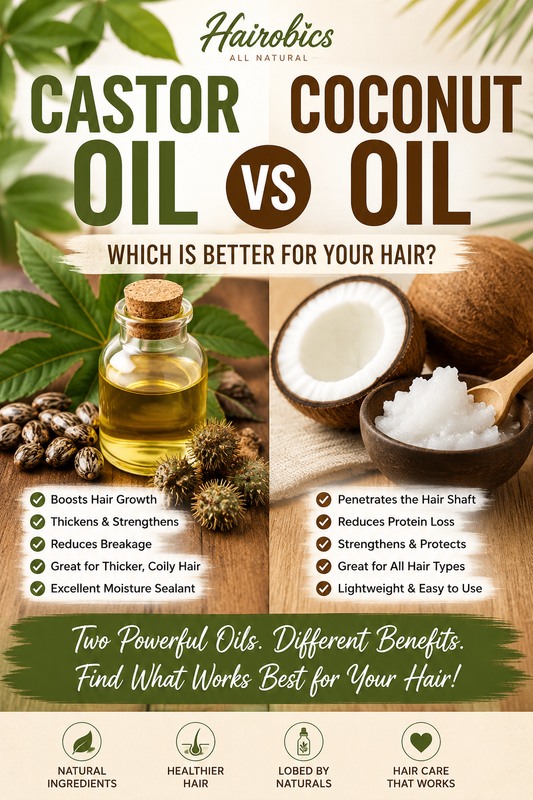
When it comes to natural hair care, two oils consistently top the list: castor oil and coconut oil. Both have earned a loyal following among people with natural hair, curly hair, coily hair, locs, braids, relaxed hair, and even men's grooming routines.
But one question keeps coming up:
Which is actually better—castor oil or coconut oil?
The truth is that neither oil is universally "better." Instead, each one offers unique benefits depending on your hair goals. If you're trying to reduce breakage, soothe an itchy scalp, lock in moisture, encourage healthy hair retention, or support stronger-looking strands, understanding the differences can help you choose the right oil—or even combine both.
In this complete guide, we'll compare castor oil and coconut oil in detail, explain the science behind each, discuss the pros and cons, and help you decide which one deserves a permanent place in your hair routine.
Quick Comparison
| Feature | Castor Oil | Coconut Oil |
|---|---|---|
| Thickness | Very thick | Lightweight |
| Best For | Scalp treatments, sealing moisture | Deep conditioning, preventing protein loss |
| Hair Growth | Supports healthy scalp | Supports stronger hair |
| Shine | Excellent | Excellent |
| Moisture Seal | Excellent | Very Good |
| Protein Protection | Moderate | Excellent |
| Daily Use | Small amounts | Easy for regular use |
| Wash Out | Harder | Easier |
| Ideal Hair Types | Coily, kinky, locs, braids | Curly, wavy, straight, natural |
What Is Castor Oil?
Castor oil comes from the seeds of the castor plant (Ricinus communis). After processing, the toxic compounds found in raw seeds are removed, leaving behind a nutrient-rich oil commonly used in cosmetic products.
Castor oil contains:
- Ricinoleic acid
- Vitamin E
- Omega-6 fatty acids
- Omega-9 fatty acids
- Natural antioxidants
Its thick consistency makes it ideal for sealing moisture into the hair shaft.
What Is Coconut Oil?
Coconut oil is extracted from mature coconuts and is one of the most researched natural oils for hair care.
It contains:
- Lauric acid
- Medium-chain fatty acids
- Vitamin E
- Healthy saturated fats
- Antioxidants
Unlike many heavier oils, coconut oil has the ability to penetrate the hair shaft rather than simply coating it.
This unique characteristic makes it especially useful before shampooing or during deep conditioning treatments.
Which Oil Helps Hair Grow Faster?
This is probably the most searched question online.
The answer may surprise you.
Neither castor oil nor coconut oil directly speeds up hair growth.
Hair growth primarily depends on:
- Genetics
- Overall health
- Hormones
- Nutrition
- Age
- Scalp condition
However, both oils create healthier environments that help hair reach its maximum growth potential.
Castor Oil
Castor oil may help by:
- Keeping the scalp moisturized
- Reducing dryness
- Minimizing breakage
- Improving hair retention
- Supporting healthier follicles
Because hair breaks less, it often appears to grow faster.
Coconut Oil
Coconut oil helps by:
- Preventing protein loss
- Strengthening strands
- Reducing damage during washing
- Protecting hair from friction
Again, healthier hair retains more length.
Winner: Tie.
Neither oil magically grows hair, but both help preserve length by reducing damage.
Which Oil Is Better for Moisture?
Many people believe oils moisturize hair.
Actually, oils seal moisture rather than provide it.
Water is the true moisturizer.
Here's how each oil performs.
Castor Oil
Excellent moisture sealant.
Perfect after applying:
- Leave-in conditioner
- Water
- Hair mist
- Aloe vera juice
Because it's thick, it slows moisture loss.
Coconut Oil
Also seals moisture but penetrates deeper into the hair shaft.
Works especially well before shampooing.
Winner for moisture retention: Castor oil
Which Oil Reduces Breakage Better?
Breakage is one of the biggest reasons people struggle to retain length.
Coconut Oil
Studies consistently show coconut oil reduces protein loss during washing.
Less protein loss means:
- Stronger strands
- Less split ends
- Less snapping
- Less breakage
Castor Oil
Provides lubrication and flexibility.
Hair experiences less friction.
However, coconut oil has stronger research supporting breakage prevention.
Winner: Coconut oil
Best Oil for Dry Natural Hair
Natural hair tends to lose moisture quickly due to its curl pattern.
Castor Oil Works Best For
- Type 4A hair
- Type 4B hair
- Type 4C hair
- Thick coils
- Dense hair
Coconut Oil Works Best For
- Type 2 hair
- Type 3 curls
- Fine natural hair
- Medium-density hair
Many people combine both.
Castor Oil for Black Hair
Castor oil has become a staple in many Black hair routines because it:
- Seals moisture well
- Supports protective styles
- Helps reduce scalp dryness
- Adds shine
- Softens coarse textures
Popular uses include:
- Edge massages
- Hot oil treatments
- Twist-outs
- Loc maintenance
- Braid care
Coconut Oil for Black Hair
Coconut oil works well for:
- Wash day
- Pre-poo treatments
- Deep conditioning
- Heat protection routines
- Detangling
It is especially useful before shampooing because it minimizes moisture loss during cleansing.
Which Oil Is Better for Curly Hair?
Curly hair needs balance.
Too much heavy oil can flatten curls.
Too little oil leads to frizz.
Choose Coconut Oil If:
- Your curls are fine
- Hair gets weighed down easily
- You wash frequently
Choose Castor Oil If:
- Hair feels extremely dry
- Ends split often
- You wear protective styles
Best Oil for Locs
Locs require moisture without excessive buildup.
Coconut Oil
Pros:
- Lightweight
- Absorbs well
- Easier to wash out
Cons:
- Can still cause buildup if overused
Castor Oil
Pros:
- Excellent for scalp massages
- Adds shine
- Helps seal moisture
Cons:
- Heavy
- Can leave residue
Many locticians recommend using castor oil primarily on the scalp and coconut oil sparingly on the length of mature locs.
Best Oil for Braids
Braids expose the scalp while protecting the hair.
Castor Oil
Great for:
- Dry scalp
- Itchy scalp
- Edges
- Hairline
Coconut Oil
Great for:
- Refreshing braid length
- Lightweight shine
- Frizz control
Using a small amount prevents buildup.
Which Oil Is Better for Edges?
Thin edges often result from:
- Tight hairstyles
- Excess manipulation
- Breakage
Castor oil's thick texture helps coat fragile edge hairs.
Many people gently massage a few drops into the hairline several nights per week.
Coconut oil also helps reduce dryness but doesn't cling to the edges as long.
Winner: Castor oil
Which Oil Is Better for Scalp Health?
Healthy hair begins with a healthy scalp.
Castor Oil Benefits
- Helps reduce dryness
- Softens flaky areas
- Adds lubrication
Coconut Oil Benefits
- Helps reduce moisture loss
- Conditions the scalp
- Leaves less residue
If your scalp is oily, coconut oil may feel lighter.
If your scalp is extremely dry, castor oil often feels more nourishing.
Can You Mix Castor Oil and Coconut Oil?
Absolutely.
In fact, combining them creates one of the best DIY hair oils.
Example blend:
- 2 tablespoons coconut oil
- 1 tablespoon castor oil
Optional:
- Rosemary essential oil
- Peppermint essential oil
- Lavender essential oil
Shake before each use.
How to Use Castor Oil
Overnight Scalp Treatment
- Divide hair into sections.
- Apply a few drops.
- Massage for five minutes.
- Sleep with a satin bonnet.
- Shampoo the next day if needed.
Seal Moisture
After applying leave-in conditioner:
- Rub a few drops between your palms.
- Smooth over hair.
- Focus on the ends.
How to Use Coconut Oil
Pre-Poo Treatment
Before shampooing:
- Apply to dry hair.
- Leave on for 30–60 minutes.
- Shampoo normally.
Deep Conditioner Booster
Add one teaspoon to your conditioner.
Leave on under a shower cap for 20–30 minutes before rinsing.
Common Mistakes
Using Too Much
Hair should feel soft—not greasy.
Applying Oil to Dry Hair
Always moisturize with water or a leave-in conditioner first.
Expecting Instant Growth
Healthy hair routines require consistency over time.
Ignoring Shampoo
Oils accumulate.
Cleanse regularly to avoid buildup.
Which Hair Types Benefit Most?
Castor Oil
- Coily hair
- Thick natural hair
- Protective styles
- Dry scalp
- Locs
- Braids
Coconut Oil
- Curly hair
- Wavy hair
- Fine hair
- Straight hair
- Color-treated hair
- Heat-styled hair
Frequently Asked Questions
Can I use castor oil every day?
Most people only need it two to four times per week. Daily use may lead to buildup.
Can coconut oil clog hair follicles?
Not usually, but applying excessive amounts to the scalp can contribute to buildup in some people. Use sparingly and wash regularly.
Which oil is lighter?
Coconut oil.
Which oil is thicker?
Castor oil.
Can I use both together?
Yes. Many people find that combining them provides the benefits of both penetration and moisture sealing.
Which oil is better for children?
Both can be used in small amounts, but always patch-test first and avoid getting oils into the eyes. Use gentle cleansing to prevent buildup.
Is Jamaican Black Castor Oil different?
Yes. Jamaican Black Castor Oil is processed differently and contains ash that gives it a darker color and thicker consistency. Many people prefer it for scalp massages and protective styles, though traditional castor oil also provides moisturizing benefits.
Sample Weekly Routine
Monday: Refresh hair with water and leave-in conditioner, then seal with a small amount of castor oil.
Wednesday: Massage a few drops of castor oil into the scalp if it feels dry.
Friday: Apply coconut oil as a pre-shampoo treatment for 30–60 minutes before washing.
Wash Day: Cleanse, deep condition, then seal moisture with a light layer of castor oil on the ends or a blend of castor and coconut oil.
Final Verdict
Choosing between castor oil and coconut oil doesn't have to be an either-or decision.
- Choose castor oil if your hair is very dry, coarse, tightly coiled, or frequently worn in braids or locs. Its thick texture excels at sealing in moisture and protecting fragile ends.
- Choose coconut oil if your goal is reducing protein loss, minimizing breakage, and strengthening hair before washing. Its ability to penetrate the hair shaft makes it a valuable addition to many wash-day routines.
- Use both together for a balanced approach that combines deep penetration with long-lasting moisture retention.
No oil can change your genetics or make hair grow overnight. Consistent cleansing, conditioning, gentle handling, good nutrition, and regular moisture are still the foundation of healthy hair. When used correctly, castor oil and coconut oil can support stronger, shinier, healthier hair that retains more length over time.