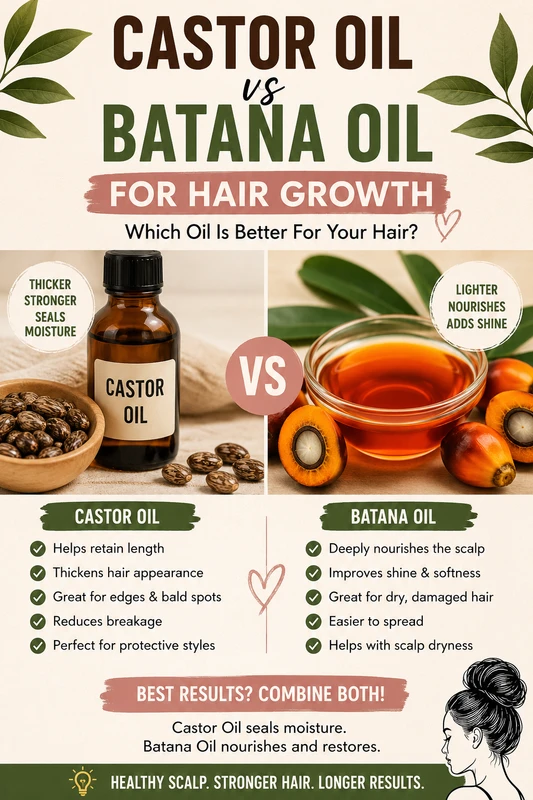
From TikTok tutorials to YouTube growth journeys, people everywhere are asking the same question:
Which oil is actually better for hair growth — Castor Oil or Batana Oil?
Both oils are praised for helping with thinning hair, dry scalp, breakage, bald spots, and weak edges. But they are very different in texture, nutrients, absorption, and results.
If you're trying to grow longer, thicker, healthier hair naturally, this guide will break down:
- What Castor Oil is
- What Batana Oil is
- The real differences between them
- Which oil is better for scalp health
- Which oil works best for thinning hair
- How to use them correctly
- Whether you should combine them
- Common mistakes slowing hair growth
- The best hair routine for maximum results
By the end, you’ll know exactly which oil fits your hair goals.
What Is Castor Oil?
Castor Oil is a thick vegetable oil extracted from castor beans.
It has been used for centuries in beauty and wellness routines because of its rich fatty acid profile, especially ricinoleic acid.
The most popular version for hair growth is:
- Jamaican Black Castor Oil
- Cold-Pressed Castor Oil
- Organic Castor Oil
Castor oil became famous in the natural hair world because many people noticed:
- Faster hair retention
- Fuller edges
- Reduced breakage
- Thicker hair appearance
- Improved scalp moisture
What Is Batana Oil?
Batana oil is a nutrient-rich oil made from the nuts of the American palm tree native to Central America.
It has traditionally been used by the Miskito people of Honduras, often called the “Tawira,” meaning “people with beautiful hair.”
Batana oil is known for:
- Deep scalp nourishment
- Hair repair
- Intense moisture
- Softening damaged hair
- Improving shine and elasticity
Unlike castor oil, Batana oil has recently become trendy online due to viral before-and-after videos showing dramatic improvements in thinning hair.
Why Oils Matter for Hair Growth
Hair growth starts at the scalp.
When your scalp is dry, inflamed, clogged, or damaged, your follicles struggle to produce healthy hair.
The right oil can help:
- Reduce dryness
- Improve scalp flexibility
- Prevent breakage
- Lock in moisture
- Support healthier follicles
- Reduce inflammation
- Improve hair retention
This is important because many people think their hair is not growing when the real issue is breakage.
Healthy oils help keep the hair strand alive long enough for you to actually see length retention.
Castor Oil Benefits for Hair Growth
1. Helps Seal Moisture Into Hair
Castor oil is extremely thick.
That thickness helps coat the hair shaft and reduce moisture loss.
Dry hair breaks faster.
Moisturized hair survives longer.
That is one reason many people notice improved length retention with castor oil.
2. Supports Thicker-Looking Hair
Because castor oil coats strands heavily, hair often appears:
- Fuller
- Denser
- Thicker
- Healthier
This can especially help people with:
- Fine hair
- Thin edges
- Sparse areas
- Weak temples
3. Great for Protective Styles
Castor oil works well with:
- Braids
- Twists
- Locs
- Wigs
- Sew-ins
It helps reduce dryness during long-term protective styling.
4. Helps Reduce Breakage
Hair growth is impossible without retention.
Castor oil reduces friction and dryness, helping strands survive longer.
Less breakage = longer hair over time.
5. Excellent for Edge Care
Many people use castor oil specifically for:
- Edges
- Bald spots
- Hairline thinning
- Postpartum shedding areas
The thickness helps keep fragile areas protected.
Batana Oil Benefits for Hair Growth
1. Deeply Nourishes the Scalp
Batana oil is loaded with:
- Fatty acids
- Antioxidants
- Vitamin E
- Nutrients that support elasticity
This can help improve overall scalp condition.
2. Better for Damaged Hair
Batana oil is often praised for helping restore:
- Heat-damaged hair
- Chemically processed hair
- Dry curls
- Brittle strands
It gives hair a softer, healthier feel.
3. Softer Texture Than Castor Oil
Batana oil is usually easier to spread throughout the hair.
Castor oil can feel sticky or overly heavy for some hair types.
Batana oil tends to feel:
- Smoother
- Softer
- More lightweight
- Easier to apply
4. Improves Shine
Batana oil gives hair a natural glossy appearance.
This makes it popular for:
- Curly hair
- Natural hair
- Locs
- Silk presses
5. May Help Dry Scalp Conditions
Many users say Batana oil helps with:
- Dry scalp
- Flaking
- Tight scalp
- Irritation
Healthy scalp conditions support stronger hair growth over time.
Castor Oil vs Batana Oil: Main Differences
| Feature | Castor Oil | Batana Oil |
|---|---|---|
| Texture | Thick | Creamier |
| Weight | Heavy | Medium |
| Best For | Hair retention | Hair nourishment |
| Scalp Feel | Occlusive | Softer |
| Shine | Moderate | High |
| Moisture Seal | Excellent | Good |
| Spreadability | Harder | Easier |
| Hair Thickness Appearance | Strong | Moderate |
| Great for Edges | Yes | Yes |
| Works for Locs | Yes | Yes |
Which Oil Helps Hair Grow Faster?
Neither oil magically changes your genetic growth rate.
Hair typically grows around:
- 0.5 inches per month on average
However, oils help create conditions for healthier growth.
The real question is:
Which oil helps you retain more hair?
For many people:
- Castor oil improves retention through moisture sealing
- Batana oil improves scalp condition and softness
Both can support healthier growth indirectly.
Which Oil Is Better for Thin Edges?
If your edges are:
- Weak
- Dry
- Breaking
- Sparse
Castor oil often performs better because of its thicker consistency.
It stays in place longer and protects fragile hairlines better.
However, Batana oil may be better if your edges are inflamed or extremely dry.
Which Oil Is Better for Dry Hair?
Batana oil usually wins for softness and manageability.
People with extremely dry curls often prefer Batana oil because it feels less sticky and penetrates easier.
Castor oil can sometimes sit on top of low-porosity hair.
Which Oil Is Better for Low Porosity Hair?
Low porosity hair struggles with product absorption.
Heavy oils may build up quickly.
Batana oil is often easier for low porosity hair to tolerate.
Castor oil may feel:
- Greasy
- Sticky
- Heavy
unless used lightly.
Which Oil Is Better for High Porosity Hair?
High porosity hair loses moisture quickly.
Castor oil works extremely well because it seals moisture inside the strand.
This helps reduce:
- Frizz
- Dryness
- Breakage
Which Oil Works Better for Bald Spots?
Neither oil is a guaranteed cure for baldness.
But both may help improve scalp health around thinning areas.
Castor oil is more commonly used for:
- Edges
- Bald spots
- Sparse hairlines
Batana oil is often preferred for:
- Scalp nourishment
- Dry damaged areas
- Overall hair recovery
Can You Mix Castor Oil and Batana Oil?
Yes — and many people get the best results by combining them.
A mix can provide:
- Moisture sealing from castor oil
- Nourishment from Batana oil
- Softer texture
- Better spreadability
- Improved scalp comfort
A simple blend could include:
- 1 tablespoon castor oil
- 2 tablespoons Batana oil
Optional additions:
- Rosemary oil
- Peppermint oil
- Tea tree oil
Best Essential Oils to Add
Rosemary Oil
Rosemary Oil is one of the most popular essential oils for scalp care.
Many people use it to support:
- Thicker hair appearance
- Scalp circulation
- Reduced shedding
Peppermint Oil
Peppermint Oil creates a cooling sensation that many people enjoy.
It may help refresh oily or itchy scalps.
Tea Tree Oil
Tea Tree Oil is commonly used for scalp buildup and flaking.
It is popular for people dealing with dandruff-like symptoms.
How to Use Castor Oil for Hair Growth
Step 1: Start With a Clean Scalp
Heavy buildup can block oils from reaching the scalp properly.
Wash first.
Step 2: Apply Small Amounts
Too much castor oil can clog hair and attract buildup.
Use lightly.
Step 3: Massage the Scalp
Massage for 3–5 minutes.
This helps distribute oil evenly.
Step 4: Focus on Ends
Hair ends are the oldest and weakest parts.
Seal them well.
Step 5: Wash Regularly
Do not let heavy oil sit for weeks without cleansing.
This can worsen buildup.
How to Use Batana Oil for Hair Growth
Step 1: Warm the Oil Slightly
Batana oil spreads better when warm.
Step 2: Apply to Damp Hair
This helps lock moisture inside.
Step 3: Focus on Dry Areas
Pay attention to:
- Ends
- Crown
- Hairline
- Dry patches
Step 4: Leave Overnight
Many people use Batana oil as an overnight treatment.
Castor Oil vs Batana Oil for Natural Hair
For natural hair:
Choose Castor Oil If You Want:
- Better moisture retention
- Fuller appearance
- Stronger edges
- Less breakage
- Protective style support
Choose Batana Oil If You Want:
- Softer curls
- Better shine
- Easier detangling
- Less stiffness
- Better scalp comfort
Castor Oil vs Batana Oil for Locs
Locs need moisture without excessive buildup.
Batana oil may feel lighter on mature locs.
Castor oil can still work well for:
- Starter locs
- Thin roots
- Dry scalp
The key is moderation.
Castor Oil vs Batana Oil for Braids
Braids often dry out the scalp.
Batana oil helps restore softness.
Castor oil helps protect edges during tension-heavy styles.
Many braid wearers alternate both oils.
Does Science Prove These Oils Grow Hair?
Research on oils and hair growth is still limited.
Most evidence is anecdotal.
However, healthy scalp conditions absolutely matter for hair quality and retention.
Oils may help indirectly by:
- Reducing inflammation
- Supporting moisture
- Protecting strands
- Reducing breakage
That can create the appearance of faster growth because more hair survives.
Common Hair Growth Mistakes
1. Using Too Much Oil
Heavy oils can clog follicles and attract buildup.
2. Never Washing the Scalp
Healthy growth requires scalp hygiene.
3. Ignoring Breakage
Retention matters more than growth speed.
4. Tight Protective Styles
Tension destroys edges.
5. Using Oils Without Moisture
Oil seals moisture.
It does not replace water.
The Best Hair Growth Routine
Weekly Wash Day
- Cleanse scalp
- Deep condition
- Moisturize hair
- Apply light oil layer
Midweek Scalp Care
Use a small amount of:
- Castor oil
- Batana oil
- Or a blend
Massage gently.
Protective Styling
Keep styles loose and scalp-friendly.
Night Protection
Sleep with:
- Satin bonnet
- Satin scarf
- Silk pillowcase
Which Oil Is Better Overall?
The answer depends on your hair goals.
Castor Oil Is Better For:
- Hair retention
- Thin edges
- High porosity hair
- Protective styles
- Thick moisture sealing
Batana Oil Is Better For:
- Softness
- Shine
- Dry curls
- Damaged hair
- Easier absorption
Should You Use Both Together?
Honestly, combining them may give the best balance.
Together they can help provide:
- Moisture
- Shine
- Scalp nourishment
- Softer texture
- Better retention
That combination works especially well for:
- Natural hair
- Braids
- Locs
- Curly hair
- Dry hair types
Final Thoughts
The truth is:
No oil can instantly transform your hair overnight.
But the right oils can help create healthier conditions for stronger, longer hair over time.
Castor Oil remains one of the best oils for moisture retention, thicker-looking hair, and edge care.
Batana oil shines when it comes to softness, nourishment, and scalp comfort.
If you struggle with:
- Breakage
- Dryness
- Weak edges
- Brittle curls
- Hair thinning
either oil may become a valuable part of your routine.
Consistency matters more than hype.
Healthy hair growth comes from:
- Scalp care
- Moisture retention
- Low manipulation
- Proper cleansing
- Patience
Over time, small healthy habits create major hair growth results.