When it comes to hair growth, oils are everywhere. From castor oil and jojoba oil to peppermint and rosemary essential oil, it can be confusing to know which oils actually grow hair — and how to use them correctly.
One of the biggest mistakes people make is using essential oils incorrectly or skipping carrier oils altogether, which can lead to scalp irritation, breakage, and stalled growth.
In this in-depth guide, we’ll break down:
-
What carrier oils are
-
What essential oils are
-
How each supports hair growth
-
Why you need both for healthy hair
-
The best carrier and essential oils for natural hair, 4C hair, locs, braids, and protective styles
-
How to safely combine them for maximum growth
If you’re serious about growing longer, thicker, healthier hair — this article will change how you use oils forever.
What Are Carrier Oils?
Carrier oils are natural, fatty oils extracted from nuts, seeds, or kernels. Unlike essential oils, carrier oils are non-volatile, gentle, and safe to apply directly to the scalp and hair.
Why They’re Called “Carrier” Oils
Carrier oils “carry” essential oils onto the skin safely. Essential oils are extremely concentrated and must be diluted — carrier oils make that possible while providing their own powerful hair benefits.
Key Benefits of Carrier Oils for Hair Growth
Carrier oils:
-
Moisturize the scalp and hair shaft
-
Reduce dryness and breakage
-
Strengthen hair strands
-
Improve elasticity
-
Support scalp health
-
Help retain length (critical for growth)
Healthy hair growth depends on retaining the hair you already have, and carrier oils are foundational for that.
Common Carrier Oils Used for Hair Growth
Here are some of the most effective carrier oils for natural hair and scalp health:
Castor Oil (Including Jamaican Black Castor Oil)
-
Thick, sealing oil
-
Helps reduce shedding
-
Supports thicker-looking hair
-
Ideal for edges, thinning areas, and protective styles
Best for: Dry scalps, breakage, slow growth, locs
Jojoba Oil
-
Closely mimics natural scalp sebum
-
Helps balance oil production
-
Lightweight and non-greasy
Best for: Oily or sensitive scalps, low-porosity hair
Sweet Almond Oil
-
Rich in vitamin E
-
Softens hair
-
Adds shine and slip
Best for: Dry, brittle hair and breakage
Olive Oil
-
Penetrating oil
-
Strengthens the hair shaft
-
Reduces split ends
Best for: Thick, coarse, and high-porosity hair
Grapeseed Oil
-
Lightweight
-
Rich in antioxidants
-
Seals moisture without buildup
Best for: Fine hair, low-porosity hair, protective styles
What Are Essential Oils?
Essential oils are highly concentrated plant extracts obtained through steam distillation or cold pressing. They contain the plant’s most potent aromatic and therapeutic compounds.
⚠️ Important: Essential oils should never be applied directly to the scalp without dilution.
How Essential Oils Support Hair Growth
Essential oils don’t moisturize hair the way carrier oils do. Instead, they work on a cellular and circulatory level.
They help by:
-
Stimulating blood flow to the scalp
-
Supporting healthy hair follicles
-
Reducing inflammation
-
Fighting bacteria and fungus
-
Creating an optimal scalp environment for growth
Think of essential oils as activators, while carrier oils are builders.
Best Essential Oils for Hair Growth
Rosemary Essential Oil
-
Clinically studied for hair regrowth
-
Improves circulation
-
May help with thinning and shedding
Often compared to minoxidil — without the side effects.
Peppermint Essential Oil
-
Creates a cooling, tingling sensation
-
Increases blood flow
-
Wakes up dormant follicles
Great for slow growth and thinning edges.
Tea Tree Essential Oil
-
Antimicrobial and antifungal
-
Clears clogged follicles
-
Soothes itchy, flaky scalps
Perfect for dandruff and scalp buildup.
Lavender Essential Oil
-
Calming and soothing
-
Helps reduce stress-related hair loss
-
Supports follicle health
Ideal for sensitive scalps.
Cedarwood Essential Oil
-
Helps balance scalp oil production
-
Supports thicker hair appearance
-
Often used in hair loss blends
Carrier Oils vs Essential Oils: The Key Differences
| Feature | Carrier Oils | Essential Oils |
|---|---|---|
| Can be used alone | Yes | No |
| Moisturize hair | Yes | No |
| Stimulate follicles | Mild | Strong |
| Safe undiluted | Yes | No |
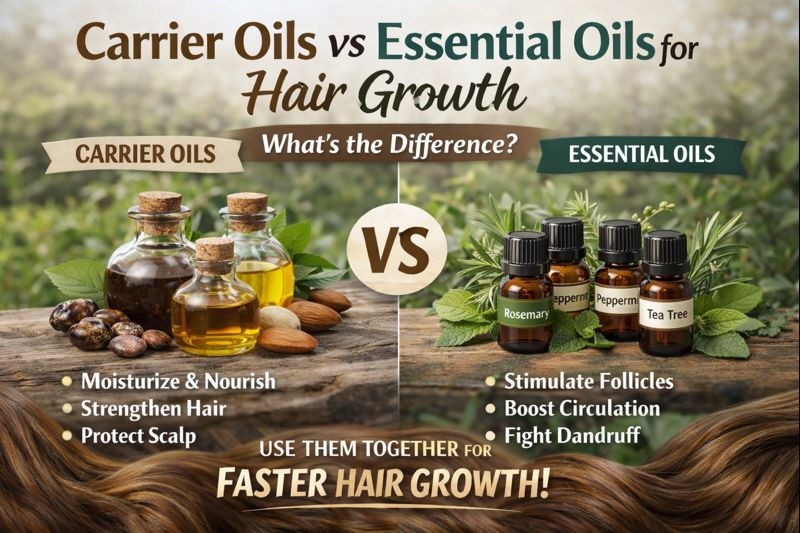
| Main role | Nourish & protect | Activate & stimulate |
? Hair growth requires both nourishment and stimulation, which is why combining these oils is so powerful.
Why You Should Never Use Essential Oils Alone on Your Scalp
Applying essential oils directly to your scalp can cause:
-
Burns
-
Redness
-
Itching
-
Inflammation
-
Hair loss due to irritation
Carrier oils protect your scalp while helping essential oils absorb slowly and effectively.
How to Combine Carrier Oils and Essential Oils for Hair Growth
Here’s a safe and effective dilution ratio:
Basic Hair Growth Oil Blend
-
2–4 tablespoons carrier oil
-
6–10 drops essential oil
For sensitive scalps, start with fewer drops.
Example DIY Growth Blend
-
2 tbsp Jamaican Black Castor Oil
-
1 tbsp Jojoba Oil
-
4 drops Rosemary Essential Oil
-
3 drops Peppermint Essential Oil
Massage into scalp 2–3 times per week.
Best Oil Combinations by Hair Type
For 4C Hair
-
Carrier: Castor oil, olive oil
-
Essential: Rosemary, peppermint
-
Focus: Moisture retention and breakage prevention
For Locs
-
Carrier: Jojoba oil, grapeseed oil
-
Essential: Tea tree, rosemary
-
Focus: Scalp health and buildup control
For Braids & Protective Styles
-
Carrier: Grapeseed oil, almond oil
-
Essential: Peppermint, lavender
-
Focus: Edge protection and scalp circulation
For Fine or Low-Porosity Hair
-
Carrier: Jojoba oil, grapeseed oil
-
Essential: Rosemary, lavender
-
Focus: Lightweight nourishment without buildup
Can Oils Actually Make Hair Grow?
Oils do not magically create new hair follicles, but they absolutely:
-
Improve scalp conditions
-
Reduce breakage
-
Support follicle function
-
Increase blood circulation
-
Help you retain length
Hair growth is about creating the right environment, and oils are a major part of that equation.
The Biggest Oil Mistakes That Stop Hair Growth
-
Using essential oils undiluted
-
Over-oiling the scalp
-
Using heavy oils too frequently
-
Ignoring scalp buildup
-
Expecting instant results
Consistency and balance matter more than quantity.
How Often Should You Oil Your Hair?
-
Dry scalp: 2–3 times per week
-
Normal scalp: 1–2 times per week
-
Oily scalp: Once per week
Massage gently — aggressive rubbing causes breakage.
Pre-Blended Oils vs DIY Oils
DIY oils work, but they require:
-
Proper dilution
-
High-quality ingredients
-
Correct storage
Pre-blended growth oils are often:
-
Professionally balanced
-
Safer for beginners
-
More consistent in results
Look for blends that combine nutrient-rich carrier oils with proven essential oils.
Final Thoughts: Carrier Oils and Essential Oils Work Best Together
If you’ve been using oils incorrectly — or skipping one category entirely — it could explain stalled growth, dryness, or irritation.
Carrier oils build the foundation.
Essential oils activate growth.
When used together correctly, they create the perfect environment for healthier, stronger, longer hair.
Hair growth isn’t about one miracle oil — it’s about strategy, consistency, and scalp health.