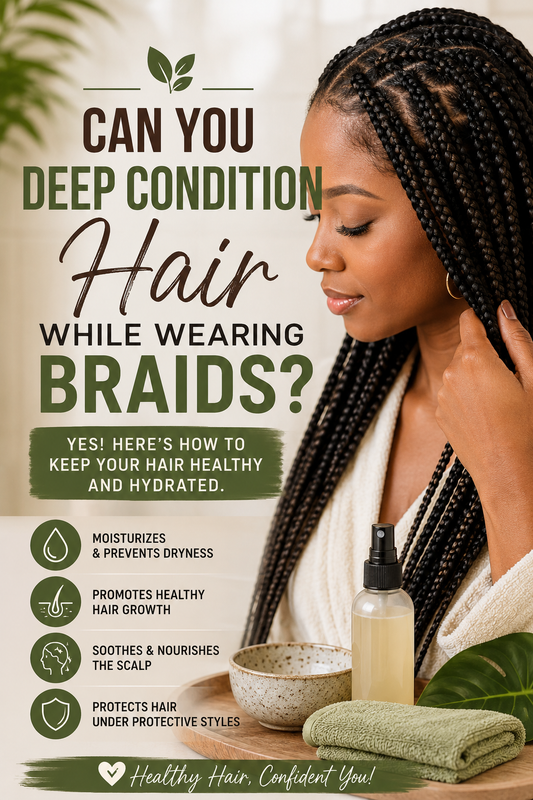
One of the most common questions people ask after getting a fresh set of braids is:
"Can I deep condition my hair while wearing braids?"
The short answer is yes—but not the same way you would with loose natural hair.
Traditional deep conditioning methods can leave product trapped inside your braids, causing buildup, odor, mildew, itching, and even scalp irritation. However, with the right techniques and lightweight products, you can give your hair much-needed moisture without ruining your protective style.
Whether you're wearing:
- Box braids
- Knotless braids
- Cornrows
- Tribal braids
- Feed-in braids
- Fulani braids
- Crochet braids
keeping your natural hair moisturized underneath is one of the biggest secrets to preventing breakage once the braids come out.
In this complete guide, you'll learn:
- Whether deep conditioning while braided is safe
- The best way to moisturize your hair
- What products to avoid
- How often to deep condition
- Mistakes that damage hair underneath braids
- How to keep your scalp healthy throughout your protective style
Why Hair Gets Dry Inside Braids
Many people assume braids protect hair from everything.
While braids protect your strands from daily manipulation, they also make it harder for moisture to reach your hair.
Several factors contribute to dryness:
- Hair cannot be easily detangled.
- Conditioner can't fully coat every strand.
- Natural oils have difficulty traveling down curly hair.
- Shampoo removes oils.
- Sun exposure dries hair.
- Air conditioning removes moisture.
- Protective styles are often worn for several weeks.
Without replacing lost moisture, hair underneath eventually becomes brittle.
Dry hair equals:
- Breakage
- Split ends
- Tangles
- Weak edges
- Hair loss
Is Traditional Deep Conditioning Recommended?
Usually not.
Traditional deep conditioning involves:
- Saturating hair
- Applying thick conditioner
- Covering with plastic
- Applying heat
- Rinsing thoroughly
This process works great for loose hair.
However, braided hair presents challenges.
Problems include:
- Conditioner trapped inside braids
- Product buildup
- Heavy residue
- Slow drying
- Mildew smell
- Itchy scalp
Instead, experts recommend modifying the process.
The Better Alternative: Moisture Treatments
Instead of heavy masks, use lightweight moisturizing treatments.
Good options include:
- Water-based leave-in conditioners
- Hydrating scalp sprays
- Aloe vera juice
- Rose water sprays
- Lightweight botanical moisturizers
These absorb into the hair much easier without sitting inside the braid.
Signs Your Braids Need Moisture
Your hair may be asking for hydration if you notice:
Dry Ends
The ends feel rough instead of soft.
Itchy Scalp
Dry skin often causes excessive itching.
Flaking
Dry scalp flakes may appear around braid parts.
Tight Feeling
Hair feels stiff whenever you move your braids.
Dull Appearance
Healthy braids usually have natural shine.
Can You Use Heat During Deep Conditioning?
Light heat is acceptable—but avoid steaming thick conditioners into braided hair.
Instead:
- Warm towel
- Warm shower steam
- Hooded dryer on low
- Heated conditioning cap (light sessions)
The goal is helping moisture penetrate—not trapping products.
How to Deep Moisturize Braids Step-by-Step
Step 1: Wash the Scalp
Use diluted shampoo.
Focus on:
- Scalp
- Parts
- Hairline
Avoid rough scrubbing.
Step 2: Rinse Thoroughly
Remove shampoo completely.
Any leftover cleanser can dry the scalp.
Step 3: Apply Lightweight Moisture
Use a spray instead of thick cream.
Focus on:
- Roots
- Length of braids
- Ends
Step 4: Massage the Scalp
Massage gently for several minutes.
Benefits include:
- Better circulation
- Even product distribution
- Less dryness
- Reduced itching
Step 5: Dry Completely
Never leave braids damp.
Moisture trapped inside braids encourages:
- Odor
- Mold
- Mildew
- Scalp irritation
Air dry or use a hooded dryer.
How Often Should You Moisturize Braids?
Every hair type is different.
General guideline:
Dry Hair
2–4 times weekly.
Normal Hair
2 times weekly.
Oily Hair
Once weekly.
Pay attention to how your hair feels rather than following a strict schedule.
Ingredients That Help Hydrate Braided Hair
Look for:
- Aloe vera
- Glycerin
- Coconut water
- Panthenol
- Marshmallow root
- Chamomile
- Green tea
- Rice water (occasionally)
- Vitamin E
These ingredients support softness without excessive buildup.
Ingredients to Avoid
Avoid products containing excessive amounts of:
- Heavy petroleum
- Thick waxes
- Mineral oil-heavy formulas
- Sticky gels
- Thick butters
- Heavy silicone buildup
These ingredients tend to remain trapped inside braids.
Does Oiling Replace Deep Conditioning?
No.
Oil seals moisture.
It does not create moisture.
Always hydrate first.
Then apply a small amount of lightweight oil to help slow moisture loss.
Can You Deep Condition Knotless Braids?
Yes.
Knotless braids are often easier to moisturize because they create less tension at the roots.
Spray moisture directly along each section.
Massage gently.
Allow complete drying.
Can You Deep Condition Cornrows?
Absolutely.
Cornrows expose more scalp, making hydration easier.
Focus on:
- Scalp
- Cornrow lines
- Ends
Can You Deep Condition Crochet Braids?
Yes.
Lift the crochet hair carefully.
Apply moisture to your natural braids underneath.
Avoid soaking synthetic hair unnecessarily.
Common Mistakes People Make
Applying Too Much Product
More product does not equal more moisture.
Too much product causes buildup.
Never Washing Braids
A dirty scalp prevents healthy growth.
Wash when needed.
Leaving Braids Wet
Always dry completely.
Ignoring Itching
Persistent itching usually signals dryness or buildup.
Address it early.
Keeping Braids Too Long
Protective styles eventually stop being protective.
Most braids should be removed after several weeks, depending on hair growth and scalp condition.
Scalp Health Matters
Healthy hair starts with a healthy scalp.
Maintain scalp health by:
- Washing regularly
- Moisturizing consistently
- Avoiding scratching
- Sleeping with a satin bonnet
- Drinking enough water
- Eating protein-rich foods
- Managing stress
Nighttime Moisture Routine
Before bed:
- Lightly mist braids.
- Massage scalp.
- Apply a few drops of lightweight oil if needed.
- Cover hair with a satin bonnet or silk scarf.
- Sleep on a satin pillowcase for added protection.
This routine helps reduce moisture loss overnight.
Frequently Asked Questions
Can I leave conditioner in my braids overnight?
It's generally better to avoid leaving traditional rinse-out conditioner in braided hair overnight because it may not rinse out completely. Lightweight leave-in products are a safer option.
Will deep conditioning ruin my braids?
Not if you use lightweight moisturizing products and avoid heavy creams that create buildup.
How do I know my hair underneath is dry?
Common signs include itching, tightness, dull-looking braids, rough ends, and increased shedding when your braids are removed.
Can I use a hair mask on braids?
Heavy hair masks are not ideal because they are difficult to rinse from braided hair. Choose water-based moisturizing sprays or light leave-in conditioners instead.
Should I oil my scalp every day?
Most people don't need daily oiling. Focus on maintaining moisture first and use oil sparingly to help seal in hydration.
How long should I keep braids in?
This depends on your hair type, braid size, and scalp health, but wearing braids for too long can increase tangling, buildup, and breakage. Monitor your scalp and remove the style when it no longer looks or feels healthy.
Healthy Braids Start with Healthy Hair
Braids are one of the best protective styles for reducing daily manipulation and helping retain length, but they still require regular care. Deep conditioning while wearing braids looks different than it does on loose hair. Instead of thick masks and heavy creams, focus on lightweight hydration, a clean scalp, and consistent moisture.
By washing gently, moisturizing regularly, drying thoroughly, and protecting your hair at night, you can enjoy longer-lasting braids while keeping your natural hair soft, strong, and resilient underneath.
For even better results, use nourishing botanical hair care products that help maintain moisture balance without leaving heavy buildup. A healthy scalp and hydrated strands are the foundation of healthier-looking braids and stronger hair when it's time to take your protective style down.
Final Thoughts
If you've ever wondered whether you can deep condition your hair while wearing braids, the answer is yes—with the right approach. Hydration is essential for preventing dryness, reducing breakage, and maintaining the health of your natural hair during any protective style. Avoid heavy conditioners that are difficult to rinse out, choose lightweight moisturizing products, and keep your scalp clean throughout the life of your braids.
Consistent care today will help ensure your hair is healthier, stronger, and easier to manage once your braids are removed, allowing you to enjoy the full benefits of protective styling while supporting long-term hair growth.