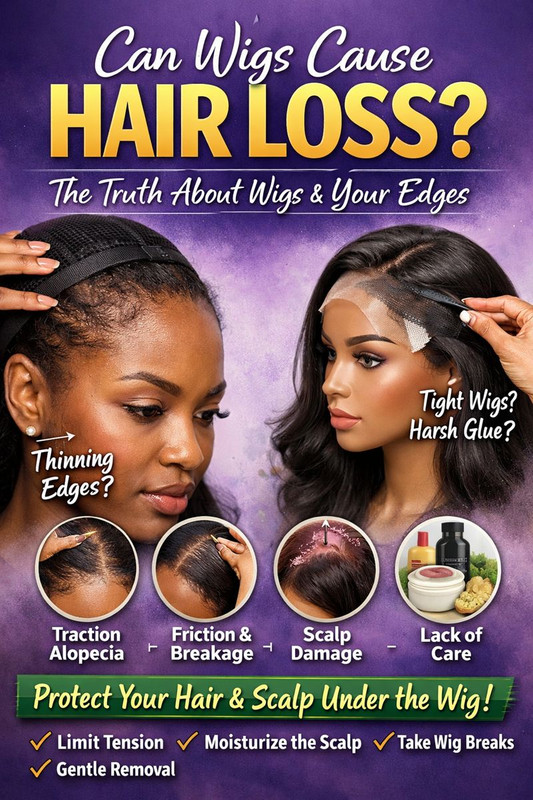
Wigs are everywhere right now—and for good reason. They’re convenient, stylish, protective, and give you the freedom to switch up your look without committing to heat, chemicals, or cuts. But if you’ve ever taken a wig off and noticed thinning edges, soreness, or excessive shedding, you’ve probably asked the big question:
Can wigs cause hair loss?
The short answer: yes, they can—but not automatically.
The long answer (the one that actually matters): it depends on how you wear them, how often, and what’s happening underneath the wig.
Let’s break this down properly—no scare tactics, no wig-shaming—just real scalp science and hair truth.
The Difference Between Hair Loss and Hair Damage (This Matters)
Before blaming wigs, it’s important to understand what kind of hair issue you’re experiencing.
Hair Loss
-
Involves damage to the hair follicle
-
Often shows up as thinning areas, bald spots, or edges that don’t grow back
-
Can be temporary or permanent depending on the cause
Hair Damage
-
Breakage, dryness, split ends
-
Hair still grows from the scalp
-
Usually reversible with proper care
Wigs don’t directly cause hair loss by themselves.
What they can cause is conditions that lead to hair loss if ignored.
How Wigs Can Contribute to Hair Loss
1. Traction Alopecia from Constant Tension
This is the #1 wig-related hair loss issue.
Traction alopecia happens when hair is under repeated tension over time. With wigs, that tension usually comes from:
-
Tight wig bands
-
Elastic straps pulling on edges
-
Wig clips snapping into fragile hairlines
-
Glued-down lace applied too far forward
Early signs:
-
Sore or tender edges
-
Small bumps along the hairline
-
Thinning temples
-
Edges that feel “weaker” than the rest of your hair
If traction continues long enough, follicles can become damaged—and regrowth becomes harder.
2. Friction + Dryness Under the Wig
Wigs create constant friction, especially when:
-
Hair is left loose underneath
-
No satin or silk barrier is used
-
Hair rubs against rough wig caps
Over time, friction:
-
Breaks hair strands
-
Dries out the hair shaft
-
Weakens edges and crown areas
Dry, brittle hair breaks easily—and chronic breakage looks like hair loss even when follicles are intact.
3. Scalp Neglect (Out of Sight, Out of Mind)
One of the sneakiest problems with wigs?
People stop caring for their real hair underneath.
Common mistakes:
-
Going weeks without washing the scalp
-
Product buildup clogging follicles
-
Ignoring itching or inflammation
-
Never moisturizing or sealing hair
A dirty, inflamed scalp creates the perfect environment for shedding and thinning, whether you wear wigs or not.
4. Wig Adhesives, Glues, and Improper Removal
Glue itself isn’t evil—but misuse is dangerous.
Problems happen when:
-
Strong adhesives are used daily
-
Glue is applied directly onto baby hairs
-
Wigs are ripped off instead of properly dissolved
-
Alcohol-based removers dry out the skin repeatedly
This combo can cause:
-
Edge thinning
-
Skin irritation
-
Inflammation that disrupts hair growth cycles
5. Lack of Oxygen & Poor Scalp Circulation
Your scalp needs:
-
Air
-
Blood flow
-
Moisture balance
Wearing wigs 24/7 without breaks can reduce circulation and trap heat, especially with tight caps. Over time, follicles can become sluggish—leading to slower growth and increased shedding.
Signs Your Wig Habit Is Hurting Your Hair
Pay attention if you notice:
-
Persistent itching or burning
-
Tender edges after removing wigs
-
Hairline receding unevenly
-
Increased shedding during wash days
-
Thinning at the crown or temples
-
Shiny scalp spots where hair used to grow
Catching these early makes a huge difference.
Are Wigs Ever Actually Protective?
Yes—when worn correctly, wigs can absolutely be protective.
A wig is protective when:
-
Hair underneath is moisturized and secured
-
Tension is minimal
-
Scalp is cleansed regularly
-
Breaks are taken between installs
-
Edges are left alone
The wig itself isn’t the issue—the routine is.
How to Wear Wigs Without Losing Your Hair
1. Prep the Hair Properly
Healthy hair under the wig = healthy hair long-term.
Best options:
-
Loose cornrows (not tight)
-
Flat twists
-
Low-tension braids
-
Satin-lined caps
Avoid:
-
Tiny, tight braids
-
Styles that pull at the hairline
-
Rubber bands near edges
2. Moisturize the Scalp Regularly
Your scalp still needs care—even when covered.
Aim for:
-
Light oils or scalp serums 2–3x per week
-
Water-based moisturizers before sealing
-
Gentle scalp massages to increase blood flow
Dry scalp = fragile follicles.
3. Choose the Right Wig Cap & Fit
Look for:
-
Adjustable straps (not overly tight)
-
No-comb or minimal-comb wigs
-
Silicone or velvet grip bands instead of tight elastics
-
Breathable lace
If your wig gives you a headache—it’s too tight.
4. Give Your Hair Breaks
This part is non-negotiable.
Try:
-
Wig-free days at home
-
Removing wigs nightly if possible
-
At least 1–2 weeks per month without glue
Your scalp needs time to breathe and reset.
5. Be Gentle with Adhesives
If you use glue:
-
Apply behind the hairline—not on baby hairs
-
Use proper adhesive removers
-
Never peel or rip wigs off
-
Clean the skin thoroughly afterward
Less glue = happier edges.
Can Wig-Related Hair Loss Grow Back?
It depends on the stage.
Early Stage Traction Alopecia
✅ Often reversible
✅ Hair can regrow with reduced tension and proper care
Long-Term or Advanced Traction Alopecia
⚠️ Regrowth may be slow or incomplete
⚠️ Some follicles may be permanently damaged
That’s why early intervention is everything.
What to Do If You Notice Thinning from Wigs
-
Stop tight styles immediately
-
Reduce wig wear temporarily
-
Focus on scalp health
-
Massage thinning areas daily
-
Avoid glue on affected spots
-
Be patient—regrowth takes time
Hair follicles respond to consistency, not panic.
Wigs Don’t Cause Hair Loss—Habits Do
Let’s be clear:
Wigs aren’t the villain. Poor tension control, neglect, and overuse are.
You can wear wigs for years and keep your edges—if you:
-
Respect your scalp
-
Prioritize moisture
-
Reduce tension
-
Listen to early warning signs
Hair loss isn’t random. It’s usually the scalp asking for help.
Final Thoughts: Wear the Wig, Protect the Crown
Wigs can be a tool—or a trap.
The difference comes down to education and care.
If you love wigs, you don’t have to give them up. Just wear them intentionally, not aggressively. Your hairline, crown, and future self will thank you.