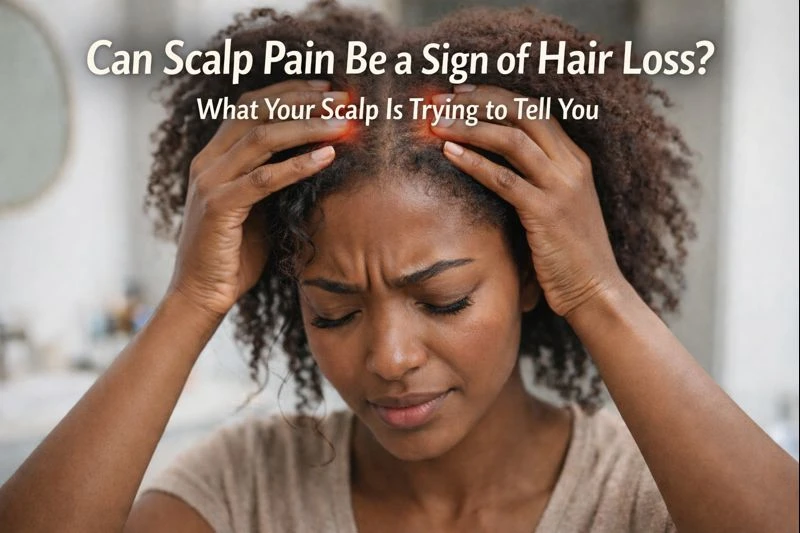
Can Scalp Pain Be a Sign of Hair Loss? What Your Scalp Is Trying to Tell Youe ask a deeper question once the discomfort sticks around:
Can scalp pain be a sign of hair loss?
Short answer: yes, it absolutely can be—but not always in the way people expect.
Scalp pain is often dismissed as stress, tight hairstyles, or “just sensitivity.” But your scalp is living tissue, filled with nerves, blood vessels, hair follicles, oil glands, and immune cells. When something disrupts that environment, pain can be one of the earliest warning signs that hair growth is being affected—or will be if nothing changes.
Let’s break down what scalp pain really means, when it’s linked to hair loss, and what you can do to stop the damage before it becomes permanent.
What Does Scalp Pain Feel Like?
Scalp pain doesn’t always show up the same way for everyone. It can feel like:
-
Tenderness or soreness when touched
-
A bruised or aching sensation
-
Burning, stinging, or tingling
-
Throbbing pain or pressure
-
Pain focused on one area (edges, crown, part)
-
Pain paired with itching, tightness, or flakes
Some people feel pain constantly, while others only notice it during styling, washing, or detangling. The key thing to understand is this:
Pain means inflammation or nerve irritation—and inflammation is one of the biggest enemies of healthy hair growth.
How the Scalp and Hair Growth Are Connected
Every hair strand grows from a follicle embedded deep in your scalp. For that follicle to produce strong, thick hair, it needs:
-
Proper blood flow
-
Oxygen and nutrients
-
Balanced oil and moisture
-
A calm, non-inflamed environment
When the scalp becomes inflamed, tight, or irritated, blood flow can decrease, follicles can weaken, and the hair growth cycle can become disrupted.
This is why scalp pain isn’t just uncomfortable—it can be a warning signal.
When Scalp Pain Is a Sign of Hair Loss
Here are the most common scenarios where scalp pain and hair loss are directly connected.
1. Scalp Inflammation (Silent Hair Killer)
Chronic inflammation is one of the top causes of gradual hair thinning.
Inflammation can come from:
-
Product buildup
-
Harsh shampoos
-
Allergic reactions
-
Autoimmune responses
-
Chronic dryness or imbalance
When inflammation is present, the scalp often feels:
-
Sore
-
Tight
-
Sensitive
-
Warm or tender
Over time, inflamed follicles shrink. Smaller follicles produce thinner hair—until eventually, they stop producing hair altogether.
Pain can show up before visible thinning, making it an early red flag.
2. Traction Alopecia (Pain Is a Major Clue)
If your scalp hurts in areas where hair is pulled tight—edges, nape, crown—it may be traction alopecia starting.
Common causes include:
-
Tight braids, ponytails, or buns
-
Wigs with tight bands
-
Sew-ins or extensions
-
Frequent slick styles
Pain, tenderness, or throbbing in these areas means follicles are under stress. If the pain continues, follicles can become damaged beyond repair.
Pain = pulling too hard for too long.
3. Scalp Tension and Reduced Blood Flow
Stress doesn’t just affect your mind—it affects your scalp.
Chronic stress can cause:
-
Muscle tension around the scalp
-
Reduced circulation
-
Tight, sore sensations
When blood flow is restricted, follicles don’t receive enough nutrients. This can push hair prematurely into the shedding phase (telogen).
Many people with stress-related hair loss report:
-
Scalp soreness
-
Tingling
-
A “tight cap” feeling
4. Folliculitis (Inflamed Hair Follicles)
Folliculitis occurs when hair follicles become infected or inflamed, often from bacteria, yeast, or clogged pores.
Symptoms include:
-
Painful bumps or pimples
-
Tender spots
-
Burning or stinging
-
Hair shedding around affected areas
When follicles are repeatedly inflamed, hair growth can slow or stop altogether in those areas.
5. Scalp Conditions That Damage Follicles
Certain scalp conditions cause pain and hair loss if untreated:
-
Seborrheic dermatitis
-
Psoriasis
-
Fungal infections
-
Lichen planopilaris (scarring alopecia)
Pain, itching, and soreness paired with excessive shedding or thinning should never be ignored.
Some conditions cause permanent follicle damage, making early intervention critical.
When Scalp Pain Is Not Directly Linked to Hair Loss
Not all scalp pain leads to hair loss—but it can still turn into a problem if ignored.
Examples include:
-
Temporary sensitivity from a new product
-
Mild dehydration of the scalp
-
Short-term tension headaches
-
Tight hairstyles worn once or twice
The difference is duration and frequency.
Occasional discomfort that resolves quickly is less concerning. Persistent pain lasting weeks or months is a sign something deeper is happening.
Why Scalp Pain Often Comes Before Hair Loss
Hair loss doesn’t happen overnight. Follicles weaken gradually.
Scalp pain often appears first because:
-
Nerves respond faster than hair changes
-
Inflammation irritates nerves early
-
Blood flow disruption causes discomfort before shedding
By the time thinning becomes visible, follicles may already be compromised.
Think of scalp pain as an early alarm, not the final outcome.
Areas of the Scalp Where Pain Is Most Concerning
Pay close attention if pain is concentrated in these areas:
-
Edges/hairline: often linked to traction alopecia
-
Crown: common with inflammation or hormonal changes
-
Part line: may signal tension, over-manipulation, or early thinning
-
One specific patch: could indicate folliculitis or localized inflammation
Localized pain is usually more serious than general tenderness.
Can Hair Grow Back If Scalp Pain Is Treated?
In many cases—yes, especially if caught early.
Hair regrowth depends on:
-
Whether follicles are still alive
-
How long inflammation has lasted
-
Whether scarring has occurred
If pain is addressed before follicles scar over, regrowth is often possible.
This is why ignoring scalp pain is risky—it reduces your window for recovery.
How to Relieve Scalp Pain and Protect Your Hair
1. Stop Tight Styles Immediately
If pain is linked to styling, loosen or remove the style. No hairstyle is worth permanent hair loss.
2. Cleanse the Scalp Properly
Buildup traps bacteria and inflammation. Use gentle, clarifying washes when needed and avoid harsh detergents.
3. Restore Moisture and Balance
A dry scalp can feel tight and painful. Hydration helps calm nerves and restore flexibility.
4. Improve Blood Circulation
-
Gentle scalp massage
-
Warm (not hot) water rinses
-
Light oils that support circulation
Avoid aggressive scratching or brushing.
5. Reduce Inflammation
Natural anti-inflammatory ingredients, stress management, and avoiding irritants all help calm the scalp environment.
6. Listen to Pain Signals
Pain is not something to “push through.” It’s feedback from your body asking for change.
When to See a Professional
Seek professional help if:
-
Pain lasts longer than 2–3 weeks
-
Pain is paired with rapid shedding
-
You notice bald spots or thinning
-
There are sores, pus, or severe itching
Early diagnosis can save follicles.
Final Thoughts: Your Scalp Is Talking—Are You Listening?
So, can scalp pain be a sign of hair loss?
Absolutely.
Not always—but often enough that it should never be ignored.
Scalp pain is your body’s way of saying:
-
Something is inflamed
-
Follicles are stressed
-
Growth conditions are being compromised
The good news? When you respond early, hair loss is often preventable—and sometimes reversible.
Healthy hair starts with a calm, nourished, pain-free scalp. If your scalp hurts, it’s not being dramatic—it’s being honest.
Listening now could save your hair later.