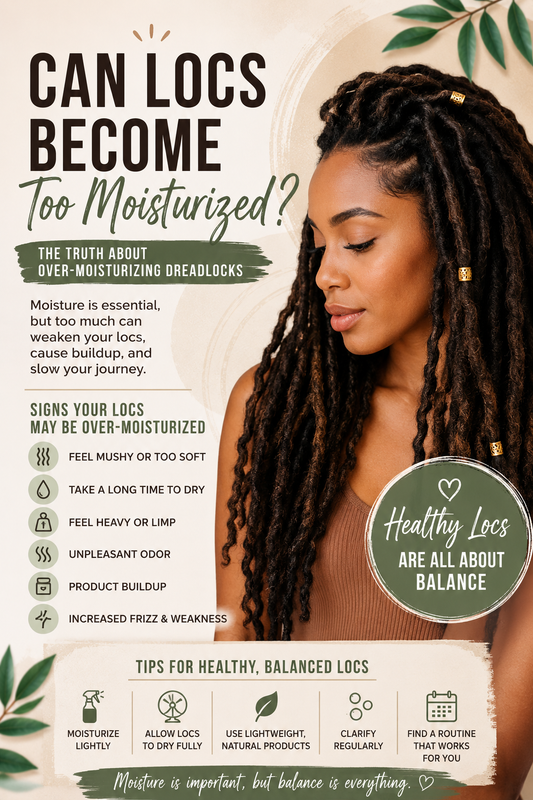
Most people with locs worry about dryness. Dry locs can become brittle, frizzy, dull, and prone to breakage. But there is another problem that many people overlook—over-moisturizing.
Yes, locs can absolutely become too moisturized.
While moisture is essential for healthy hair, too much moisture can weaken the structure of your locs, delay the locking process, encourage buildup, create unpleasant odors, and even increase breakage over time.
Healthy locs are all about balance.
The goal isn't soaking your hair with products every day. The goal is maintaining the right moisture level so your locs remain soft enough to prevent breakage while still being strong enough to hold their shape.
In this guide you'll learn:
- Can locs become too moisturized?
- Signs your locs have too much moisture
- What happens inside over-moisturized hair
- Common mistakes that cause moisture overload
- How to restore healthy balance
- The ideal moisturizing routine
- Best ingredients for loc health
- Frequently asked questions
The Science Behind Moisture in Locs
Hair is made primarily of keratin protein.
Protein gives hair:
- Strength
- Elasticity
- Shape
- Structure
Water softens these protein bonds temporarily.
This is why hair becomes flexible after washing.
However, when hair stays excessively wet or overloaded with moisturizing products for long periods, the protein structure weakens.
Think of cardboard.
Dry cardboard is sturdy.
Soak it in water for hours and it becomes soft, weak, and bends easily.
Hair behaves similarly.
Locs need moisture—but not endless moisture.
Yes—Locs Can Become Too Moisturized
Many people believe:
"The more moisturizer I use, the healthier my locs will be."
Unfortunately, this isn't true.
Over-moisturized locs often become:
- Mushy
- Weak
- Limp
- Slow to dry
- Heavy
- Puffy
- Fragile
Instead of strengthening your locs, excessive moisture may actually reduce their durability.
Why This Happens
Locs hold moisture much longer than loose hair.
Unlike straight hair, locs contain tightly packed strands.
Water becomes trapped inside.
When additional products are layered on top every day, moisture accumulates faster than it evaporates.
This creates a constant damp environment.
That environment isn't ideal.
Signs Your Locs Are Too Moisturized
Watch for these warning signs.
1. Your Locs Feel Mushy
Healthy locs feel:
- Firm
- Flexible
- Strong
Over-moisturized locs feel:
- Spongy
- Soft
- Squishy
- Puffy
If you squeeze your loc and it feels overly soft, moisture may be excessive.
2. They Never Fully Dry
Healthy locs usually dry within several hours depending on thickness.
If your locs remain damp:
- Overnight
- For an entire day
- Multiple days
You likely have moisture overload.
Constant dampness encourages problems.
3. Your Locs Feel Heavy
Water weighs a lot.
Excess moisture makes locs feel:
- Dense
- Heavy
- Sluggish
Heavy locs may also pull on your scalp.
4. Increased Frizz
Ironically, over-moisturized locs often become frizzier.
Soft hair escapes the loc more easily.
This leads to:
- Puffy roots
- Loose hairs
- Fuzzy appearance
5. Unpleasant Odor
One of the biggest warning signs.
Locs that stay damp may develop:
- Musty smells
- Mildew odors
- Sour scents
Healthy locs should smell clean.
6. Product Buildup
Too many creams and oils trap:
- Dirt
- Dust
- Sweat
- Lint
The result:
- Sticky locs
- Dull appearance
- White residue
7. Weak Hair
Hair that remains constantly moisturized may stretch excessively.
This reduces structural strength.
Eventually:
- Breakage increases.
- Ends thin.
- Weak spots develop.
Why New Locs Are Especially Vulnerable
Starter locs haven't fully matured.
Their internal structure is still forming.
Too much moisture may cause:
- Unraveling
- Puffiness
- Slower locking
- Frizz
During the early months, moderation is key.
Mature Locs Can Also Become Over-Moisturized
Mature locs are denser.
They absorb large amounts of water.
If repeatedly soaked without drying completely, they can experience:
- Internal buildup
- Odor
- Soft spots
- Weakened fibers
Age doesn't eliminate the risk.
Common Causes of Over-Moisturized Locs
Spraying Hair Multiple Times Daily
Many people mist their locs:
Morning.
Afternoon.
Night.
Every day.
Eventually, the moisture never leaves.
Sleeping With Wet Locs
Never go to bed with soaking wet locs.
The moisture remains trapped for hours.
This increases the risk of:
- Odor
- Bacteria
- Mildew
- Weakening
Using Too Many Leave-In Products
Locs don't need:
- Heavy creams
- Thick butters
- Excess lotions
These products accumulate inside the loc.
Washing Too Frequently
Daily washing isn't necessary for most people.
Constant saturation prevents the hair from resting.
Humid Climates
High humidity naturally adds moisture to hair.
People living in humid areas often require fewer moisturizing products.
Wearing Hats Immediately After Washing
Covered wet locs dry very slowly.
Air circulation matters.
What Happens Inside Wet Locs?
Imagine a sponge.
Water fills every space.
Now imagine wrapping the sponge tightly.
The center stays wet much longer.
That's similar to locs.
The inside often remains damp after the surface feels dry.
This hidden moisture causes many problems people don't notice until odors or buildup appear.
The Difference Between Healthy Moisture and Over-Moisture
Healthy moisture looks like:
- Flexible locs
- Soft but firm texture
- Easy movement
- Natural shine
- Clean scalp
Too much moisture looks like:
- Mushy texture
- Limp locs
- Puffy appearance
- Constant dampness
- Heavy feeling
- Slow drying
Balance is everything.
How Often Should You Moisturize Locs?
It depends on:
- Climate
- Hair thickness
- Activity level
- Porosity
- Lifestyle
Many people do well with:
2–4 light moisturizing sessions per week.
Others only need moisture after washing.
Your hair should guide your routine.
Best Way to Moisturize Locs
Instead of soaking them every day:
Step 1
Lightly mist with water.
Not dripping.
Just enough to refresh.
Step 2
Seal lightly if needed.
A small amount of lightweight oil can help reduce moisture loss.
Avoid heavy coatings.
Step 3
Allow complete drying.
Never trap moisture.
Ingredients That Work Well
Look for lightweight hydration.
Examples include:
- Aloe vera
- Rose water
- Distilled water
- Vegetable glycerin (used sparingly, especially in humid weather)
- Chamomile
- Peppermint
- Lavender
Avoid excessive amounts of:
- Petroleum
- Heavy waxes
- Thick grease
- Dense creams
Can Too Much Oil Cause Moisture Problems?
Indirectly—yes.
Oil itself doesn't hydrate hair.
However, excessive oil can:
- Trap existing moisture
- Slow drying
- Attract lint
- Increase buildup
Less is usually more.
How to Fix Over-Moisturized Locs
Stop Spraying Daily
Give your locs time to breathe.
Allow Complete Drying
After washing:
- Air dry in a well-ventilated space, or
- Use a hooded dryer or diffuser on a low setting if needed.
Never leave the interior of the locs damp for extended periods.
Clarify the Hair
A residue-removing shampoo occasionally helps eliminate buildup from excess products.
Reduce Heavy Products
Simpler routines often produce healthier locs.
Improve Airflow
Don't keep wet locs:
- Under scarves
- Inside hats
- Wrapped all day
The Best Moisture Routine
Morning
Light mist only if hair actually feels dry.
After Exercise
Allow sweat to evaporate.
Cleanse if necessary.
Dry thoroughly.
Wash Day
Cleanse.
Condition only if appropriate for your hair and routine.
Dry completely.
Evening
Avoid soaking hair before bed.
Can Over-Moisturizing Slow Hair Growth?
Over-moisturizing doesn't directly stop hair from growing from the scalp.
However, it may increase breakage and weaken the hair shaft.
If the hair breaks faster than it grows, it can seem like growth has stalled because you're not retaining length.
Healthy length retention depends on balancing moisture with overall hair care.
Best Routine for Active People
If you exercise daily:
- Wash as needed.
- Focus on drying thoroughly afterward.
- Avoid layering multiple moisturizing products on top of sweat.
- Keep your scalp clean without leaving the locs constantly damp.
Seasonal Moisture Tips
Summer
Humidity often provides extra moisture.
Use lighter products.
Winter
Indoor heating can dry hair.
Moisturize slightly more often while avoiding product overload.
Rainy Seasons
Dry your locs thoroughly after getting caught in the rain.
Myths About Moisturizing Locs
Myth 1: More Moisture Equals Faster Growth
False.
Hair growth begins in the scalp, not from how wet the locs stay.
Myth 2: Spray Every Day
Not always.
Some locs don't need daily hydration.
Myth 3: Oils Moisturize Hair
Oil helps reduce moisture loss but does not add water to the hair.
Hydration comes primarily from water-based moisture.
Myth 4: Damp Locs Are Healthy Locs
Healthy locs should not remain constantly damp.
They need time to dry between washes or moisturizing sessions.
Frequently Asked Questions
Can locs be too soft?
Yes. If they become overly soft, mushy, or lose firmness, they may have absorbed too much moisture or have significant product buildup.
Should I moisturize every day?
Not necessarily. Many people only need light moisture a few times each week. Adjust based on your climate, activity level, and how your locs feel.
Why do my locs smell after moisturizing?
If moisture is trapped inside the locs and they don't dry completely, odors can develop. Ensure thorough drying after washing or misting.
Can over-moisturizing cause mold?
Persistent dampness can encourage mildew or mold growth inside locs, especially if they stay wet for long periods. Drying completely after washing is one of the best ways to reduce this risk.
Is water enough?
For many people, a light water-based mist followed by proper drying is all that's needed. Product needs vary depending on your hair and environment.
Final Thoughts
So, can locs become too moisturized? Absolutely.
While hydration is essential for maintaining flexible, healthy locs, constant saturation and excessive product use can do more harm than good. Locs that remain damp, mushy, heavy, or slow to dry are often signaling that it's time to simplify your routine and let them fully dry between moisturizing sessions.
The healthiest locs strike a balance—they're clean, resilient, comfortably hydrated, and able to dry thoroughly after washing. Rather than chasing maximum moisture, aim for consistent, moderate care tailored to your hair type, climate, and lifestyle.
By focusing on gentle cleansing, lightweight hydration, complete drying, and avoiding heavy product buildup, you'll help your locs stay strong, healthy, and beautiful for years to come.