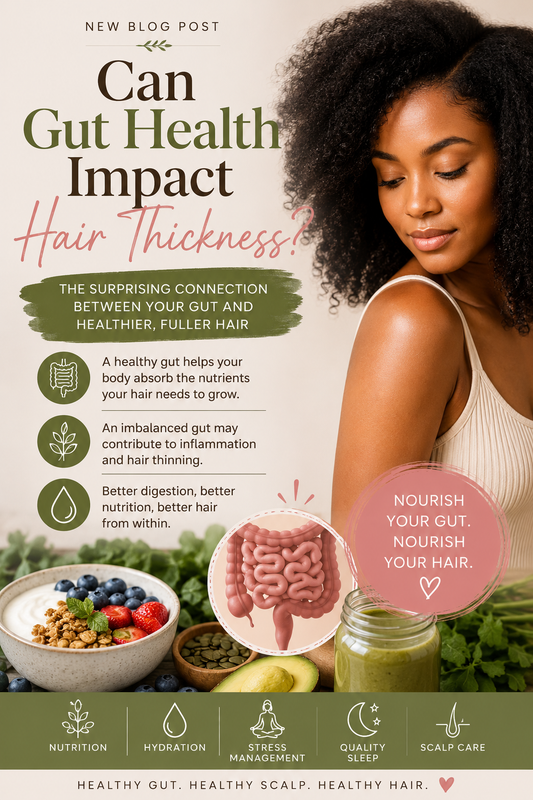
Have you noticed your hair becoming thinner even though you're using quality shampoos, conditioners, oils, and hair growth products? Many people focus entirely on what they apply to their hair while overlooking something that could be influencing hair health from the inside out—their gut.
Your digestive system does much more than break down food. Inside your gut lives a diverse community of beneficial bacteria known as the gut microbiome. These microorganisms help digest food, produce vitamins, regulate inflammation, support immune function, and assist your body in absorbing nutrients that hair follicles need to produce healthy strands.
When your gut is functioning well, your body is better equipped to deliver essential nutrients to your scalp and hair follicles. When it's out of balance, however, nutrient absorption may suffer, inflammation can increase, and your body may struggle to support healthy hair growth.
Although gut health is not the only factor that determines hair thickness—genetics, hormones, stress, age, and hair care habits all play important roles—it can be an important piece of the puzzle.
In this guide, you'll learn:
- What gut health really means
- How your digestive system may influence hair thickness
- The nutrients your hair depends on
- Common gut problems that can contribute to thinning hair
- Foods that support both digestive and hair health
- Lifestyle habits that improve your gut microbiome
- How to build a complete routine for fuller-looking hair
Let's explore the fascinating connection between your gut and your hair.
What Is Gut Health?
Gut health refers to how well your digestive system functions and how balanced your gut microbiome is.
Your gut contains trillions of microorganisms, including beneficial bacteria, fungi, and other microbes. While that may sound alarming, these organisms perform many essential jobs, including:
- Breaking down food
- Helping absorb vitamins and minerals
- Producing certain nutrients
- Supporting immune function
- Helping regulate inflammation
- Contributing to overall health
A healthy gut microbiome contains a wide variety of beneficial bacteria working together in balance.
Problems can arise when that balance is disrupted. Factors such as poor diet, chronic stress, inadequate sleep, certain medications, illness, and frequent antibiotic use may reduce beneficial bacteria while allowing less helpful microbes to become more dominant.
This imbalance is often called gut dysbiosis.
Why Hair Depends on Good Nutrition
Hair is made primarily of a protein called keratin. Producing keratin requires a steady supply of nutrients.
Your hair follicles are among the most metabolically active structures in your body. That means they constantly need fuel to support the hair growth cycle.
Some of the nutrients associated with healthy hair include:
Protein
Hair is composed mostly of protein. Without enough dietary protein, your body may prioritize other essential functions over hair production.
Iron
Iron helps transport oxygen throughout the body. Low iron stores have been linked with increased hair shedding in some individuals.
Zinc
Zinc supports normal cell growth and repair, including cells involved in hair production.
Vitamin D
Vitamin D plays a role in many bodily functions, including those related to the hair growth cycle.
Biotin
Biotin helps your body metabolize nutrients. True biotin deficiency is uncommon but can contribute to hair changes when present.
Omega-3 Fatty Acids
Healthy fats support skin and scalp health and may help maintain a healthy environment for hair.
Vitamin C
Vitamin C supports collagen production and helps improve iron absorption.
B Vitamins
Several B vitamins contribute to energy production and healthy cell function, both of which support growing hair.
The Gut-Hair Connection
At first glance, your stomach and your hair seem completely unrelated.
In reality, they're connected through several important pathways.
1. Nutrient Absorption
Even if you're eating nutritious foods, your body still has to absorb those nutrients effectively.
Your small intestine is responsible for absorbing vitamins, minerals, proteins, and healthy fats from the food you eat.
If nutrient absorption is impaired, your hair follicles may not receive everything they need to function optimally.
2. Inflammation
A healthy gut helps regulate the body's inflammatory response.
When the gut microbiome becomes imbalanced, inflammation may increase throughout the body. Persistent inflammation can affect many systems, including the scalp and hair follicles.
While inflammation alone doesn't always cause hair thinning, chronic inflammation may create conditions that are less supportive of healthy hair growth.
3. Immune System Support
About 70% of the immune system is associated with the gut.
Because the immune system and inflammation are closely connected, maintaining a healthy gut may contribute to overall scalp wellness.
4. Hormone Regulation
The gut microbiome may influence how the body processes certain hormones.
Hormonal balance is important because hormones play a major role in:
- Hair growth
- Hair shedding
- Scalp oil production
- Hair thickness
Although hormones are regulated by many organs and systems, gut health may indirectly contribute to maintaining overall balance.
Can Poor Gut Health Lead to Thinner Hair?
Poor gut health doesn't automatically cause thin hair.
However, digestive issues may contribute to conditions that make healthy hair growth more difficult.
Potential mechanisms include:
- Reduced nutrient absorption
- Increased inflammation
- Changes in the gut microbiome
- Lower production of certain beneficial compounds
- Reduced availability of vitamins needed for hair production
Hair follicles require continuous nourishment. If your body isn't getting or absorbing what it needs, hair may become weaker over time.
Signs Your Gut May Need More Support
Some signs that may indicate your digestive system could benefit from attention include:
- Frequent bloating
- Excess gas
- Constipation
- Diarrhea
- Food sensitivities
- Frequent stomach discomfort
- Feeling sluggish after meals
- Irregular digestion
- Persistent fatigue
- Difficulty maintaining energy levels
These symptoms don't necessarily mean your gut health is affecting your hair, but they may be worth discussing with a healthcare professional if they persist.
Why Hair Thickness Changes Over Time
Hair thickness is influenced by many different factors, including:
- Genetics
- Aging
- Hormonal changes
- Stress
- Diet
- Sleep quality
- Medical conditions
- Hair care practices
- Heat styling
- Chemical treatments
- Tight hairstyles
- Overall scalp health
- Gut health
This is why improving just one area may not completely transform hair. A holistic approach often produces the best long-term results.
The Hair Growth Cycle
Understanding the hair growth cycle helps explain why changes in health—including nutrition and gut health—may take time to show visible results.
Every hair follicle goes through four stages:
Anagen (Growth Phase)
This is the active growth stage, which can last anywhere from two to seven years. Hair grows steadily during this phase.
Catagen (Transition Phase)
The follicle shrinks and prepares to stop growing.
Telogen (Resting Phase)
Hair remains in place while the follicle rests.
Exogen (Shedding Phase)
The old hair sheds, making room for a new strand.
Because this cycle unfolds over several months, improvements in nutrition, scalp care, or gut health are unlikely to produce overnight changes. Consistency is key.
How the Gut Microbiome Supports Hair Health
Your gut microbiome is made up of trillions of microorganisms that work together to keep your digestive system functioning properly. While these microbes are tiny, their impact on your overall health—including your hair—can be significant.
A balanced microbiome helps your body:
- Digest food efficiently
- Absorb vitamins and minerals
- Produce certain nutrients
- Support immune function
- Maintain healthy inflammation levels
- Protect the intestinal lining
When your microbiome is thriving, your body is generally better equipped to provide hair follicles with the nutrients they need to produce healthy strands.
The Gut-Inflammation-Hair Connection
Inflammation is your body's natural response to injury or illness. Short-term inflammation is helpful because it supports healing.
The problem occurs when inflammation becomes chronic.
Poor diet, lack of sleep, ongoing stress, smoking, excess alcohol, and an imbalanced gut microbiome can all contribute to long-term inflammation.
Chronic inflammation may:
- Reduce nutrient availability
- Affect scalp health
- Increase oxidative stress
- Disrupt normal hair growth cycles
Hair follicles perform best in a healthy environment. Reducing unnecessary inflammation supports your body's ability to maintain healthy hair.
Leaky Gut: What Does It Mean?
You may have heard the phrase "leaky gut."
This term refers to increased intestinal permeability, where the lining of the intestines may become more permeable than normal.
Research into this area is ongoing, but scientists believe that maintaining a healthy intestinal barrier plays an important role in overall wellness.
Supporting gut health through a balanced diet, hydration, and healthy lifestyle habits may help maintain normal digestive function.
Nutrients Your Gut Helps Deliver to Hair Follicles
Protein
Hair is made primarily of keratin, a structural protein.
Without adequate protein intake and digestion, hair may become weaker over time.
Good sources include:
- Fish
- Chicken
- Turkey
- Eggs
- Greek yogurt
- Lentils
- Beans
- Tofu
Iron
Iron helps deliver oxygen throughout the body, including to hair follicles.
Low iron stores have been associated with increased hair shedding in some people.
Good sources include:
- Lean beef
- Spinach
- Lentils
- Pumpkin seeds
- Beans
Pair plant-based iron with foods rich in vitamin C to improve absorption.
Zinc
Zinc supports normal cell division and tissue repair, making it important for healthy hair follicles.
Foods rich in zinc include:
- Pumpkin seeds
- Beef
- Chickpeas
- Cashews
- Oysters
Omega-3 Fatty Acids
Healthy fats nourish both the scalp and skin.
Sources include:
- Salmon
- Sardines
- Walnuts
- Chia seeds
- Flaxseed
Vitamin D
Vitamin D contributes to many body functions, including healthy hair follicle activity.
Food sources include:
- Fatty fish
- Egg yolks
- Fortified dairy products
Sunlight also helps your body produce vitamin D.
Biotin
Biotin assists in energy metabolism and supports healthy hair, skin, and nails.
Natural sources include:
- Eggs
- Almonds
- Sweet potatoes
- Sunflower seeds
Vitamin C
Vitamin C supports collagen production and improves iron absorption.
Eat plenty of:
- Oranges
- Strawberries
- Kiwi
- Bell peppers
- Broccoli
Best Foods for Gut Health and Hair Thickness
Instead of focusing on one "superfood," build meals around a variety of nutrient-rich foods.
Fermented Foods
These foods naturally contain beneficial bacteria.
Examples include:
- Yogurt with live cultures
- Kefir
- Kimchi
- Sauerkraut
- Miso
Fiber-Rich Foods
Fiber feeds beneficial gut bacteria.
Choose:
- Oats
- Apples
- Pears
- Beans
- Lentils
- Berries
- Broccoli
Colorful Vegetables
Different colors provide different antioxidants.
Aim to eat:
- Spinach
- Kale
- Sweet potatoes
- Carrots
- Bell peppers
- Tomatoes
Healthy Fats
Healthy fats support scalp moisture and reduce dryness.
Examples include:
- Avocados
- Olive oil
- Nuts
- Seeds
Lean Protein
Hair follicles require amino acids every day.
Include:
- Chicken
- Turkey
- Fish
- Eggs
- Beans
- Lentils
Foods That May Disrupt Gut Health
No single food causes hair thinning, but diets high in ultra-processed foods may contribute to poor overall health.
Try limiting excessive amounts of:
- Sugary beverages
- Highly processed snacks
- Deep-fried foods
- Excess alcohol
- Excess added sugars
Focus on balance rather than perfection.
Can Probiotics Help Hair Growth?
Probiotics are live microorganisms that may help support a balanced gut microbiome.
Some early research suggests probiotics may support overall wellness, but evidence directly linking probiotics to thicker hair is still limited.
They may be worth considering as part of a healthy lifestyle, especially if recommended by your healthcare provider.
Natural probiotic foods include:
- Yogurt
- Kefir
- Kimchi
- Sauerkraut
- Kombucha
Don't Forget Prebiotics
Prebiotics are fibers that feed beneficial bacteria.
Think of them as fertilizer for your gut microbiome.
Excellent sources include:
- Garlic
- Onions
- Bananas
- Oats
- Asparagus
- Chicory root
- Leeks
Eating both probiotics and prebiotics helps create a healthier digestive environment.
Hydration Matters More Than You Think
Water supports:
- Digestion
- Nutrient absorption
- Circulation
- Skin hydration
- Scalp hydration
Aim to drink water consistently throughout the day.
If your urine is consistently dark yellow, you may need more fluids.
The Stress-Gut-Hair Cycle
Stress doesn't just affect your mind—it affects your digestive system too.
Long-term stress may:
- Alter gut bacteria
- Slow digestion
- Increase inflammation
- Influence hormone balance
- Contribute to increased hair shedding in susceptible individuals
Reducing stress benefits both gut health and hair health.
Healthy stress-management techniques include:
- Walking
- Meditation
- Prayer
- Deep breathing
- Journaling
- Exercise
- Spending time outdoors
- Quality sleep
Sleep Is a Hair Growth Superpower
Poor sleep affects:
- Hormone regulation
- Recovery
- Immune function
- Digestion
- Stress hormones
Adults should generally aim for 7–9 hours of quality sleep each night.
Sleep allows your body to repair itself—including the tissues involved in healthy hair growth.
Exercise Benefits Both Gut and Hair
Regular movement improves:
- Blood circulation
- Insulin sensitivity
- Stress management
- Digestive function
- Overall health
Better circulation helps deliver oxygen and nutrients throughout the body, including to the scalp.
You don't need intense workouts to see benefits.
Even:
- Walking
- Cycling
- Dancing
- Swimming
- Strength training
can support overall wellness.
Digestive Conditions That May Affect Hair Health
Certain digestive conditions can make it harder for the body to absorb the nutrients needed for healthy hair growth. While not everyone with these conditions experiences hair thinning, they may increase the risk if nutrient deficiencies develop.
Examples include:
- Celiac disease
- Inflammatory bowel diseases (such as Crohn's disease and ulcerative colitis)
- Chronic diarrhea
- Persistent malabsorption disorders
- Some gastrointestinal surgeries
If you have ongoing digestive symptoms along with noticeable hair thinning, it's important to speak with a healthcare provider for proper evaluation and treatment.
Common Myths About Gut Health and Hair Thickness
Myth #1: Taking a Probiotic Will Instantly Make Your Hair Thicker
Truth: Probiotics may support a healthy gut microbiome, but there is no evidence that they produce immediate or guaranteed increases in hair thickness. Hair growth takes time and depends on many factors.
Myth #2: Hair Products Alone Can Fix Thin Hair
Truth: Healthy-looking hair is influenced by both internal and external care. A consistent hair care routine, balanced nutrition, good scalp health, and healthy lifestyle habits all work together.
Myth #3: Hair Thinning Always Means You Have Gut Problems
Truth: Hair thinning can result from genetics, aging, hormonal changes, stress, nutritional deficiencies, illness, medications, or hairstyling practices. Gut health is just one possible factor.
Myth #4: One "Superfood" Will Transform Your Hair
Truth: No single food can dramatically change your hair overnight. Consistency with a balanced diet and healthy habits is far more important.
A Daily Routine for Supporting Gut Health and Hair Thickness
Morning
- Drink a glass of water after waking up.
- Eat a protein-rich breakfast with fiber, such as eggs with whole-grain toast and fruit or Greek yogurt with berries and oats.
- Include healthy fats like avocado or nuts.
- If recommended by your healthcare provider, take supplements with breakfast.
Afternoon
- Stay hydrated throughout the day.
- Include lean protein and colorful vegetables with lunch.
- Add fiber-rich foods such as beans, brown rice, or quinoa.
- Take a short walk after eating to support digestion.
Evening
- Choose a balanced dinner with vegetables, protein, and healthy fats.
- Limit heavy, high-sugar meals close to bedtime.
- Wind down with a relaxing routine to help reduce stress.
Nighttime Hair Care
Healthy hair also depends on how you care for it while you sleep.
Consider these habits:
- Sleep on a satin or silk pillowcase.
- Wear a satin bonnet or scarf.
- Avoid sleeping with soaking wet hair.
- Gently detangle before bed if needed.
- Keep hairstyles loose enough to avoid unnecessary tension.
- Moisturize your hair as needed based on your hair type.
Why Scalp Care Still Matters
Even with excellent nutrition, a healthy scalp remains essential for healthy-looking hair.
A clean, well-maintained scalp helps create an environment where hair can thrive.
Good scalp care includes:
- Washing your scalp regularly based on your hair type and lifestyle.
- Removing product buildup.
- Avoiding excessive scratching.
- Massaging the scalp gently during cleansing.
- Using products that help maintain moisture and support scalp comfort.
Supporting Your Hair Routine with Hairobics Hair & Scalp Booster
While nutrition and gut health support hair from within, topical hair care products can complement a consistent routine by helping maintain a healthy-feeling scalp and conditioned hair.
Hairobics Hair & Scalp Booster is designed to be part of a complete hair care regimen. When used consistently alongside a balanced diet, healthy lifestyle habits, and proper scalp care, it can help support your overall hair care goals.
For best results:
- Apply consistently according to the product directions.
- Massage gently into the scalp.
- Pair with a healthy diet rich in protein, vitamins, and minerals.
- Stay hydrated and prioritize sleep.
- Minimize excessive heat and tight hairstyles.
Remember, no product can overcome poor overall health on its own. Healthy hair is often the result of consistent habits practiced over time.
Frequently Asked Questions (FAQ)
Can gut health really affect hair thickness?
It may. A healthy digestive system helps your body absorb nutrients that support normal hair growth and overall scalp health. Hair thickness, however, is influenced by many factors, including genetics, hormones, age, and hair care practices.
How long does it take to notice changes in hair?
Hair grows slowly. It may take several months of consistent healthy habits before changes in hair appearance become noticeable.
What foods are best for thicker-looking hair?
Focus on protein-rich foods, colorful fruits and vegetables, healthy fats, whole grains, nuts, seeds, and foods rich in iron and zinc.
Can stress affect both gut health and hair?
Yes. Chronic stress can influence digestion, sleep, hormone balance, and the normal hair growth cycle.
Should I take probiotics for hair growth?
Probiotics may support digestive health, but evidence that they directly increase hair thickness is still limited.
Is drinking more water good for hair?
Hydration supports overall health, including skin and scalp health, which contributes to healthier-looking hair.
Does sugar affect hair?
A diet high in added sugars may contribute to overall inflammation and poor nutrition, which can indirectly affect hair health.
Is biotin enough to make hair thicker?
Biotin helps only if you have a deficiency. Most people benefit more from an overall balanced diet than from a single nutrient.
Can poor digestion cause hair shedding?
Digestive issues that reduce nutrient absorption may contribute to hair shedding in some individuals. If you experience ongoing digestive symptoms or significant hair loss, consult a healthcare professional.
What lifestyle habits support thicker hair?
Eat a balanced diet, stay hydrated, exercise regularly, manage stress, sleep well, avoid excessive heat styling, and maintain a healthy scalp care routine.
Final Thoughts
Your hair reflects many aspects of your overall health, and your digestive system is one piece of that larger picture. While gut health isn't the sole determinant of hair thickness, a well-functioning digestive system helps your body absorb the nutrients needed to support healthy hair growth.
Pairing a nutrient-rich diet with regular exercise, quality sleep, stress management, and consistent scalp care creates the best foundation for stronger, healthier-looking hair over time.
Whether you're caring for natural hair, curls, coils, braids, or locs, remember that healthy hair starts from within—and is strengthened by the habits you practice every day.
Ready to Support Your Hair From the Inside Out?
If you're looking to build a complete healthy hair routine, combine balanced nutrition, proper scalp care, and consistent moisturizing with Hairobics Hair & Scalp Booster. Together with healthy lifestyle habits, it can help you care for your scalp and maintain stronger, healthier-looking hair over time.
Visit www.hairobicsallnatural.com to explore the full Hairobics collection and discover products designed to nourish your hair care routine naturally.