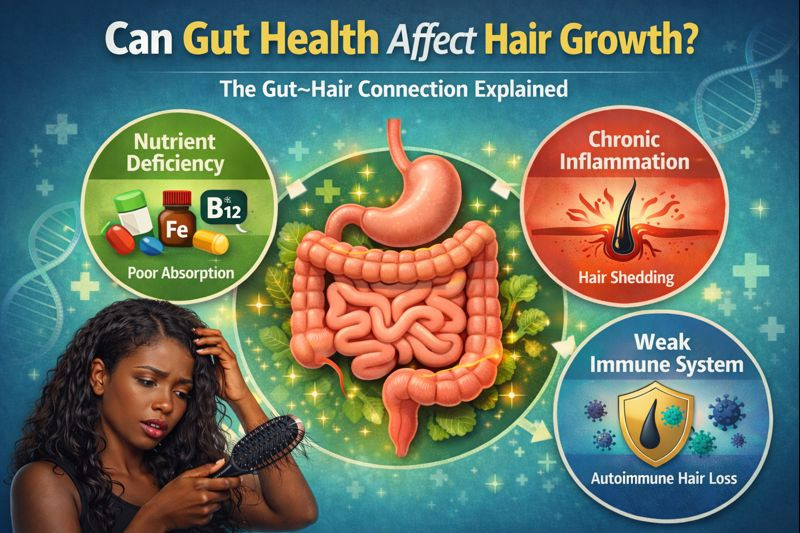
Hair growth is often treated as a surface-level issue—something to fix with oils, shampoos, supplements, or protective styles. But for many people struggling with thinning hair, slow growth, excessive shedding, or scalp inflammation, the real issue may not start on the scalp at all.
It may begin in the gut.
In recent years, scientists and health professionals have uncovered a powerful connection between gut health and hair growth. The digestive system doesn’t just process food—it regulates nutrient absorption, hormone balance, immune response, and inflammation. When the gut is compromised, hair is often one of the first places the body shows it.
This article breaks down exactly how gut health affects hair growth, the warning signs your gut may be impacting your hair, and what you can do to restore balance from the inside out.
What Is Gut Health?
Gut health refers to how well your gastrointestinal system functions—especially the balance of bacteria living in your intestines, known as the gut microbiome.
Your gut microbiome contains trillions of microorganisms, including beneficial bacteria that help:
-
Digest food
-
Absorb nutrients
-
Regulate inflammation
-
Support the immune system
-
Balance hormones
When these bacteria are healthy and diverse, the body thrives. When they’re imbalanced—a condition called gut dysbiosis—problems can arise throughout the body, including in the hair and scalp.
The Gut–Hair Axis: How Your Digestive System Impacts Hair Growth
Hair follicles are highly sensitive to internal stress. They require a steady supply of nutrients, oxygen, and hormonal balance to stay in the growth phase (anagen). Gut issues disrupt all three.
1. Poor Nutrient Absorption Starves Hair Follicles
Even if you eat a nutrient-rich diet, an unhealthy gut may prevent your body from absorbing what your hair needs to grow.
Common gut-related nutrient deficiencies include:
-
Iron
-
Zinc
-
Biotin
-
Vitamin B12
-
Vitamin D
-
Protein and amino acids
Hair follicles are non-essential tissues in survival terms. When nutrients are scarce, the body redirects them to vital organs first—leaving hair growth compromised.
Result: slow growth, excessive shedding, thinning edges, and brittle strands.
2. Chronic Gut Inflammation Triggers Hair Shedding
An unhealthy gut often leads to systemic inflammation. This low-grade, chronic inflammation travels through the bloodstream and can reach the scalp.
Inflammation around hair follicles can:
-
Shorten the hair growth cycle
-
Push hair into the shedding phase (telogen)
-
Irritate the scalp
-
Worsen conditions like dandruff, psoriasis, and alopecia
This is why people with inflammatory gut conditions often experience diffuse hair loss rather than localized breakage.
3. Gut Health Directly Influences Hormones
Your gut plays a major role in regulating hormones—especially estrogen and cortisol.
Estrogen Imbalance
Certain gut bacteria help metabolize and eliminate excess estrogen. When these bacteria are disrupted, estrogen can build up or fluctuate unpredictably.
Hormonal imbalance may cause:
-
Hair thinning at the crown
-
Postpartum-style shedding
-
Texture changes
-
Increased breakage
Cortisol and Stress
Poor gut health can increase cortisol (the stress hormone). Elevated cortisol restricts blood flow to hair follicles and disrupts the growth cycle.
Chronic stress + gut dysfunction = chronic shedding.
4. Gut Dysbiosis Weakens the Immune System
About 70% of your immune system lives in your gut. When gut bacteria are out of balance, the immune system may become overactive.
This can trigger autoimmune-related hair conditions such as:
-
Alopecia areata
-
Scalp inflammation
-
Sudden patchy hair loss
Even without autoimmune disease, immune overactivation can create scalp sensitivity and follicle damage over time.
Signs Your Gut Health May Be Affecting Your Hair
You don’t need digestive pain to have gut issues. Many people with hair problems have silent gut dysfunction.
Common warning signs include:
-
Excessive hair shedding with no clear cause
-
Hair thinning despite a good hair routine
-
Slow growth or hair that “won’t retain length”
-
Dry, brittle, or weak strands
-
Scalp itching or inflammation
-
Bloating or gas
-
Constipation or diarrhea
-
Food sensitivities
-
Frequent fatigue or brain fog
If hair problems appear alongside digestive symptoms, the gut–hair connection is worth investigating.
Gut Conditions Commonly Linked to Hair Loss
Certain gut-related conditions are especially known for affecting hair health.
Leaky Gut Syndrome
Leaky gut occurs when the intestinal lining becomes permeable, allowing toxins and undigested food particles into the bloodstream.
This can trigger:
-
Systemic inflammation
-
Nutrient malabsorption
-
Immune activation
Hair follicles often suffer as a result.
Irritable Bowel Syndrome (IBS)
IBS can interfere with nutrient absorption and increase stress hormones, both of which negatively impact hair growth.
Small Intestinal Bacterial Overgrowth (SIBO)
SIBO occurs when bacteria overgrow in the small intestine, leading to malabsorption of iron, B vitamins, and protein—all essential for hair.
Chronic Antibiotic Use
Antibiotics wipe out both harmful and beneficial gut bacteria. Repeated or long-term use can significantly disrupt the microbiome, sometimes leading to hair shedding months later.
How Gut Health Affects Different Hair Types
Natural and Textured Hair
Curly and coily hair types already struggle with moisture retention. Nutrient deficiencies caused by gut issues can worsen dryness, breakage, and thinning at the edges.
Relaxed or Chemically Treated Hair
Compromised gut health can slow regrowth and reduce the hair’s ability to recover after chemical processing.
Aging Hair
As gut diversity decreases with age, hair often becomes thinner, drier, and slower-growing unless gut health is actively supported.
How to Improve Gut Health for Better Hair Growth
The good news? Gut health is highly responsive to lifestyle changes. Supporting your digestive system can create noticeable improvements in hair growth over time.
1. Eat for Gut Diversity
A diverse microbiome thrives on a diverse diet.
Focus on:
-
Leafy greens
-
Colorful vegetables
-
Fruits rich in fiber
-
Legumes
-
Whole grains
-
Nuts and seeds
Fiber feeds beneficial bacteria, helping them produce compounds that reduce inflammation and support nutrient absorption.
2. Incorporate Gut-Friendly Foods
Certain foods actively support gut repair:
-
Fermented foods (yogurt, kefir, sauerkraut, kimchi)
-
Bone broth (supports gut lining integrity)
-
Omega-3 rich foods (salmon, flaxseeds, walnuts)
These foods reduce inflammation and strengthen the gut barrier.
3. Reduce Inflammatory Triggers
Common gut irritants include:
-
Excess sugar
-
Ultra-processed foods
-
Excess alcohol
-
Artificial sweeteners
Reducing these allows the gut lining to heal, improving nutrient uptake for hair follicles.
4. Manage Stress Intentionally
Stress alters gut bacteria within hours. Chronic stress keeps the gut in a constant inflammatory state.
Helpful practices include:
-
Walking
-
Breathwork
-
Meditation
-
Adequate sleep
Lower stress = healthier gut = stronger hair growth signals.
5. Support Digestion Properly
If digestion is weak, nutrients won’t reach the hair.
Helpful habits:
-
Eat slowly
-
Chew thoroughly
-
Avoid eating late at night
-
Stay hydrated
Some people also benefit from digestive enzymes or probiotics under professional guidance.
How Long Does It Take for Gut Health to Affect Hair Growth?
Hair growth is delayed compared to internal healing.
-
Gut improvements may occur within weeks
-
Reduced shedding often follows in 2–3 months
-
Visible regrowth may take 3–6 months
Consistency is key. Hair responds slowly but reliably once the internal environment improves.
Can Topical Hair Products Fix Gut-Related Hair Issues?
Topical products can support the scalp environment, but they cannot correct internal imbalances alone.
If gut health is the root cause:
-
Oils may improve circulation
-
Scalp treatments may reduce inflammation
-
Moisturizers may reduce breakage
However, true regrowth requires internal repair. Combining internal gut support with external scalp care delivers the best results.
When to Seek Professional Help
If hair loss is severe or sudden, consider consulting:
-
A healthcare provider
-
A registered dietitian
-
A trichologist
Testing for nutrient deficiencies, gut conditions, or hormonal imbalances can provide clarity and speed up recovery.
Final Thoughts: Healthy Hair Starts in the Gut
Hair is not just a beauty feature—it’s a biological signal. When the gut is inflamed, nutrient-deficient, or stressed, hair growth often suffers quietly until shedding becomes noticeable.
Improving gut health won’t deliver overnight miracles, but it creates the foundation for long-term hair growth, thickness, and scalp health.
If your hair feels like it’s fighting you no matter what you apply topically, the answer may not be another product—it may be healing from within.