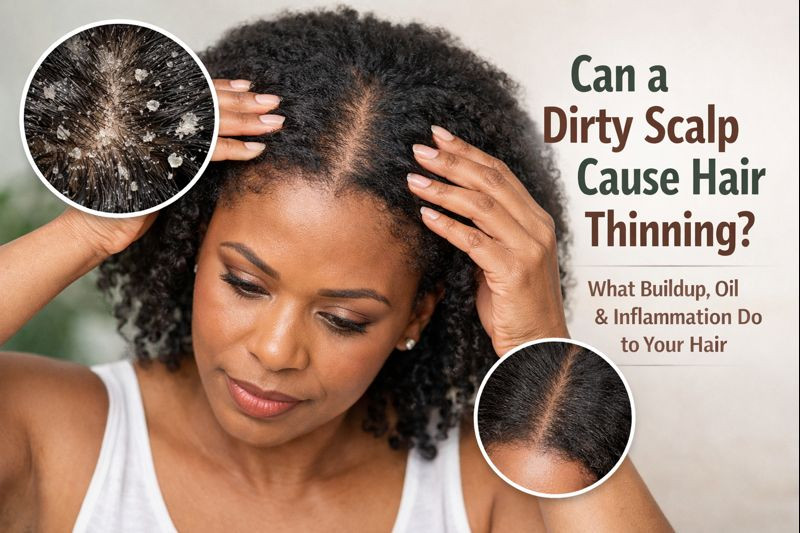
If you’ve noticed your hair looking thinner—especially around the crown, part line, or edges—you might immediately blame genetics, hormones, or “just stress.” But there’s a sneaky, underrated factor that can absolutely contribute to thinning: a scalp that’s clogged, inflamed, and not being cleansed well enough.
To be clear, a “dirty scalp” doesn’t magically make follicles disappear overnight. But buildup, excess oil, sweat, product residue, and flaky debris can create the perfect environment for inflammation, blocked follicles, and disrupted growth—especially if you’re prone to dandruff, seborrheic dermatitis, folliculitis, or traction issues.
In this guide, we’ll break down:
-
What “dirty scalp” really means
-
How buildup can lead to shedding and thinning
-
Signs your scalp hygiene is hurting your growth
-
The fastest routine to reset your scalp
-
A natural, scalp-first regimen (with Hairobics-friendly steps)
What Does “Dirty Scalp” Actually Mean?
A dirty scalp isn’t just about going too long between washes. It can mean:
-
Product buildup (oils, butters, gels, edge control, dry shampoo, heavy leave-ins)
-
Sebum overload (your natural scalp oil mixed with residue)
-
Sweat + bacteria (workouts, hats/wigs, humid weather)
-
Dead skin cell buildup (flaking, dullness, itch)
-
Hard water minerals (calcium/magnesium deposits that coat the scalp and hair)
Even if your hair looks “fine,” your scalp can still be coated. And when the scalp is coated, follicles don’t thrive.
Think of it like gardening: you can’t expect a plant to grow well if the soil is compacted, crusty, and inflamed.
How a Dirty or Clogged Scalp Can Contribute to Hair Thinning
1) Buildup can clog follicle openings and disrupt the growth cycle
Each strand grows from a follicle opening. When that opening is repeatedly coated with oils, waxes, silicones, and debris, it can contribute to:
-
follicle congestion
-
mini inflammation around the follicle
-
weaker anchoring at the root
-
more shedding during detangling and washing
This doesn’t mean the follicle is “sealed shut forever,” but chronic congestion can keep your scalp in a stressed state—leading to more breakage at the base and increased shedding.
2) Inflammation is the real enemy of thickness
Hair follicles are sensitive. When your scalp is irritated long-term—itchy, flaky, tender, or oily—your body sends inflammatory signals.
Inflammation can:
-
push more hairs into the telogen (resting/shedding) phase
-
slow healthy growth signals
-
worsen scalp conditions like dandruff, dermatitis, or folliculitis
If your scalp frequently feels “hot,” sore, itchy, or tight, that’s not just annoying—it’s a red flag.
3) Excess oil + yeast overgrowth can trigger flaking and shedding
Many people with thinning also struggle with persistent dandruff. One common cause is seborrheic dermatitis, where a yeast (Malassezia) feeds on scalp oils and triggers inflammation and flakes.
When oil builds up, yeast tends to thrive. The result:
-
greasy flakes
-
itch
-
scalp irritation
-
more shedding (and sometimes noticeable thinning)
4) Folliculitis can mimic thinning
If your scalp gets bumps, tenderness, or “pimples,” you may be dealing with folliculitis—inflamed follicles often driven by bacteria, yeast, sweat, occlusion, or heavy product use.
Folliculitis can cause:
-
shedding around irritated areas
-
slow regrowth
-
scalp sensitivity
-
patchy-looking density
Ignoring it and continuing heavy oils on top of it can make it worse.
5) Buildup makes breakage more likely
Sometimes what looks like “thinning” is actually breakage caused by:
-
dryness underneath buildup (yes, you can be oily AND dry)
-
weak roots from inflammation
-
poor slip during detangling
-
buildup that makes hair rough and snaggy
If you see short hairs everywhere, frayed ends, or hair that “won’t retain length,” scalp health may be involved.
Dirty Scalp vs. Real Hair Loss: How to Tell the Difference
A dirty scalp can worsen thinning, but it’s important to recognize when you might be dealing with a medical or hormonal root cause.
Thinning that may be scalp-hygiene related
-
Hair feels heavier at the roots, but dry on ends
-
Itchy scalp that improves after washing
-
Flakes that return quickly
-
Greasy scalp within 24–48 hours
-
More shedding when buildup is heavy
-
Hair looks “flat” and sparse at the part line due to oiliness
Thinning that may require medical support
-
Sudden heavy shedding lasting 3+ months (possible telogen effluvium)
-
Bald patches or smooth spots (possible alopecia areata)
-
Burning, pain, or scarring scalp areas (possible scarring alopecia—see a dermatologist ASAP)
-
Thinning with major fatigue, weight changes, or menstrual changes (possible thyroid/hormonal issues)
If you suspect something deeper, it’s still smart to fix scalp health—but also consider seeing a dermatologist or clinician.
Signs Your Scalp Is Too Dirty (Even If You Wash “Sometimes”)
If you’re experiencing 3 or more of these, your scalp likely needs a reset:
-
Your scalp smells “sour” or musty after a day or two
-
You have flakes that don’t go away with oil
-
Your scalp is itchy or tight after styling
-
You get bumps around your hairline, nape, or crown
-
Your hair is thinning at the crown or part and feels oily quickly
-
Your hair products “stop working” after a few days
-
Your hair sheds more when you finally wash
-
Your scalp has a waxy, coated feeling when you scratch it
How Often Should You Wash for Hair Growth?
There’s no one perfect schedule. The best routine depends on your scalp type, activity level, and styling habits.
General guidelines
-
Oily scalp / dandruff / frequent sweating: every 2–4 days
-
Normal scalp: every 5–7 days
-
Dry scalp (true dryness, not buildup): every 7–10 days
-
Protective styles (braids, twists, wigs): cleanse scalp every 7–10 days (sometimes more often)
If you’re using a lot of oils/butters on your scalp, you’ll likely need to cleanse more often—not less.
The “Scalp Reset” Routine (Fastest Way to Reverse Buildup-Related Thinning)
If your hair is thinning and your scalp is itchy, flaky, oily, or congested, do this for 2–4 weeks to reset.
Step 1: Pre-cleanse (5–10 minutes)
This is not about heavy oiling. This is about loosening residue.
Options:
-
Warm water rinse + gentle finger massage
-
A light, scalp-friendly pre-cleanse spray (water-based)
-
If you use oils, use a small amount and avoid smothering the scalp
Tip: Use the pads of your fingers—not nails.
Step 2: Cleanse twice (the “double cleanse” rule)
-
First cleanse: breaks down oil and product residue
-
Second cleanse: actually cleans the scalp skin
If your shampoo doesn’t foam the first time, that’s usually buildup talking.
Step 3: Treat the scalp (not the hair)
This is where you support follicles.
Look for:
-
soothing botanicals
-
lightweight oils (not thick grease)
-
scalp hydration (water-based first)
-
anti-inflammatory ingredients
Step 4: Keep your scalp breathable between washes
If you smother the scalp daily with heavy oils, it’s like putting a blanket over your follicles.
Instead:
-
hydrate with a light spray
-
seal lightly if needed
-
focus oils on ends, not always the scalp
A Natural, Growth-Supporting Routine Using Hairobics
Here’s a practical routine you can use immediately. Adjust wash frequency based on oiliness and flakes.
Wash Day (1–2x per week for most people)
-
Cleanse thoroughly
-
Focus on the scalp, not the hair length.
-
-
Condition and detangle
-
Keep heavy conditioners mostly on mid-lengths and ends.
-
-
Scalp support
-
Apply Hairobics Hair & Scalp Booster in sections to a clean scalp.
-
Massage gently for 2–3 minutes to increase circulation and help distribution.
-
-
Moisture + protection
-
Use a lightweight leave-in (like your Hairobics Leave-In Treatment) on hair strands.
-
If needed, seal ends lightly.
-
Between Washes (2–4 days per week)
-
If your scalp gets dry or itchy:
-
use a light hydration mist (water-based)
-
apply a small amount of Hair & Scalp Booster only where needed (not your whole scalp daily)
-
-
If your scalp gets oily quickly:
-
avoid adding more oils
-
focus on keeping the scalp clean and breathable
-
Protective Styles (braids/twists/wigs)
-
Cleanse scalp every 7–10 days
-
Use a scalp applicator bottle to target the scalp
-
Avoid heavy grease and waxy edge products that build up fast
-
Apply Hair & Scalp Booster lightly 2–3x per week (not daily)
Mistakes That Keep a Dirty Scalp Thinning Your Hair
Mistake 1: “Oiling” flakes instead of cleansing them
If your scalp is flaky because of yeast/dandruff or buildup, oiling can sometimes feed the problem. Flakes need cleansing + calming, not constant coating.
Mistake 2: Going too long between washes while using heavy products
If you wear gels, edge control, thick butters, or multiple layers of product, you can’t treat your scalp like it’s product-free.
Mistake 3: Scratching with nails
This creates micro-injuries and more inflammation.
Mistake 4: Ignoring tender spots, bumps, or persistent itching
These are inflammation signals. If bumps persist, consider medical guidance.
Mistake 5: Dirty tools
Brushes, combs, scarves, wig caps, and pillowcases collect oil and product residue. Clean them regularly.
Quick FAQs
Can a dirty scalp cause permanent hair loss?
Usually, no—not by itself. But if buildup contributes to chronic inflammation or worsens conditions like seborrheic dermatitis or folliculitis, it can contribute to ongoing thinning and slow regrowth. Scarring conditions are different and require medical care.
Why do I shed more when I finally wash my hair?
Some shedding is normal. When you wait longer between washes, shed hairs simply accumulate and come out all at once. But if the amount is extreme and ongoing, scalp inflammation or stress triggers may be involved.
Is it better to wash more often for growth?
If your scalp is oily, flaky, itchy, or you sweat often—yes, washing more consistently can support a healthier growth environment. Clean scalp = calmer follicles.
What if my scalp is oily but my hair is dry?
That usually means:
-
your scalp produces oil quickly
-
your ends aren’t getting moisture
-
buildup may be blocking hydration and making hair rough
Solution: cleanse scalp regularly, hydrate strands, seal ends lightly.
The Bottom Line: Clean Scalp = Better Growth Conditions
So—can a dirty scalp cause hair thinning? It can absolutely contribute.
Not because dirt “kills follicles,” but because buildup and poor cleansing often lead to inflammation, clogged follicles, itching, flakes, and breakage. The fastest path back to thickness is simple:
-
Cleanse consistently (based on your scalp type)
-
Reduce heavy buildup products
-
Treat the scalp after washing
-
Keep the scalp breathable between washes
-
Support follicles with a gentle, natural routine