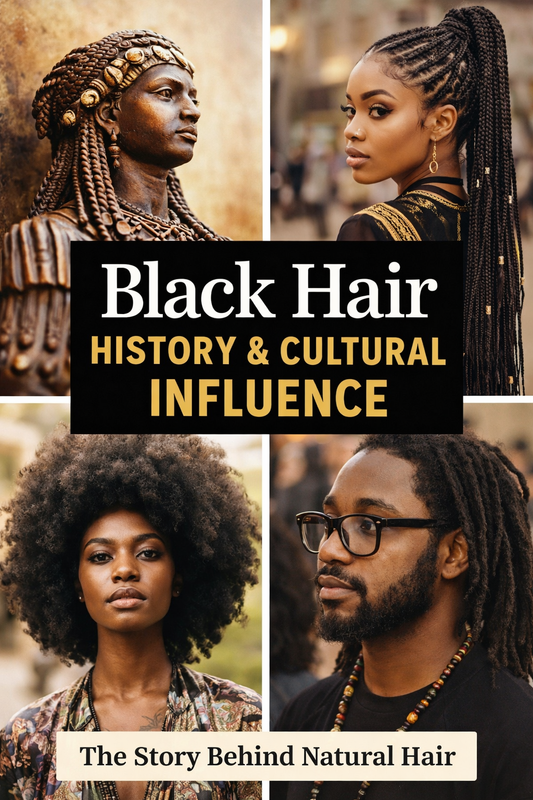
Black hair is more than texture, curls, coils, or styles — it is a powerful symbol of identity, heritage, resistance, and creativity. From ancient African civilizations to modern natural hair movements, Black hair has carried deep cultural meaning and social significance.
Understanding Black hair history and cultural influence helps explain why natural hair care is not just about beauty — it's about self-expression, history, pride, and empowerment.
In this in-depth guide, you'll learn:
-
The origins of Black hair culture in Africa
-
How slavery changed Black hair traditions
-
The evolution of Black hairstyles in America
-
The Civil Rights natural hair movement
-
Modern natural hair culture
-
The meaning behind braids, locs, and afros
-
How Black hair continues to shape global culture
This article is designed to rank for search terms like:
-
Black hair history
-
Black hair culture
-
African hair traditions
-
History of natural hair
-
Cultural significance of Black hair
-
Evolution of Black hairstyles
The Origins of Black Hair Culture in Africa
Black hair culture began thousands of years ago in ancient African civilizations. Hair was never just cosmetic — it communicated social identity, spirituality, and status.
Hair styles revealed:
-
Tribe or ethnic group
-
Age
-
Marital status
-
Religion
-
Wealth
-
Social rank
In many African societies, hairdressing was considered a sacred act. Only trusted family members or skilled stylists were allowed to touch someone's hair.
The head was believed to be the most spiritual part of the body, connecting a person to higher powers and ancestors.
Traditional African Hairstyles
Common styles included:
-
Intricate braids
-
Threaded hair
-
Twists
-
Locs
-
Sculpted shapes
-
Decorative beads and shells
Each style had meaning.
For example:
-
Young girls often wore simple braids
-
Married women wore elaborate styles
-
Warriors wore distinctive patterns
-
Royal families wore complex designs
Hair functioned as a living cultural language.
The Impact of Slavery on Black Hair Traditions
The transatlantic slave trade disrupted African hair traditions dramatically.
Enslaved Africans were often forced to shave their heads, stripping them of identity and cultural connection.
This was intentional.
Hair represented:
-
Heritage
-
Community
-
Individual identity
Removing hair symbolized erasing culture and autonomy.
Survival Through Hair
Despite oppression, enslaved Africans preserved hair traditions.
They used available materials such as:
-
Butter
-
Animal fat
-
Plant oils
-
Cornmeal mixtures
Braiding became especially important.
Braids served practical purposes:
-
Low maintenance during forced labor
-
Protection from harsh conditions
Some historians believe braided patterns were used to:
-
Map escape routes
-
Store seeds for survival
Hair became a tool for resistance and survival.
Post-Slavery Hair Culture (1800s–Early 1900s)
After emancipation, many Black Americans faced pressure to assimilate into Eurocentric beauty standards.
Straight hair became associated with:
-
Employment opportunities
-
Social acceptance
-
Respectability
This period saw the rise of hot combs and early relaxers.
Madam C.J. Walker and Black Hair Entrepreneurship
One of the most influential figures in Black hair history was Madam C.J. Walker, the first self-made female millionaire in America.
She developed:
-
Hair treatments
-
Scalp products
-
Training programs
Her work helped create the modern Black hair industry.
Walker promoted:
-
Hair health
-
Economic independence
-
Black entrepreneurship
Her legacy continues today in the natural hair industry.
The Straight Hair Era
For decades, straightened hair dominated Black beauty standards.
Popular methods included:
-
Hot comb pressing
-
Chemical relaxers
-
Pomades
-
Hair greases
These methods allowed Black women and men to navigate a society that often discriminated based on appearance.
Straight hair was often seen as:
-
Professional
-
Acceptable
-
"Neat"
But maintaining straight hair required:
-
Frequent heat
-
Chemical treatments
-
Heavy oils
These practices often caused breakage and scalp damage.
The Civil Rights Era and the Afro Revolution
The 1960s and 1970s marked a major shift in Black hair culture.
Natural hair became a symbol of:
-
Freedom
-
Political resistance
-
Cultural pride
The Afro emerged as one of the most iconic hairstyles in history.
The Meaning of the Afro
The Afro represented:
-
Rejection of Eurocentric beauty standards
-
Pride in African heritage
-
Political awareness
It became associated with the phrase:
"Black is Beautiful."
Activists, artists, and intellectuals embraced natural hair as part of cultural liberation.
The Rise of Braids and Protective Styling
Protective styles have always been part of Black hair culture, but their popularity surged in the late 20th century.
Common styles include:
-
Box braids
-
Cornrows
-
Twists
-
Locs
-
Crochet styles
Protective styling helps:
-
Reduce breakage
-
Retain moisture
-
Preserve length
These styles also carry deep cultural meaning rooted in African traditions.
The Natural Hair Movement (2000–Present)
The modern natural hair movement began in the early 2000s and accelerated through social media.
More Black women began embracing:
-
Natural curls
-
Coils
-
Afros
-
Locs
-
Twist-outs
-
Wash-and-gos
Why the Natural Hair Movement Grew
Several factors contributed:
1. Internet Education
Online forums and YouTube tutorials taught:
-
Hair science
-
Moisture techniques
-
Protective styling
2. Health Concerns
Many people wanted to avoid:
-
Harsh chemicals
-
Frequent relaxers
-
Heat damage
3. Cultural Pride
Natural hair became a form of identity and empowerment.
The Cultural Meaning of Black Hairstyles
Black hairstyles carry deep symbolism.
Braids
Braids represent:
-
Heritage
-
Community
-
Tradition
Braiding is often a social activity passed down through generations.
Locs
Locs represent:
-
Spirituality
-
Discipline
-
Identity
Many cultures see locs as sacred.
Afros
Afros symbolize:
-
Self-acceptance
-
Cultural pride
-
Strength
Twists and Natural Styles
These styles reflect:
-
Modern natural hair culture
-
Hair health awareness
-
Texture appreciation
Black Hair and Workplace Discrimination
Black hair has historically been subject to discrimination.
Natural styles have often been labeled:
-
Unprofessional
-
Untidy
-
Extreme
Many Black employees were pressured to change their hair to keep jobs.
The CROWN Act
The CROWN Act (Creating a Respectful and Open World for Natural Hair) was introduced to prevent hair discrimination.
The law protects hairstyles such as:
-
Afros
-
Braids
-
Locs
-
Twists
The CROWN Act represents a major step toward equality.
Black Hair and Identity
For many people, Black hair is deeply tied to identity.
Hair reflects:
-
Culture
-
Personality
-
Lifestyle
-
Heritage
Changing hairstyles can mark:
-
Life transitions
-
Personal growth
-
Cultural exploration
Natural hair journeys often become self-discovery journeys.
The Science Behind Black Hair Texture
Black hair is structurally unique.
It typically features:
-
Elliptical strands
-
Tight curl patterns
-
Natural dryness
-
High shrinkage
These characteristics make Black hair:
-
Beautifully textured
-
Highly versatile
-
Delicate
Understanding this structure helps people care for hair properly.
Global Influence of Black Hair Culture
Black hair culture influences global fashion and beauty trends.
Styles that originated in African communities are now worn worldwide.
Examples include:
-
Braids
-
Locs
-
Edge styling
-
Baby hairs
-
Twist styles
-
Bantu knots
Celebrities and stylists have helped bring Black hair styles into mainstream culture.
Black hair culture continues to shape:
-
Fashion
-
Music
-
Social media
-
Beauty industries
The Natural Hair Economy
The natural hair industry is worth billions of dollars.
Products include:
-
Oils
-
Butters
-
Leave-in conditioners
-
Growth treatments
-
Styling creams
Black-owned brands are increasingly important in the industry.
Consumers want:
-
Natural ingredients
-
Healthy hair solutions
-
Authentic brands
The natural hair movement has created major business opportunities.
Why Black Hair Requires Specialized Care
Black hair tends to:
-
Lose moisture quickly
-
Tangle easily
-
Break under stress
Healthy Black hair care focuses on:
Moisture
Hydrated hair resists breakage.
Scalp Health
Healthy follicles support growth.
Protection
Low manipulation preserves length.
Gentle Handling
Reduced tension prevents damage.
The Future of Black Hair Culture
Black hair culture continues evolving.
Future trends include:
-
Ingredient transparency
-
Scalp-focused care
-
Protective style innovation
-
Custom routines
-
Texture-specific products
Technology and education are making healthy hair more achievable than ever.
Why Black Hair History Matters Today
Understanding Black hair history helps people:
-
Appreciate cultural roots
-
Make informed hair decisions
-
Build confidence
-
Preserve traditions
Black hair represents:
-
Survival
-
Creativity
-
Pride
-
Strength
It tells a story that stretches across centuries.
Final Thoughts
Black hair history is a story of culture, resilience, and identity. From ancient African braiding traditions to the modern natural hair movement, Black hair has remained a powerful expression of heritage and individuality.
Today, natural hair is more accepted and celebrated than ever before, but its significance goes far beyond beauty. Black hair connects people to ancestors, traditions, and community.
Healthy natural hair begins with understanding — and when you understand the history and meaning behind Black hair, caring for it becomes more intentional and powerful.
Black hair is not just hair.
It is history you can see and culture you can wear.