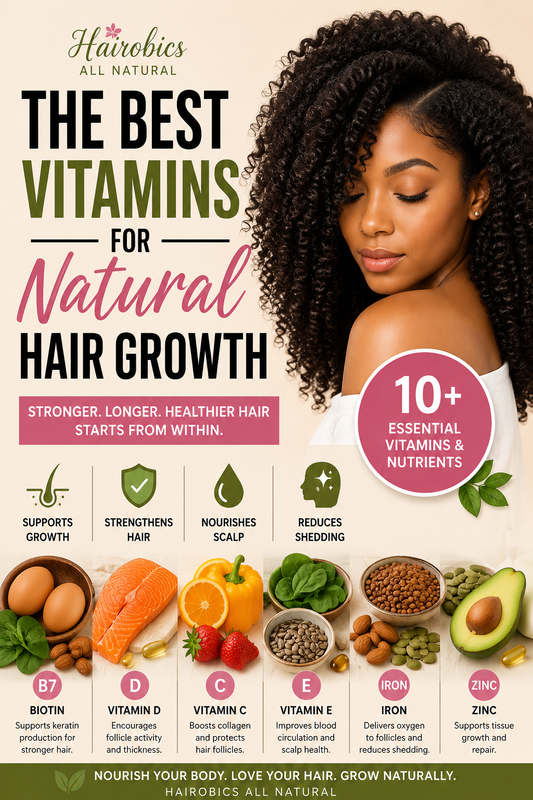
Introduction
If you've been trying to grow your natural hair longer, thicker, and healthier, you've probably heard people talk about vitamins for hair growth. While products, oils, protective styles, and healthy hair routines all play important roles, the truth is that hair growth starts from within.
Your hair follicles require nutrients to produce strong, healthy strands. When your body lacks essential vitamins and minerals, your hair may become weak, dry, brittle, thin, or grow more slowly than normal.
For many women and men with natural hair, vitamin deficiencies can contribute to:
- Excessive shedding
- Slow hair growth
- Thinning edges
- Dry scalp
- Breakage
- Weak strands
- Poor length retention
The good news is that the right vitamins can support healthy hair growth from the inside out.
In this guide, we'll explore the best vitamins for natural hair growth, how they work, signs you may be deficient, and how to create a nutrient-rich routine that supports stronger hair naturally.
How Hair Growth Works
Before discussing vitamins, it's important to understand how hair grows.
Hair grows in three main stages:
Anagen Phase
This is the active growth phase.
Hair grows approximately:
- ½ inch per month
- 6 inches per year
This phase can last between 2 and 7 years.
Catagen Phase
A short transition stage where growth slows.
Telogen Phase
The resting phase.
Hair eventually sheds and new hair begins growing.
Healthy vitamin levels help maximize the growth potential of the anagen phase.
Why Vitamins Matter for Hair Growth
Hair follicles are among the most active cells in the body.
They require:
- Oxygen
- Amino acids
- Vitamins
- Minerals
- Healthy fats
Without adequate nutrients, your body prioritizes vital organs over hair growth.
As a result, hair often becomes one of the first areas where nutritional deficiencies appear.
Vitamin #1: Biotin
Biotin is one of the most popular hair growth vitamins.
Also known as:
- Vitamin B7
- Vitamin H
Biotin helps the body convert food into energy and supports keratin production.
Keratin is the primary protein that makes up your hair.
Benefits of Biotin
- Supports stronger strands
- Helps reduce breakage
- Supports healthy scalp function
- Improves hair elasticity
- May enhance thickness in deficient individuals
Foods Rich in Biotin
- Eggs
- Almonds
- Sweet potatoes
- Salmon
- Spinach
- Avocados
Signs of Biotin Deficiency
- Hair thinning
- Brittle hair
- Skin irritation
- Fatigue
Vitamin #2: Vitamin D
Many people experiencing hair thinning have low vitamin D levels.
Vitamin D helps regulate hair follicle cycling and supports new follicle development.
Benefits
- Encourages follicle activity
- Supports thicker growth
- May help reduce excessive shedding
- Supports scalp health
Sources
- Sunlight
- Fatty fish
- Egg yolks
- Fortified dairy products
Signs of Deficiency
- Hair shedding
- Fatigue
- Muscle weakness
- Low mood
Many people with natural hair spend less time exposing their scalp to sunlight due to protective styles, making vitamin D especially important.
Vitamin #3: Vitamin A
Vitamin A helps produce sebum.
Sebum is the scalp's natural oil that moisturizes hair and protects follicles.
Benefits
- Supports scalp hydration
- Helps prevent dryness
- Supports cell growth
Food Sources
- Sweet potatoes
- Carrots
- Spinach
- Kale
- Pumpkin
Important Warning
Too much vitamin A can actually contribute to hair loss.
Balance is key.
Vitamin #4: Vitamin C
Vitamin C is a powerful antioxidant.
It protects hair follicles from oxidative stress while supporting collagen production.
Benefits
- Supports collagen formation
- Helps strengthen hair shafts
- Improves iron absorption
- Protects follicles from damage
Rich Sources
- Oranges
- Strawberries
- Kiwi
- Bell peppers
- Broccoli
Without adequate vitamin C, hair can become weak and more prone to breakage.
Vitamin #5: Vitamin E
Vitamin E helps improve circulation and protects scalp tissues.
Benefits
- Supports blood flow
- Protects follicles
- Helps maintain scalp health
- Supports moisture retention
Food Sources
- Almonds
- Sunflower seeds
- Avocados
- Spinach
Many people also use vitamin E oil externally to support healthy hair.
Vitamin #6: Iron
Technically a mineral, iron is one of the most important nutrients for hair growth.
Iron helps red blood cells carry oxygen throughout the body.
Hair follicles depend heavily on oxygen.
Benefits
- Supports growth
- Reduces shedding caused by deficiency
- Supports stronger follicles
Sources
- Lean meats
- Spinach
- Lentils
- Beans
- Pumpkin seeds
Signs of Iron Deficiency
- Hair loss
- Fatigue
- Dizziness
- Weakness
Iron deficiency is particularly common among women.
Vitamin #7: Zinc
Zinc plays a major role in hair tissue growth and repair.
Benefits
- Supports follicle function
- Helps scalp healing
- Supports protein synthesis
- May reduce shedding
Sources
- Oysters
- Beef
- Pumpkin seeds
- Chickpeas
Deficiency can lead to:
- Hair thinning
- Slow growth
- Scalp issues
Vitamin #8: Folate
Folate is also known as vitamin B9.
It supports healthy cell division.
Since hair follicles constantly produce new cells, folate is essential.
Benefits
- Supports follicle growth
- Helps strengthen roots
- Supports overall scalp health
Sources
- Leafy greens
- Lentils
- Beans
- Avocados
Vitamin #9: Vitamin B12
Vitamin B12 helps form red blood cells and supports oxygen delivery.
Benefits
- Supports healthy follicles
- Reduces deficiency-related shedding
- Supports scalp health
Sources
- Fish
- Meat
- Eggs
- Dairy products
Vegans and vegetarians are more likely to develop deficiencies.
Vitamin #10: Omega-3 Fatty Acids
Omega-3s are essential fats that support healthy hair and scalp function.
Benefits
- Reduces dryness
- Supports scalp health
- May improve shine
- Supports stronger hair
Sources
- Salmon
- Sardines
- Chia seeds
- Flaxseeds
- Walnuts
Protein: The Foundation of Hair Growth
Hair is primarily made of protein.
Without enough protein, even the best vitamins won't be enough.
Best Protein Sources
- Chicken
- Fish
- Eggs
- Greek yogurt
- Lentils
- Beans
Protein deficiencies often cause:
- Breakage
- Shedding
- Slow growth
Signs Your Hair May Need More Nutrients
Watch for:
Excessive Shedding
Large amounts of hair loss may indicate deficiencies.
Weak Hair
Hair snaps easily.
Thinning Edges
Nutritional issues can contribute to fragile hairlines.
Slow Growth
Hair seems stuck at the same length.
Dry Hair
Persistent dryness despite moisturizing.
Best Foods for Natural Hair Growth
The healthiest approach is getting nutrients through food whenever possible.
Hair Growth Plate
Include:
- Lean protein
- Vegetables
- Fruits
- Healthy fats
- Whole grains
Examples:
Breakfast
Eggs with spinach and avocado.
Lunch
Grilled salmon with vegetables.
Dinner
Chicken, sweet potatoes, and greens.
Snacks
- Almonds
- Walnuts
- Fruit
- Greek yogurt
Do Hair Vitamins Really Work?
Hair vitamins work best when:
- A deficiency exists
- Diet needs improvement
- Hair loss is nutrition-related
However, vitamins are not magic.
They cannot:
- Instantly grow hair
- Reverse genetic hair loss
- Fix severe damage overnight
Consistency is crucial.
Most people need:
- 3 to 6 months
- Sometimes 12 months
To notice meaningful improvements.
Common Hair Growth Mistakes
Taking Too Many Supplements
More isn't always better.
Excess vitamins can cause problems.
Ignoring Diet
Supplements should complement healthy eating.
Not Drinking Enough Water
Hydration affects hair health.
Expecting Overnight Results
Hair growth requires patience.
Vitamins and Protective Styles
Protective styles help retain growth, but follicles still require nutrients.
Whether you wear:
- Locs
- Braids
- Twists
- Wigs
- Natural curls
Vitamins remain important.
Healthy follicles produce stronger strands regardless of style choice.
Vitamins for Loc Growth
People growing locs often benefit from:
- Biotin
- Vitamin D
- Zinc
- Iron
- Omega-3s
These nutrients help support:
- Strong roots
- Reduced breakage
- Length retention
Vitamins for Thinning Edges
When edges become thin, nutrients may help if deficiencies are involved.
Focus on:
- Iron
- Vitamin D
- Zinc
- Biotin
- Protein
Combine nutritional support with gentle styling practices.
Lifestyle Habits That Support Hair Growth
Exercise
Improves circulation.
Sleep
Hair repair happens during rest.
Aim for:
- 7–9 hours nightly
Stress Management
Chronic stress can increase shedding.
Try:
- Walking
- Meditation
- Prayer
- Journaling
Hydration
Drink adequate water daily.
Creating the Ultimate Hair Growth Routine
Combine:
Internal Support
- Healthy diet
- Vitamins
- Hydration
External Support
- Gentle cleansing
- Deep conditioning
- Scalp care
- Protective styling
Growth Protection
- Satin bonnet
- Satin pillowcase
- Reduced heat styling
This combination produces the best long-term results.
Natural Hair Growth FAQ
Which Vitamin Is Best for Hair Growth?
There is no single best vitamin.
The most important include:
- Biotin
- Vitamin D
- Iron
- Zinc
- Vitamin C
How Long Before Vitamins Work?
Usually:
- 3–6 months
Consistency matters.
Can Vitamins Regrow Hair?
They may help if deficiencies contribute to hair thinning.
Are Gummies Effective?
Many gummies contain useful nutrients, but check ingredient amounts carefully.
Can You Take Multiple Hair Vitamins?
Only if they don't exceed recommended daily levels.
Final Thoughts
Healthy natural hair growth begins from within. While oils, protective styles, and quality hair products can support your journey, your follicles still require essential nutrients to produce strong, healthy strands.
Biotin, vitamin D, vitamin C, vitamin E, zinc, iron, folate, vitamin B12, omega-3 fatty acids, and adequate protein all play important roles in supporting healthy hair growth.
If your goal is longer natural hair, thicker edges, stronger locs, healthier braids, or improved length retention, focus on nourishing your body consistently. Pair a nutrient-rich diet with a healthy hair care routine and patience.
Over time, these habits can help create the ideal environment for stronger, healthier, and more resilient natural hair growth.
For more natural hair growth tips, scalp care advice, and healthy hair routines, visit Hairobics All Natural and continue your journey toward stronger, healthier hair naturally.