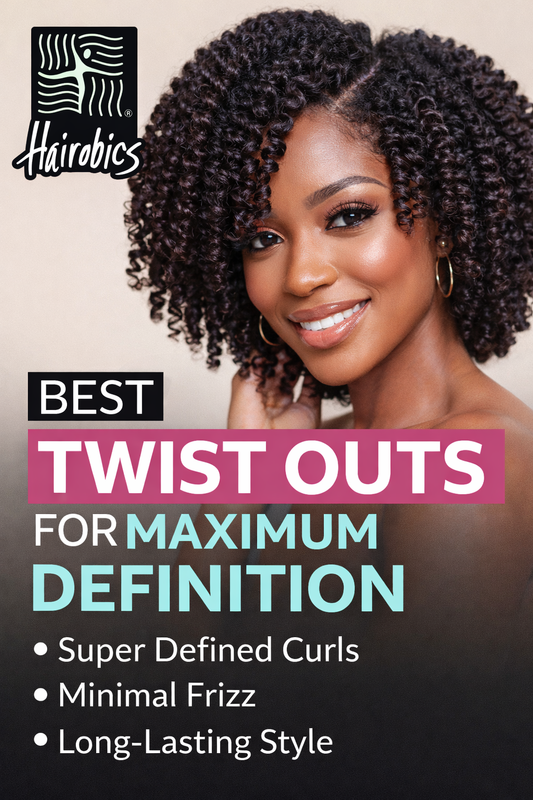
A twist out is one of the most reliable ways to achieve defined, soft, and healthy curls on natural hair. When done correctly, a twist out can transform frizzy or undefined hair into uniform coils, elongated curls, and smooth texture with minimal breakage.
But not all twist outs produce the same results.
Some twist outs look fluffy but undefined. Others shrink too much. Some unravel into frizz within hours.
The best twist outs for maximum definition use the right preparation, the right products, and the right twisting method.
This complete guide explains:
-
How twist outs create definition
-
The best twist out techniques
-
Product layering strategies
-
Sectioning secrets
-
Drying methods
-
How to reduce frizz
-
How to make twist outs last longer
If you want a twist out that stays defined for days, this guide will show you exactly how to do it.
What Makes a Twist Out Highly Defined?
Maximum definition comes down to four key factors:
1. Moisture Balance
Dry hair cannot form clean curl patterns.
Hair must be:
-
Hydrated
-
Conditioned
-
Flexible
Without moisture, twists look:
-
Frizzy
-
Puffy
-
Uneven
Definition starts before you twist.
2. Even Sectioning
Large uneven sections produce:
-
Loose curls
-
Frizzy roots
-
Puffy ends
Small consistent sections produce:
-
Sharp curl patterns
-
Smooth roots
-
Uniform coils
The more even the sections, the cleaner the twist out.
3. Product Distribution
Maximum definition requires even product coating from root to tip.
Many people only apply product to:
-
The surface
-
The ends
-
The roots
But definition forms along the entire strand.
Each section must be fully saturated.
4. Complete Drying
This is the most overlooked factor.
If twists are not 100% dry, the twist out will:
-
Frizz quickly
-
Lose shape
-
Puff up
Even slightly damp twists reduce definition dramatically.
The Best Twist Out Methods for Maximum Definition
1. The Classic Two-Strand Twist Out
The two-strand twist out is the most popular method for defined curls.
Why It Works
Two-strand twists:
-
Lock hair into a curl pattern
-
Control frizz
-
Stretch curls
-
Reduce tangling
This method works well for:
-
Type 3 curls
-
Type 4 curls
-
Transitioning hair
Step-by-Step Method
Step 1 — Start With Clean Hair
Wash hair with:
-
Moisturizing shampoo
-
Deep conditioner
Clean hair twists more evenly.
Step 2 — Apply Leave-In Conditioner
Leave-in conditioner:
-
Softens hair
-
Improves slip
-
Reduces breakage
Apply evenly.
Step 3 — Add Curl Cream or Butter
This creates hold and definition.
Focus on:
-
Mid-lengths
-
Ends
Step 4 — Seal With Oil
Oil helps:
-
Lock in moisture
-
Reduce frizz
-
Add shine
Light oils work best.
Step 5 — Twist Tightly
Twist firmly but not painfully tight.
Loose twists = loose definition.
Step 6 — Let Hair Dry Fully
Air dry overnight or longer.
Step 7 — Untwist Carefully
Use oiled fingers.
Separate slowly.
Result:
-
Smooth curls
-
High definition
-
Low frizz
2. Mini Twist Out (Maximum Definition Method)
Mini twists create the most defined twist outs possible.
Why Mini Twists Work
Small twists create:
-
Uniform curls
-
Long-lasting styles
-
Minimal frizz
Mini twists also:
-
Stretch hair more
-
Keep roots smooth
How Small Should Twists Be?
Ideal twist size:
Width of a pencil
Smaller twists create:
-
Tighter curls
-
Longer definition
Benefits
Mini twist outs:
-
Last 5–7 days
-
Maintain shape
-
Resist humidity
3. The Rope Twist Method
Rope twists create sharper curl definition than regular twists.
Rope Twist Technique
Instead of twisting strands together:
-
Twist each strand individually
-
Twist strands together
This technique:
-
Locks curls
-
Reduces frizz
-
Creates spiral curls
Best For
Rope twists work well on:
-
Type 4 hair
-
Thick hair
-
Coarse textures
4. The Wet Twist Out Method
Wet twist outs create maximum curl clumping.
Why It Works
Water helps:
-
Strands stick together
-
Products absorb evenly
-
Curls form uniformly
How Wet Hair Should Be
Hair should be:
Damp but not dripping.
Too wet causes:
-
Long drying times
-
Puffy roots
5. The Braid + Twist Out Method
This hybrid method creates elongated defined curls.
How It Works
-
Braid roots
-
Twist the ends
Benefits:
-
Less shrinkage
-
Smooth roots
-
Defined ends
Best Products for Defined Twist Outs
Maximum definition requires layering.
The LCO Method
Liquid → Cream → Oil
Liquid
Examples:
-
Water
-
Leave-in conditioner
Purpose:
-
Hydration
Cream
Purpose:
-
Curl formation
-
Hold
Creams provide the structure of a twist out.
Oil
Purpose:
-
Seal moisture
-
Add shine
-
Reduce frizz
Best Ingredients for Definition
Look for:
-
Shea butter
-
Aloe vera
-
Castor oil
-
Coconut oil
-
Avocado oil
Avoid:
-
Heavy waxes
-
Alcohol-heavy gels
How to Get a Perfect Twist Out Every Time
Detangle Completely
Knots create:
-
Frizz
-
Uneven curls
-
Breakage
Use:
-
Wide tooth comb
-
Fingers
Stretch Hair First
Light stretching improves definition.
Try:
-
Banding
-
Blow drying on cool
-
Braids
Smooth While Twisting
Smooth hair between fingers before twisting.
This aligns strands.
Aligned strands = defined curls.
Keep Parts Clean
Clean parts reduce frizz at the roots.
Messy parts create puffiness.
Twist Out Mistakes That Ruin Definition
Twisting Dry Hair
Dry hair produces:
-
Frizz
-
Weak curl patterns
Using Too Much Product
Excess product causes:
-
Sticky curls
-
Product buildup
-
Dull hair
Taking Twists Down Too Early
Hair must be completely dry.
Otherwise:
-
Definition collapses
Rushing the Separation Process
Fast separation creates:
-
Frizz
-
Breakage
How to Separate a Twist Out Without Frizz
Step 1
Apply oil to fingers.
Step 2
Untwist slowly.
Step 3
Separate only where hair naturally splits.
Step 4
Avoid over-separating.
Too much separation reduces definition.
How to Make a Twist Out Last All Week
Night Protection
Sleep with:
-
Satin bonnet
-
Satin pillowcase
Pineapple Method
Gather hair loosely at the top.
Prevents flattening.
Re-Twist at Night
Re-twist 6–8 large twists.
Maintains definition.
Light Moisturizing
Use:
-
Light oil
-
Moisturizing spray
Avoid soaking hair.
Twist Outs by Hair Type
Type 3 Hair
Best methods:
-
Medium twists
-
Light creams
Avoid heavy butters.
Type 4A Hair
Best methods:
-
Small twists
-
Cream + oil
Type 4B Hair
Best methods:
-
Mini twists
-
Rope twists
Type 4C Hair
Best methods:
-
Mini twists
-
Heavy creams
-
Slow separation
Twist Outs vs Wash and Go
Twist outs provide:
-
More stretch
-
Less tangling
-
Longer lasting styles
Wash and gos provide:
-
More shrinkage
-
Less manipulation
-
Faster styling
Twist outs usually last longer than wash and gos.
Why Twist Outs Improve Hair Growth
Twist outs help retain length by:
-
Reducing tangles
-
Preventing knots
-
Protecting ends
-
Minimizing breakage
Length retention = visible growth.
How Often to Do Twist Outs
Ideal frequency:
Once per week
Too frequent manipulation can cause breakage.
Professional Twist Out Routine (Maximum Definition)
Step 1
Wash and deep condition.
Step 2
Apply leave-in conditioner.
Step 3
Apply curl cream.
Step 4
Apply oil lightly.
Step 5
Create small twists.
Step 6
Dry completely.
Step 7
Untwist carefully.
The Secret to Ultra-Defined Twist Outs
The biggest secret is:
Small twists + full drying + gentle separation.
This combination produces:
-
Maximum definition
-
Long-lasting curls
-
Smooth texture
Final Thoughts: The Best Twist Outs for Maximum Definition
The best twist outs are not about luck — they are about technique.
When done properly, twist outs produce:
-
Consistent curl patterns
-
Soft defined texture
-
Healthy shine
-
Reduced breakage
For maximum definition:
-
Twist on moisturized hair
-
Use small even sections
-
Apply products evenly
-
Let twists dry completely
-
Separate gently
Mastering twist outs can give you one of the most reliable defined styles for natural hair.
And once perfected, twist outs become a long-term strategy for healthy, strong natural hair.