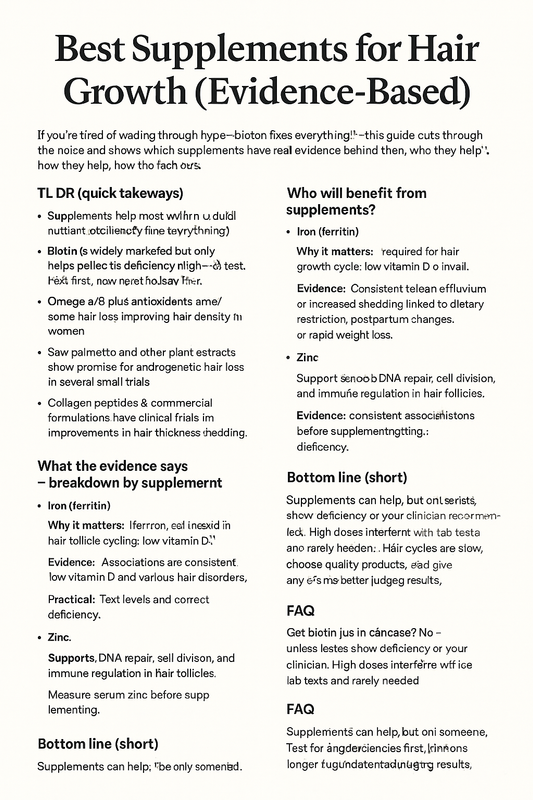
If you’re tired of wading through hype — biotin boosts! collagen fixes everything! — this guide cuts through the noise and shows which supplements have real evidence behind them, who they help, how they work, and what to watch out for. I’ll focus on supplements with clinical studies or plausible biological mechanisms, and link the primary studies and reviews so you can dig deeper.
TL;DR (quick takeaways)
-
Supplements help most when hair loss is caused or worsened by a nutrient deficiency (iron, vitamin D, zinc, protein). Test first. JAAD+1
-
Biotin is widely marketed but only helps people with biotin deficiency (rare). High-dose biotin can interfere with lab tests. PMC+1
-
Omega-3/6 + antioxidants and some marine protein supplements have randomized data showing improved hair density in women. PubMed+1
-
Saw palmetto and other plant extracts show promise for androgenetic hair loss in several small trials, but results vary. PMC+1
-
Collagen peptides and commercial formulations (e.g., Viviscal) have clinical trials showing improvements in hair thickness and shedding, though mechanisms may be indirect. ScienceDirect+1
Who will benefit from supplements?
Supplements are not a universal fix. They’re most useful when:
-
Blood tests show a deficiency (e.g., low ferritin/iron, low vitamin D, low zinc). JAAD+1
-
You have telogen effluvium or increased shedding linked to dietary restriction, postpartum changes, or rapid weight loss. PMC
-
You’re using evidence-backed topical or medical treatments for pattern hair loss (minoxidil, finasteride) and want supportive nutrition — supplements can be adjuncts, not replacements. ASCO Publications+1
If your hair loss is due to autoimmune conditions (e.g., alopecia areata), scarring, or genetic male/female pattern hair loss, some supplements may help a bit but medical treatments are usually primary. For alopecia areata, vitamin D treatments (often injected) have some evidence — but oral supplementation alone is less certain. PMC+1
What the evidence says — breakdown by supplement
1. Iron (ferritin)
Why it matters: Iron is required for the hair growth cycle. Low ferritin (iron stores) is associated with telogen effluvium and increased hair shedding. JAAD
Evidence: Multiple studies and reviews link low ferritin with diffuse hair loss in women; iron supplementation can improve symptoms when deficiency is present. Recent observational studies continue to support benefit in patients with low or borderline ferritin. PMC+1
Practical: Check serum ferritin and hemoglobin before supplementing. Typical oral iron dosing and duration depend on severity — treat deficiency under medical supervision (GI side effects and interactions are common).
2. Vitamin D
Why it matters: Vitamin D receptors are involved in hair follicle cycling; low vitamin D is associated with various hair disorders. PMC
Evidence: Associations are consistent (low vitamin D in alopecia areata and other hair conditions). For alopecia areata specifically, intralesional vitamin D3 has shown benefit in some trials — but the role of oral supplementation in hair regrowth is less definitive. Test levels and correct deficiency. PMC+1
3. Zinc
Why it matters: Zinc supports DNA repair, cell division, and immune regulation in hair follicles. Low zinc correlates with worse alopecia areata and some hair loss states. PMC
Evidence: Trials show oral zinc can help patients with low baseline zinc (e.g., some alopecia areata studies); routine supplementation without deficiency is not clearly beneficial. PMC+1
Practical: Measure serum zinc before supplementing; excess zinc can cause copper deficiency and other issues.
4. Biotin (Vitamin B7)
Why it matters: Biotin is popular for hair, skin, and nails.
Evidence: Reviews show no randomized controlled trials proving biotin helps hair growth in people who are not biotin-deficient. Some case series report benefit when a true deficiency exists (rare). High-dose biotin can interfere with laboratory assays (eg, cardiac troponin, thyroid tests), causing dangerous misreadings. PMC+2PMC+2
Practical: Only supplement biotin if testing shows deficiency or if recommended by your clinician. Avoid mega-doses without medical advice.
5. Omega-3 / Omega-6 fatty acids + antioxidants
Why it matters: These fatty acids and antioxidants reduce inflammation and support scalp health.
Evidence: A randomized trial in women showed a supplement containing omega-3 and omega-6 plus antioxidants improved hair density and reduced the percentage of hairs in telogen after 6 months. Another marine protein supplement RCT (Viviscal) showed increased hair growth in a 3-month RCT. PubMed+1
Practical: Fish oil or combined omega supplements can be considered, particularly if dietary intake is low. Pick high-quality products and expect months to see change.
6. Saw palmetto and botanical 5-alpha-reductase inhibitors
Why it matters: Saw palmetto (Serenoa repens) contains phytosterols that may inhibit 5-alpha-reductase, reducing DHT — a driver of androgenetic alopecia. PMC
Evidence: Several small RCTs and cohort studies report improved hair count, density, or subjective hair quality with oral/topical saw palmetto (dosages vary). Larger, higher-quality trials are still needed, but the signal is promising, especially for mild-to-moderate pattern hair loss. A 16-week RCT of a standardized saw palmetto oil showed safety and signals of effect. PMC+1
Practical: Discuss with your clinician before use — saw palmetto can interact with hormones/medications and isn’t appropriate for everyone.
7. Collagen peptides & marine protein supplements (e.g., Viviscal)
Why it matters: Collagen is a source of amino acids important for keratin production; marine protein formulas may supply peptide building blocks and micronutrients.
Evidence: Recent studies and reviews show oral collagen peptides and specific marine protein supplements can reduce hair shedding and increase hair thickness over 8–12+ weeks in women. Results are positive but not dramatic; mechanism may be improved dermal environment and nutrition rather than a direct “follicle-activating” effect. ScienceDirect+1
Practical: Look for clinical trials tied to the exact product you’re considering; not all collagen/marine supplements are equal.
8. Multivitamins / targeted formulas
Why it matters: A balanced multivitamin can correct multiple subclinical deficiencies (iron, zinc, B vitamins, vitamin D).
Evidence: Trials of targeted multi-ingredient formulas (omega fatty acids + vitamins + antioxidants) have shown benefits in hair density and reduced shedding in some populations. However, multivitamins won’t help if the hair loss is purely genetic or immune-mediated without any nutrient deficiency. PubMed+1
How to approach supplementation (practical protocol)
-
Get tested first: Ferritin, CBC (for anemia), vitamin D (25-OH), zinc, and thyroid function are common useful tests. Supplement only to correct documented deficiencies. JAAD+1
-
Address diet & lifestyle: Protein intake, overall calorie sufficiency, stress reduction, sleep, and scalp care matter. Supplements are adjuncts. PMC
-
Choose evidence-backed products: If opting for a marine protein, Viviscal and other tested formulas have RCTs; if choosing saw palmetto, prefer standardized extracts used in trials. PMC+1
-
Be patient: Hair growth cycles are slow — expect 3–6 months to notice changes, sometimes longer.
-
Safety checks: Avoid excessive doses (for example, iron without deficiency can cause harm; too much zinc causes copper deficiency; high biotin interferes with labs). Always inform your clinician and pharmacist. Verywell Health+1
Dosing snapshots & notes (common approaches)
-
Iron: Dose depends on lab values and formulation (ferrous sulfate 65 mg elemental iron often used daily). Treat deficiency under medical supervision. JAAD
-
Vitamin D: Replace deficiency to reach blood 25-OH D in target range (clinician will guide dosing). PMC
-
Zinc: Supplement only if low; common therapeutic doses in studies vary (eg, 50 mg elemental zinc/day short term), but prolonged high dosing requires monitoring. PMC
-
Biotin: Adequate intake is small; only supplement if deficiency documented. Mega-doses (mg range) are unnecessary for most and can interfere with lab testing. PMC+1
-
Omega-3/6 + antioxidants: Use formulations proven in trials; expect 3–6 months for effect. PubMed
-
Saw palmetto: Trials used varied doses (commonly 100–320 mg/day of extracts); consult provider. PMC+1
Supplements with limited or no convincing evidence
-
Unselected use of biotin in people who aren’t deficient — little proof of benefit. PMC
-
Many “hair complex” supplements on the market are not tested in RCTs; labels may not match contents and dosing is inconsistent. Prefer products with clinical data.
-
Herbal combinations sometimes show promise in small studies, but quality and standardization vary widely. PMC
Safety & regulation — what you need to know
-
Supplements are not tightly regulated like medicines; product content and purity vary. Buy reputable brands and, when possible, choose products tested by third parties (USP, NSF).
-
Interactions: Supplements interact with prescription meds (e.g., iron with some antibiotics, saw palmetto with hormonal meds, biotin with lab tests). Tell your healthcare providers about any supplements you take. Verywell Health
-
Side effects: Gastrointestinal upset (iron, zinc), allergic reactions, hormonal effects (saw palmetto), and rare liver effects have been reported with some herbal products. Monitor and stop if problems occur. PMC+1
Example evidence-based regimens (by scenario)
-
Low ferritin + shedding: Treat iron deficiency under medical guidance first. Consider short course of multinutrient support if other deficiencies present. JAAD
-
Female pattern hair loss with normal labs: Consider topical proven therapies (minoxidil), plus adjunct marine protein or collagen peptide supplements with clinical data. Consider saw palmetto if appropriate. PMC+2PubMed+2
-
Alopecia areata: Work with a dermatologist; vitamin D (intralesional) shows benefit in some trials, and correcting vitamin D/zinc deficiencies may help. Systemic immunomodulatory therapies are often necessary. PubMed+1
Bottom line (short)
Supplements can help, but only sometimes. Test for and correct deficiencies first (iron, vitamin D, zinc). For non-deficiency hair loss, evidence supports certain marine protein/collagen supplements, omega-3/6 + antioxidant formulas, and possibly saw palmetto for pattern loss — yet none are miracle cures. Work with a clinician, choose quality products, and give any strategy at least 3–6 months before judging results. JAAD+2PubMed+2
Recommended further reading / key studies
-
Biotin reviews and limits of evidence. PMC+1
-
Iron and hair loss — clinical reviews and observational studies. JAAD+1
-
Omega-3/6 + antioxidants RCT (2015) showing improved hair density in women. PubMed
-
Viviscal and marine protein randomized trials. PMC+1
-
Saw palmetto systematic reviews and RCTs in androgenetic alopecia. PMC+1
-
Collagen peptide supplementation and recent clinical data. ScienceDirect+1
FAQ
Q: Should I take biotin just in case?
A: No — only if tests show deficiency or your clinician recommends it. High doses interfere with lab tests and rarely are needed. PMC+1
Q: How long until I see results?
A: Hair cycles are slow. Expect 3–6 months for early changes, sometimes longer. Supplements usually require consistent use. PubMed
Q: Can supplements replace minoxidil/finasteride?
A: No. For androgenetic (pattern) hair loss, proven medical therapies are first-line; supplements can be adjunctive. ASCO Publications+1