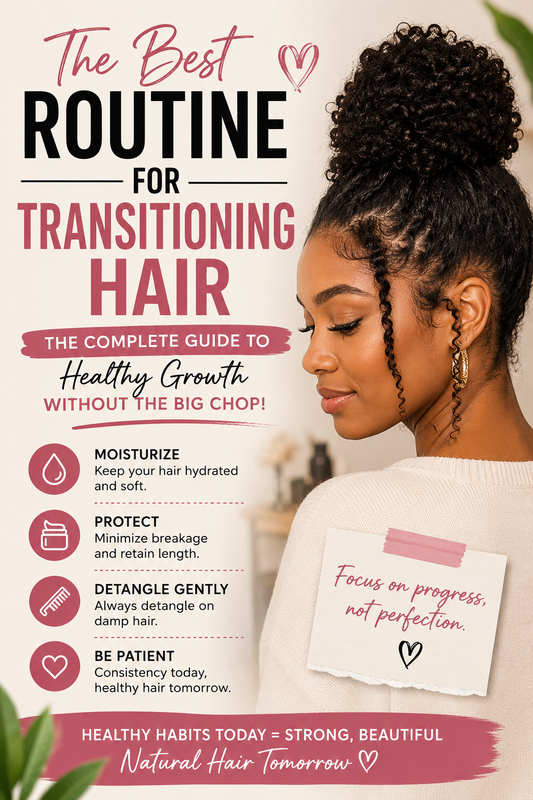
Transitioning from chemically relaxed hair to your natural texture is an exciting journey, but it can also be challenging. During this period, your hair contains two completely different textures: your new natural growth and your previously relaxed ends. Because these textures behave differently, transitioning hair requires a special routine that focuses on moisture, strength, and gentle handling.
The good news is that you don't have to do the big chop to enjoy healthy natural hair. Thousands of people successfully transition over several months—or even a year—while retaining length and minimizing breakage.
This guide explains the best routine for transitioning hair, including daily, weekly, and monthly habits that help protect your strands while encouraging healthy growth.
What Is Transitioning Hair?
Transitioning hair is hair that is growing naturally after you stop using chemical relaxers or texturizers.
As your hair grows, you'll notice two different textures:
- Relaxed hair on the ends
- Natural hair growing from the scalp
The line where these two textures meet is called the line of demarcation. This area is much weaker than the rest of your hair and is where breakage most often occurs.
A successful transitioning routine focuses on protecting this fragile section while keeping both textures moisturized.
Why Transitioning Hair Breaks So Easily
Many people become discouraged because their hair seems to break more during transition than before.
Several factors contribute to this:
Two Different Textures
Natural curls shrink and bend differently than relaxed hair. These differences create stress where the textures meet.
Dryness
Natural hair usually requires more moisture than relaxed hair. When moisture is lacking, strands become brittle.
Manipulation
Frequent brushing, combing, and styling increase stress on fragile hair.
Protein Loss
Relaxed hair has already experienced structural changes, making it weaker than virgin natural hair.
Understanding these challenges helps you create a routine that protects rather than damages your hair.
Step 1: Cleanse Your Hair Properly
Healthy hair starts with a healthy scalp.
Wash your hair every 7–14 days depending on:
- Lifestyle
- Sweat levels
- Product buildup
- Scalp condition
A clean scalp allows hair follicles to function efficiently while reducing itchiness and buildup.
Avoid harsh shampoos that strip away natural oils.
Instead, choose gentle cleansers that remove dirt without leaving hair dry.
When shampooing:
- Massage your scalp with your fingertips.
- Let shampoo run down the hair shaft.
- Avoid piling hair on top of your head.
- Rinse thoroughly.
Healthy growth begins with a clean foundation.
Step 2: Deep Condition Every Week
Deep conditioning is one of the most important parts of a transitioning routine.
Since relaxed ends lose moisture quickly, weekly deep conditioning restores hydration and elasticity.
Benefits include:
- Softer hair
- Improved curl definition
- Less breakage
- Easier detangling
- Increased flexibility
Allow your conditioner to sit for at least 20–30 minutes for maximum effectiveness.
Using gentle heat, such as a warm towel or heat cap, can help the conditioner penetrate more effectively.
Step 3: Moisturize Frequently
Transitioning hair thrives when moisture levels remain consistent.
Instead of waiting until your hair feels dry, moisturize regularly.
Pay close attention to:
- Ends
- Line of demarcation
- Hairline
- Crown
Moisturized hair bends instead of snapping.
Many people find success following a simple moisture routine several times each week.
Step 4: Seal in Moisture
Moisture leaves the hair over time.
After applying a water-based moisturizer, seal it in with a lightweight natural oil or butter.
Sealing helps:
- Reduce moisture loss
- Increase softness
- Improve shine
- Reduce tangles
- Protect ends
Avoid applying excessive amounts, as heavy buildup can weigh hair down.
Step 5: Detangle With Care
Improper detangling is one of the fastest ways to lose months of hair growth.
Always detangle:
- On damp hair
- With conditioner applied
- In small sections
Start at the ends and slowly work upward toward the roots.
Never rush through knots.
Using fingers before a wide-tooth comb helps preserve more hair.
Why Finger Detangling Works So Well
Finger detangling allows you to:
- Feel knots before pulling them
- Separate curls naturally
- Minimize unnecessary breakage
- Protect fragile transition points
Many long-term naturals use finger detangling as their primary method because it significantly reduces shedding caused by rough combing.
Step 6: Wear Protective Styles
Protective styles reduce daily manipulation while helping retain length.
Popular options include:
- Two-strand twists
- Flat twists
- Buns
- Roller sets
- Flexi rod sets
- Loose braids
- Wigs worn correctly
Protective styles should never be painfully tight.
Excessive tension can damage your edges and scalp.
Protective Styling Mistakes to Avoid
Protective styles only work when done correctly.
Avoid:
- Keeping styles in too long
- Ignoring scalp care
- Skipping moisturizing
- Tight ponytails
- Heavy extensions
- Excessive edge control
Remember:
Protective styles protect hair only when your hair remains healthy underneath.
Step 7: Trim Damaged Ends
Many people avoid trimming because they fear losing length.
However, damaged relaxed ends continue splitting upward.
Small trims every few months help remove weak ends while keeping styles looking healthier.
Signs you need a trim include:
- Thin ends
- Single-strand knots
- Constant tangling
- Split ends
- Rough texture
- Uneven hair
Removing damaged ends often improves overall length retention because less hair breaks off over time.
Your Daily Transitioning Hair Routine
Consistency is the secret to successful transitioning. You don't need to spend hours on your hair every day. Instead, focus on simple habits that keep your hair moisturized and protected.
Morning Routine
Every morning:
- Check your hair's moisture level.
- Lightly mist dry areas with water or a water-based moisturizer.
- Smooth flyaways gently with your hands instead of brushing.
- Style loosely to avoid unnecessary tension.
- Protect your ends by tucking them into a twist, bun, or braid whenever possible.
Avoid reapplying heavy products every day. Too much product buildup can make hair dull and harder to moisturize.
Midday Hair Care
If your environment is dry or you're spending time outdoors, your hair may lose moisture faster.
Simple midday habits include:
- Avoid touching your hair excessively.
- Stay hydrated by drinking water.
- Wear a satin-lined hat if spending long hours in the sun.
- Protect hair from strong winds, which can increase tangling.
Small habits throughout the day make a big difference over time.
The Best Nighttime Routine
Your nighttime routine is just as important as your daytime routine.
Cotton pillowcases absorb moisture and create friction that leads to breakage.
Instead:
- Wear a satin bonnet.
- Use a satin scarf.
- Sleep on a satin pillowcase for added protection.
Before bed:
- Lightly moisturize dry sections.
- Twist or braid hair into 4–8 loose sections.
- Cover with satin.
- Sleep without tight ponytails or rubber bands.
You'll wake up with fewer tangles and softer hair.
Weekly Hair Routine
A consistent weekly schedule helps keep transitioning hair healthy.
Day 1
- Shampoo
- Deep condition
- Detangle
- Moisturize
- Seal
- Protective style
Midweek
- Refresh moisture.
- Massage scalp for a few minutes.
- Restyle if necessary.
End of Week
- Check for tangles.
- Moisturize ends.
- Prepare for wash day.
A routine makes it easier to stay consistent and avoid neglecting your hair.
Monthly Hair Care Routine
Every month, take time to evaluate your hair's condition.
Monthly tasks include:
- Clarify hair if you have heavy product buildup.
- Trim damaged ends if needed.
- Clean combs and brushes.
- Wash satin bonnets and pillowcases.
- Assess moisture and protein balance.
- Take progress photos to track growth.
Photos often reveal improvements that you might not notice day to day.
How Long Should You Transition?
There is no perfect timeline.
Some people transition for:
- 3 months
- 6 months
- 12 months
- 18 months
- 2 years
The right length depends on:
- Hair health
- Comfort level
- Styling preferences
- Desired length before cutting relaxed ends
Transition at your own pace.
Should You Big Chop?
The "big chop" means cutting off all relaxed hair at once.
Benefits include:
- One consistent texture
- Easier wash days
- Better curl definition
- Less breakage at the line of demarcation
However, it's not required.
Many people successfully transition without cutting everything off immediately.
Choose the path that feels right for you.
Protective Styles That Work Best During Transition
Protective styling helps reduce manipulation and preserve length.
Some of the best options include:
Two-Strand Twists
Easy to install, low-maintenance, and ideal for blending two textures.
Flat Twists
Protect roots while keeping hair neat.
Roller Sets
Stretch the hair gently without direct heat.
Flexi Rod Sets
Create curls that blend relaxed and natural textures.
Loose Buns
Quick, elegant, and protective when not worn too tightly.
Wigs
A good option when worn over properly moisturized and braided hair.
Remember to continue cleansing and moisturizing your scalp even while wearing protective styles.
Avoid Excessive Heat
Flat irons and blow dryers may seem helpful for blending textures, but too much heat can damage your new natural growth.
If you choose to use heat:
- Apply a heat protectant.
- Use the lowest effective temperature.
- Limit heat styling to occasional use.
Heat damage can permanently alter your curl pattern, making the transition more difficult.
Protein vs. Moisture Balance
Transitioning hair needs both moisture and strength.
Signs You Need More Moisture
- Dryness
- Rough texture
- Dull appearance
- Increased tangling
Signs You May Need Protein
- Hair feels overly soft or mushy.
- Excessive breakage despite moisturizing.
- Lack of elasticity.
Use protein treatments sparingly and always follow with a moisturizing conditioner to restore softness.
Scalp Care During Transition
Healthy hair begins with a healthy scalp.
Keep your scalp in good condition by:
- Cleansing regularly.
- Avoiding excessive scratching.
- Massaging gently with your fingertips.
- Using lightweight oils if your scalp feels dry.
A healthy scalp creates the best environment for strong, healthy hair growth.
Healthy Habits That Support Hair Growth
While products can improve the condition of your hair, overall wellness also matters.
Support healthy hair by:
- Eating protein-rich foods.
- Including fruits and vegetables in your diet.
- Drinking enough water each day.
- Managing stress.
- Getting enough sleep.
- Staying physically active.
Healthy habits contribute to healthier-looking hair over time.
15 Common Transitioning Hair Mistakes to Avoid
Even with the best intentions, a few habits can slow your progress. Avoiding these common mistakes will help you retain more length and keep your hair healthier.
1. Not Moisturizing Enough
Transitioning hair tends to dry out faster because relaxed ends and natural roots have different moisture needs.
If your hair feels rough, brittle, or difficult to comb, it may need more hydration.
2. Skipping Deep Conditioning
Deep conditioning restores moisture and improves elasticity, making hair less likely to snap during styling and detangling.
Aim for at least one deep conditioning treatment every week.
3. Detangling Dry Hair
Dry hair is more fragile and prone to breakage.
Always detangle damp hair with conditioner or a detangling product to reduce friction.
4. Using Too Much Heat
Frequent flat ironing and blow-drying can weaken your new natural growth and may permanently alter your curl pattern.
Limit heat styling and always use a heat protectant.
5. Tight Protective Styles
Braids, buns, and ponytails that are too tight can place stress on your scalp and edges.
Choose styles that are secure but comfortable.
6. Ignoring the Ends
Your relaxed ends are the oldest and weakest part of your hair.
Keep them moisturized and tucked away whenever possible.
7. Overloading Hair With Products
Using too many creams, oils, gels, and butters can create buildup that prevents moisture from reaching your hair.
Use products in moderation and clarify your hair when needed.
8. Comparing Your Journey to Others
Everyone's hair grows at a different rate.
Focus on healthy habits rather than comparing your progress with someone else's.
9. Not Trimming Damaged Ends
Split ends don't repair themselves.
Small trims help prevent splits from traveling farther up the hair shaft.
10. Forgetting Scalp Care
A clean, healthy scalp provides the best environment for healthy-looking hair.
Keep your scalp clean and avoid heavy product buildup.
11. Washing Too Infrequently
Going too long between wash days can allow dirt, sweat, and product residue to accumulate.
Develop a schedule that works for your hair and lifestyle.
12. Rough Towel Drying
Traditional bath towels create friction that can roughen the hair cuticle.
Instead, gently blot your hair with a microfiber towel or a soft cotton T-shirt.
13. Constantly Wearing the Same Style
Changing your part and hairstyle occasionally helps reduce repeated tension on the same areas.
14. Neglecting Nutrition
Hair health is supported by a balanced diet, hydration, and overall wellness.
15. Expecting Overnight Results
Transitioning is a marathon, not a sprint.
Healthy routines practiced consistently often produce the best long-term results.
Signs Your Transition Is Going Well
As you continue your routine, look for these positive changes:
- Less breakage during wash days
- Softer, more manageable hair
- Better moisture retention
- Increased shine
- Stronger natural curls
- Easier detangling
- Fuller-looking hair
- Gradual length retention
These improvements are often more meaningful than focusing only on hair length.
Seasonal Tips for Transitioning Hair
Spring
- Refresh your routine after winter dryness.
- Trim damaged ends if needed.
- Begin wearing lighter protective styles.
Summer
- Protect hair from chlorine and salt water.
- Wear hats or scarves in prolonged sun.
- Increase moisturizing if you're outdoors frequently.
Fall
- Prepare for cooler weather with regular deep conditioning.
- Reduce exposure to dry indoor air.
Winter
- Deep condition consistently.
- Wear satin-lined hats.
- Avoid going outside with wet hair.
- Seal moisture into your strands to combat dry air.
Adjusting your routine with the seasons can help maintain healthier hair year-round.
Frequently Asked Questions
How long does transitioning hair take?
The process varies from person to person. Some people transition for a few months, while others take a year or longer before cutting off relaxed ends.
Can I color my hair while transitioning?
Chemical color treatments may increase dryness and breakage. If you choose to color your hair, take extra care with moisturizing and conditioning.
How often should I wash transitioning hair?
Many people find washing every 7–14 days works well, though the ideal schedule depends on your scalp, activity level, and product use.
Is shedding normal?
Yes. Losing some hair each day is normal. However, excessive breakage or sudden heavy shedding may indicate that your routine needs adjustment.
Should I comb my hair every day?
Not necessarily. Frequent combing can increase breakage. Handle your hair gently and detangle only when needed.
Can protective styles help with length retention?
Yes. Properly installed and maintained protective styles can reduce daily manipulation and help preserve the length you grow.
Final Thoughts
Transitioning from relaxed hair to natural hair is a journey that requires patience, consistency, and gentle care. There may be days when your hair feels difficult to manage, but every healthy habit you build today contributes to stronger, healthier hair over time.
The best routine for transitioning hair focuses on four key principles:
- Keep your hair clean.
- Maintain consistent moisture.
- Minimize breakage through gentle handling.
- Protect your hair while it grows.
With time and dedication, you'll become more familiar with your natural texture and develop a routine that works specifically for your hair.
Support Your Transitioning Hair Routine with Hairobics
Healthy hair starts with consistent care, and the right products can help support your routine.
The Hairobics Hair & Scalp Booster is designed to complement your healthy hair care regimen with nourishing natural ingredients that help moisturize the scalp, reduce the appearance of dryness, and promote stronger-looking hair. Pair it with a regular wash day routine, weekly deep conditioning, and protective styling to help maintain healthier-looking hair throughout your transition.
Whether you're transitioning for six months or two years, consistency is the key to long-term success. Stay committed to your routine, be patient with the process, and celebrate every milestone on your journey to healthy natural hair.