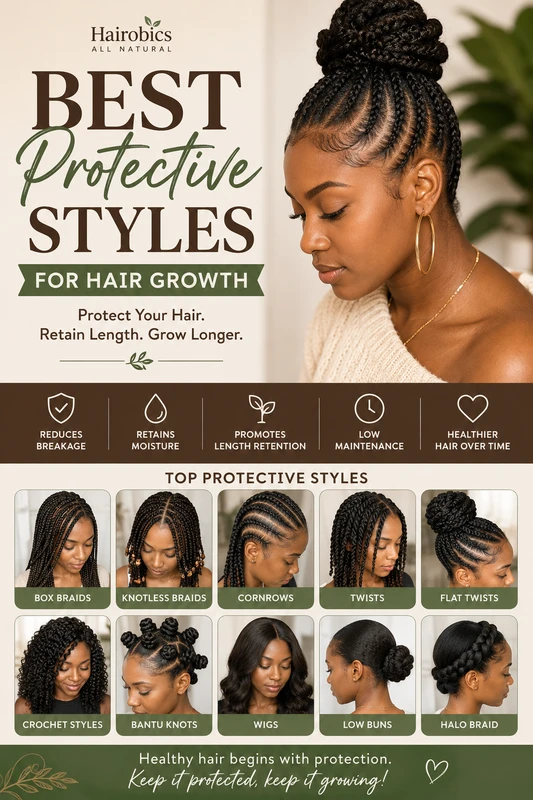
If you're trying to grow longer, healthier hair, protective styling can be one of the most powerful tools in your hair care routine. Many people focus only on products, oils, and supplements while overlooking one of the biggest factors that impacts hair growth: protecting the hair you already have.
The truth is that hair is constantly growing from the scalp. However, many people never see significant length because their hair breaks at the same rate it grows. Protective styles help reduce manipulation, prevent breakage, minimize moisture loss, and create an environment where hair can thrive.
Whether you have natural hair, relaxed hair, curly hair, coily hair, locs, or transitioning hair, choosing the right protective style can dramatically improve your length retention and overall hair health.
In this guide, we'll cover the best protective styles for hair growth, how they work, common mistakes to avoid, and how to maximize growth while wearing them.
What Are Protective Styles?
Protective styles are hairstyles designed to protect the ends of the hair while minimizing daily manipulation.
The ends of your hair are the oldest and weakest part of every strand. When exposed to friction, weather, heat, and constant styling, they become prone to breakage.
Protective styles help by:
- Reducing daily combing and brushing
- Protecting fragile ends
- Preventing tangles
- Retaining moisture
- Limiting heat damage
- Reducing friction from clothing and bedding
- Encouraging length retention
Protective styles do not magically make hair grow faster. Instead, they help you keep more of the hair that naturally grows from your scalp.
How Hair Growth Actually Works
Hair grows from follicles located beneath the scalp.
On average, hair grows approximately:
- ½ inch per month
- 6 inches per year
However, growth rates vary based on:
- Genetics
- Age
- Nutrition
- Overall health
- Stress levels
- Hormones
- Scalp condition
The key to achieving longer hair is retaining length.
If your hair grows six inches per year but breaks off five inches, you'll only see one inch of growth.
Protective styling helps solve this problem.
Benefits of Protective Styles
Less Breakage
Constant manipulation weakens hair fibers.
Protective styles reduce:
- Combing
- Brushing
- Detangling
- Styling stress
This means fewer broken strands.
Better Moisture Retention
Dry hair breaks more easily.
Protective styles help seal in moisture and prevent dehydration.
Reduced Split Ends
When ends remain tucked away and protected, they're less likely to split and unravel.
Improved Length Retention
Protective styling allows hair to remain intact long enough for visible growth.
Easier Hair Management
Protective styles save time and reduce daily styling stress.
Best Protective Styles for Hair Growth
1. Box Braids
Box braids remain one of the most popular protective styles for natural hair growth.
Benefits include:
- Low manipulation
- Long-lasting style
- Versatility
- Protection for ends
To maximize growth:
- Avoid excessive tension
- Keep scalp moisturized
- Don't wear them longer than 8 weeks
Box braids work best when installed properly and maintained consistently.
2. Knotless Braids
Knotless braids have become increasingly popular because they're gentler on the scalp.
Advantages include:
- Less tension
- Reduced risk of traction alopecia
- More natural appearance
- Greater comfort
Many people find knotless braids superior for long-term hair health.
3. Cornrows
Cornrows provide excellent protection when installed correctly.
Benefits:
- Minimal manipulation
- Easy maintenance
- Lower tension than many extensions
- Great foundation for wigs
Cornrows are especially useful for those recovering from breakage.
4. Flat Twists
Flat twists offer many benefits similar to cornrows while being easier on fragile hair.
Advantages:
- Reduced tension
- Elegant appearance
- Excellent moisture retention
- Easy removal
Flat twists work particularly well for Type 4 hair.
5. Two-Strand Twists
Two-strand twists are among the healthiest protective styles available.
Benefits include:
- Low tension
- Reduced breakage
- Easy maintenance
- Excellent moisture retention
Twists also allow easy access to the scalp for moisturizing.
6. Wig Protective Styles
Wigs can be highly effective protective styles when worn properly.
For best results:
- Braid hair underneath
- Moisturize regularly
- Remove wig periodically
- Clean scalp consistently
Avoid wearing wigs continuously without scalp care.
7. Crochet Braids
Crochet styles provide versatility while reducing daily manipulation.
Benefits:
- Quick installation
- Protective foundation
- Style variety
- Reduced handling
Proper scalp maintenance remains essential.
8. Bantu Knots
Bantu knots protect hair while creating beautiful curls when taken down.
Advantages:
- Heat-free styling
- Reduced tangles
- Moisture retention
- Minimal manipulation
9. Halo Braid
A halo braid keeps hair secure and protected.
Benefits include:
- Elegant appearance
- End protection
- Reduced friction
- Great for special occasions
10. Low Buns
Simple low buns are underrated protective styles.
Benefits:
- Minimal tension
- Easy maintenance
- Reduced breakage
- Suitable for daily wear
Use soft hair ties to prevent damage.
Protective Styles for Natural Hair
Natural hair thrives when protected from excessive manipulation.
Best options include:
- Twists
- Flat twists
- Cornrows
- Buns
- Box braids
- Knotless braids
These styles help preserve curl patterns and reduce breakage.
Protective Styles for Curly Hair
Curly hair benefits from styles that maintain moisture and reduce friction.
Recommended styles:
- Pineapple styling
- Twists
- Braids
- Loose updos
- Low buns
Maintaining hydration is critical.
Protective Styles for Locs
Locs need protection too.
Great options include:
- Barrel twists
- Rope twists
- Updos
- Petal styles
- Braided loc styles
Avoid excessive tension around the hairline.
Protective Styles for Thin Hair
Thin hair requires special care.
Choose styles that:
- Minimize tension
- Avoid heavy extensions
- Reduce pulling
Good options include:
- Flat twists
- Loose twists
- Low buns
- Lightweight crochet styles
How Long Should You Keep Protective Styles?
Recommended duration:
- Twists: 2–4 weeks
- Cornrows: 2–6 weeks
- Box braids: 6–8 weeks
- Knotless braids: 6–8 weeks
- Wigs: Remove regularly for scalp care
Leaving styles in too long can lead to:
- Matting
- Breakage
- Product buildup
- Scalp irritation
Common Protective Styling Mistakes
Installing Styles Too Tight
Excessive tension can cause:
- Hair loss
- Scalp pain
- Broken edges
- Traction alopecia
Protective styles should never hurt.
Ignoring Scalp Health
Healthy hair begins with a healthy scalp.
Continue:
- Cleansing
- Moisturizing
- Massaging
even while protective styling.
Skipping Moisture
Many people assume protective styles eliminate the need for hydration.
This is false.
Hair still needs moisture regularly.
Wearing Styles Too Long
Overextended wear often causes:
- Tangles
- Breakage
- Excess shedding
Timely removal is essential.
How to Maintain Protective Styles
Cleanse Your Scalp
Use gentle cleansers to remove buildup.
Moisturize Regularly
Apply water-based moisturizers several times weekly.
Seal in Moisture
Natural oils can help lock in hydration.
Popular options include:
- Jojoba oil
- Castor oil
- Coconut oil
Sleep with Protection
Use:
- Satin bonnet
- Satin scarf
- Satin pillowcase
to reduce friction.
Best Products to Use While Protective Styling
Focus on products that:
- Hydrate
- Strengthen
- Nourish
Look for ingredients such as:
- Aloe vera
- Castor oil
- Peppermint oil
- Rosemary oil
- Jojoba oil
- Tea tree oil
Hairobics All Natural products can help support scalp health and moisture retention while wearing protective styles.
Protective Styling and Hair Growth Myths
Myth: Protective Styles Make Hair Grow Faster
Protective styles do not directly speed growth.
They help retain existing growth.
Myth: More Tension Equals More Growth
Tight styles damage follicles.
Healthy growth requires low tension.
Myth: Hair Doesn't Need Moisture in Braids
Hair continues to lose moisture even when braided.
Hydration remains important.
Myth: Protective Styles Can Be Left In Forever
Long-term wear often causes more damage than benefit.
Creating the Perfect Hair Growth Routine
For maximum results:
- Cleanse scalp regularly.
- Moisturize consistently.
- Use low-tension protective styles.
- Maintain healthy nutrition.
- Get adequate sleep.
- Reduce stress.
- Protect hair at night.
- Trim damaged ends when necessary.
Consistency always beats complexity.
Signs Your Protective Style Is Helping
Positive signs include:
- Less breakage
- Increased length retention
- Stronger strands
- Improved moisture levels
- Reduced tangling
- Healthier ends
Take monthly photos to track progress.
Final Thoughts
Protective styles remain one of the most effective strategies for retaining length and supporting healthy hair growth. While no hairstyle can force hair to grow faster than your genetics allow, the right protective style can dramatically reduce breakage and help you keep the growth you work so hard to achieve.
Whether you choose knotless braids, twists, cornrows, wigs, crochet styles, or low-maintenance buns, success comes from proper installation, consistent maintenance, and a healthy scalp care routine.
When combined with quality hair products, regular moisture, and good overall health habits, protective styling can be the missing piece that finally helps you reach your hair growth goals.
Healthy hair growth is not about finding a miracle product. It's about protecting your hair long enough to see the results of the growth that's already happening every day.