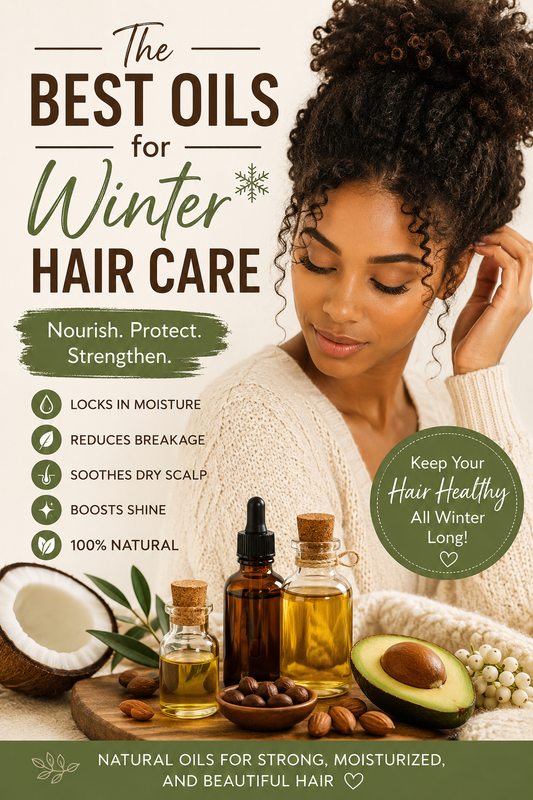
Winter is one of the toughest seasons for your hair. Cold temperatures, dry indoor heat, harsh winds, and low humidity strip moisture from your hair and scalp, leaving them dry, brittle, itchy, and prone to breakage.
Whether you wear your hair natural, relaxed, curly, braided, or in locs, choosing the right natural oil can make all the difference. The best oils help seal in moisture, nourish your scalp, strengthen strands, reduce frizz, and keep your hair looking healthy throughout the winter months.
In this complete guide, you'll discover the best oils for winter hair care, how to use them correctly, and how to build the perfect winter hair routine.
Why Hair Gets Dry During Winter
During winter, the air contains significantly less humidity than in warmer seasons. Without moisture in the air, your hair loses water much faster.
Winter also brings:
- Cold outdoor temperatures
- Dry indoor heating
- Hot showers
- Hats causing friction
- Static electricity
- Less frequent washing
- Increased scalp dryness
Together, these factors weaken the hair cuticle and cause excessive moisture loss.
Common winter hair problems include:
- Dry hair
- Split ends
- Frizz
- Tangles
- Dullness
- Scalp flakes
- Itchy scalp
- Breakage
- Hair shedding
Natural oils help solve many of these issues.
Why Oils Are Essential During Winter
Healthy oils don't simply make hair shiny.
They help by:
- Locking moisture inside the hair shaft
- Softening rough cuticles
- Preventing moisture loss
- Lubricating strands
- Protecting against environmental damage
- Reducing friction
- Nourishing the scalp
- Supporting stronger hair growth
- Improving elasticity
Using oils correctly can dramatically reduce winter breakage.
1. Coconut Oil
Coconut oil remains one of the most researched natural oils for protecting hair.
Benefits
- Deeply penetrates hair
- Reduces protein loss
- Helps prevent breakage
- Softens coarse hair
- Adds shine
- Protects against dryness
Because coconut oil penetrates inside the hair shaft instead of simply coating it, it's excellent as a pre-shampoo treatment.
Best For
- Thick hair
- Curly hair
- Coily hair
- Natural hair
- Damaged hair
2. Jamaican Black Castor Oil
This thick, nutrient-rich oil has become a favorite for winter hair care.
Benefits include:
- Seals moisture
- Helps reduce breakage
- Softens dry hair
- Supports healthy scalp conditions
- Excellent for protective styles
Many people use Jamaican Black Castor Oil around the edges and on dry ends throughout winter.
3. Argan Oil
Known as "liquid gold," argan oil is packed with Vitamin E and antioxidants.
Benefits:
- Lightweight
- Reduces frizz
- Adds shine
- Softens hair
- Improves elasticity
- Helps repair dry strands
Argan oil works especially well for finer hair because it doesn't feel overly heavy.
4. Jojoba Oil
Jojoba oil closely resembles your scalp's natural sebum.
Benefits include:
- Moisturizes scalp
- Reduces dryness
- Helps balance oil production
- Lightweight
- Softens hair
- Excellent for itchy winter scalps
It works beautifully for both scalp massages and daily moisturizing.
5. Avocado Oil
Avocado oil contains:
- Vitamin A
- Vitamin D
- Vitamin E
- Healthy fatty acids
- Antioxidants
Benefits include:
- Deep moisture
- Softens brittle hair
- Improves flexibility
- Helps reduce split ends
- Smooths rough cuticles
6. Olive Oil
Olive oil has been used for centuries in hair care.
Benefits:
- Deep conditioning
- Reduces dryness
- Improves softness
- Adds shine
- Helps with detangling
- Great hot oil treatment
It works especially well for coarse textures.
7. Sweet Almond Oil
Sweet almond oil is rich in Vitamin E and healthy fats.
Benefits:
- Lightweight hydration
- Smooths hair
- Adds shine
- Helps reduce frizz
- Makes detangling easier
Excellent for medium-textured hair.
8. Grapeseed Oil
For people who dislike heavy oils, grapeseed oil is a great alternative.
Benefits:
- Lightweight
- Doesn't weigh hair down
- Reduces frizz
- Helps seal moisture
- Adds softness
Perfect for fine curls.
9. Sunflower Oil
Sunflower oil contains linoleic acid, which helps support hair moisture.
Benefits:
- Locks in hydration
- Lightweight
- Improves softness
- Smooths hair
- Helps reduce dryness
10. Rosemary Infused Oil
Rosemary has become one of the most popular botanical ingredients for scalp care.
Benefits:
- Supports healthy scalp circulation
- Helps maintain healthy hair growth
- Refreshes the scalp
- Reduces dryness when blended with carrier oils
Always dilute rosemary essential oil properly before applying to the scalp.
Which Oil Is Best for Your Hair Type?
Natural Hair
Choose:
- Jamaican Black Castor Oil
- Coconut Oil
- Avocado Oil
- Olive Oil
These heavier oils help lock in moisture.
Curly Hair
Best options:
- Argan Oil
- Avocado Oil
- Coconut Oil
These reduce frizz while keeping curls defined.
Fine Hair
Use lighter oils:
- Grapeseed Oil
- Argan Oil
- Jojoba Oil
Heavy oils may flatten fine hair.
Locs
Great winter oils include:
- Jojoba Oil
- Grapeseed Oil
- Rosemary-infused oil
- Light blends formulated for loc care
Avoid excessive heavy oils that may cause buildup.
Braids
Focus on the scalp.
Use:
- Jojoba Oil
- Rosemary-infused oil
- Light castor oil blends
Apply sparingly between parts.
How to Oil Hair During Winter
Follow these simple steps:
Step 1
Mist hair lightly with water or a leave-in conditioner.
Never apply heavy oils to completely dry hair if your goal is moisture.
Step 2
Rub a small amount of oil between your palms.
Step 3
Apply from mid-lengths to ends.
The ends are the oldest and driest part of your hair.
Step 4
Massage excess oil into the scalp.
Use gentle circular motions for 3–5 minutes.
Step 5
Style as usual.
Hot Oil Treatments for Winter
Hot oil treatments can restore softness to dry winter hair.
Popular combinations:
- Coconut + Olive
- Jojoba + Argan
- Avocado + Castor
- Grapeseed + Rosemary
Warm the oil gently (never boiling), apply to damp hair, cover with a shower cap, and leave on for 20–30 minutes before shampooing.
Oils for Itchy Winter Scalp
If your scalp becomes dry during winter, try:
- Jojoba Oil
- Rosemary-infused oil
- Grapeseed Oil
- Sweet Almond Oil
Massage 2–3 times weekly.
Oils for Hair Growth Support
Healthy hair grows best from a healthy scalp.
Scalp-friendly oils include:
- Rosemary-infused oil
- Jamaican Black Castor Oil
- Jojoba Oil
- Coconut Oil
While oils don't magically speed hair growth, they can help reduce breakage and create a healthier environment for retaining length.
Winter Hair Routine Using Oils
Wash Day
- Shampoo gently
- Deep condition
- Apply leave-in conditioner
- Seal with natural oil
Midweek
- Lightly mist hair
- Apply a small amount of oil to the ends
- Massage scalp if needed
Weekly
- Perform a hot oil treatment
- Trim damaged ends as necessary
- Wear a satin bonnet or scarf at night
Mistakes to Avoid
Using Too Much Oil
Excess oil attracts dirt and causes buildup.
Less is more.
Oiling Dirty Hair Repeatedly
Layering oil on top of product buildup can make hair feel greasy without adding moisture.
Cleanse regularly.
Skipping Water
Oil seals moisture—it doesn't replace it.
Always moisturize first.
Using Heavy Oils on Fine Hair
Fine hair benefits from lightweight oils to avoid limp, greasy strands.
Ignoring the Ends
Your ends need the most protection during winter.
Frequently Asked Questions
Should I oil my hair every day?
Not usually. Most people benefit from applying oil 2–4 times per week, depending on hair type and dryness.
Can oil replace conditioner?
No. Conditioner hydrates and smooths the hair after shampooing, while oil helps seal that moisture in.
Is coconut oil good for everyone?
Not always. Some people with low-porosity hair find coconut oil makes their hair feel stiff. If that happens, try argan, jojoba, or grapeseed oil instead.
What is the best oil for a dry scalp?
Jojoba oil is often a great choice because it closely resembles the scalp's natural oils and absorbs well without feeling overly greasy.
Should I use oil before or after styling?
For most people, applying a small amount after moisturizing and before styling helps lock in hydration. You can also use a tiny amount after styling to tame frizz.
Final Thoughts
Winter doesn't have to mean dry, brittle, or unmanageable hair. By choosing the right natural oil and pairing it with a consistent moisturizing routine, you can protect your strands from harsh weather, reduce breakage, and maintain softness all season long.
Whether you prefer coconut oil for deep conditioning, jojoba oil for scalp care, argan oil for shine, or Jamaican Black Castor Oil for sealing in moisture, the key is consistency. Healthy winter hair comes from moisturizing regularly, sealing that moisture with the right oil, protecting your hair at night, and avoiding excessive heat and buildup.
With the right routine, your hair can stay hydrated, strong, and healthy—even during the coldest months.