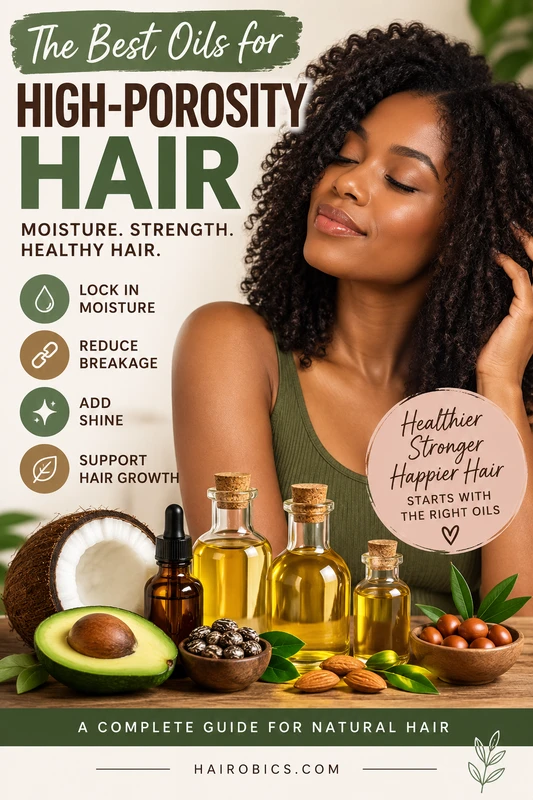
High-porosity hair can absorb moisture incredibly fast—but keeping that moisture locked in is often the real challenge. You may apply water, leave-in conditioner, cream, and oil only to find that your hair feels dry again a few hours later. You might also notice excessive frizz, tangles, roughness, split ends, or breakage.
Choosing the best oils for high-porosity hair can make a major difference.
The right oils help support the hair's moisture barrier, reduce friction, improve softness, add shine, and make high-porosity strands easier to manage. Some oils are particularly useful as sealing oils, while others work well in pre-shampoo treatments, scalp routines, or deep-conditioning treatments.
But not every oil needs to be used the same way.
In this complete guide, we'll explore the best oils for high-porosity natural hair, how high porosity affects moisture retention, how to use oils correctly, which oils may work especially well for Black and curly hair, and how to build a routine that helps your hair stay moisturized longer.
What Is High-Porosity Hair?
Hair porosity describes how easily your hair absorbs and retains water and hair products.
The outermost layer of a hair strand is called the cuticle. You can think of the cuticle as a protective outer surface made of overlapping scales.
When hair has relatively high porosity, water can move into and out of the hair more readily.
That means high-porosity hair may become wet quickly when you wash or spray it with water—but it may also lose moisture quickly afterward.
This is why someone with high-porosity hair might say:
"My hair absorbs everything I put on it, but somehow it's still dry."
That experience can be frustrating, but changing how you moisturize and seal your hair may help.
Signs You May Have High-Porosity Hair
Porosity exists on a spectrum, and at-home porosity tests aren't always definitive. Instead of relying on one test, pay attention to how your hair behaves over time.
Possible characteristics of higher-porosity hair include:
- Hair becomes wet relatively quickly.
- Hair absorbs products quickly.
- Moisture seems to disappear soon after application.
- Hair frequently feels dry or rough.
- Strands tangle easily.
- Hair is prone to frizz.
- Ends feel particularly dry.
- Hair may experience frequent breakage.
- Hair may appear dull without conditioning or styling products.
- Chemical treatments have changed the way your hair behaves.
- Heat-damaged sections behave differently from healthier sections.
- Hair requires frequent conditioning to remain manageable.
Some people naturally have more porous hair, while porosity can also increase because of accumulated damage.
Frequent chemical treatments, excessive heat, aggressive manipulation, weathering, and other forms of damage can alter the hair's cuticle and increase its permeability.
Why High-Porosity Hair Loses Moisture So Quickly
The problem isn't necessarily getting moisture into high-porosity hair.
It's keeping it there.
Imagine two containers.
One holds water without much leakage. The other has tiny openings throughout its surface. You can fill both with water, but the second container will lose water much faster.
Although hair is obviously more complex, this provides a simple way to understand the moisture challenge associated with high porosity.
This is where oils can become useful.
Oil does not "hydrate" dry hair in the same way that water does. Instead, oils are generally most useful as part of a routine that includes water and conditioning ingredients.
Depending on the oil and how it's used, oil may help:
- Reduce water loss
- Lubricate strands
- Improve softness
- Reduce friction
- Improve manageability
- Add shine
- Protect vulnerable ends
- Reduce tangling
- Make detangling easier
- Support length retention by reducing mechanical damage
For high-porosity hair, the goal is often:
Hydrate → condition → seal → protect.
What Are the Best Oils for High-Porosity Hair?
There isn't one universal "best" oil for everyone. Hair density, strand thickness, styling routine, climate, product preferences, and degree of damage can all influence what works best.
However, several oils are especially popular for high-porosity natural and curly hair.
Some of the best options include:
- Jamaican black castor oil
- Coconut oil
- Avocado oil
- Olive oil
- Argan oil
- Jojoba oil
- Sweet almond oil
- Grapeseed oil
- Baobab oil
- Marula oil
Let's look at each one.
1. Jamaican Black Castor Oil
Best for: Sealing, dry ends, thick natural hair, protective styles
Jamaican black castor oil is an excellent option to consider when your biggest challenge is keeping high-porosity hair from feeling dry.
Castor oil has a thick, rich consistency compared with many other popular hair oils.
That heaviness can be beneficial for people who find lightweight oils simply aren't enough to keep their hair feeling soft and protected.
Why High-Porosity Hair May Like Jamaican Black Castor Oil
High-porosity hair can lose water quickly. A heavier oil can help coat the strands and reduce the dry, rough feeling that often develops after moisturizing.
It can be especially useful on:
- Ends
- Dry sections
- Thick hair
- Coarse-feeling strands
- Braids
- Twists
- Locs
- Protective styles
How to Use It
Start with damp, conditioned hair.
Apply your leave-in conditioner or moisturizer first. Then rub a small amount of Jamaican black castor oil between your palms and smooth it over the hair.
Concentrate on the ends because they're the oldest and often most vulnerable part of your hair.
A little goes a long way.
Using too much can make your hair feel sticky, heavy, or greasy.
2. Coconut Oil
Best for: Pre-shampoo treatments and reducing protein loss from hair
Coconut oil is one of the most researched oils used in hair care.
Its fatty-acid composition allows it to interact with the hair differently from many oils that primarily coat the surface.
Coconut oil can be particularly useful as a pre-shampoo treatment.
High-porosity or damaged hair may benefit from reducing some of the stress associated with repeated washing, swelling, drying, and manipulation.
How to Use Coconut Oil
Before shampooing:
- Divide dry hair into sections.
- Apply a modest amount of coconut oil from mid-length to ends.
- Pay particular attention to damaged areas.
- Allow it to sit before washing.
- Shampoo normally.
- Follow with conditioner.
You don't necessarily need to leave coconut oil on overnight.
Even a shorter pre-shampoo treatment can fit easily into your wash-day routine.
What If Coconut Oil Makes My Hair Feel Hard?
Coconut oil doesn't work equally well for everyone.
Some people report that their hair feels stiff, coated, or unpleasant after using it.
If that's your experience, don't force it.
Try avocado oil, olive oil, argan oil, or another alternative instead.
3. Avocado Oil
Best for: Dry, damaged, thick, curly, and natural hair
Avocado oil is one of the most versatile oils for high-porosity hair.
It contains a mixture of fatty acids and is rich enough to provide lubrication without necessarily feeling as heavy as castor oil.
For someone who wants a middle ground between a lightweight oil and a very thick sealing oil, avocado oil can be an excellent option.
Benefits of Avocado Oil for High-Porosity Hair
Avocado oil may help hair feel:
- Softer
- Smoother
- More manageable
- Less rough
- Better lubricated
It can be used for:
- Sealing
- Pre-poo treatments
- Hot-oil treatments
- Deep-conditioning routines
- Ends
- Protective styles
How to Use It
Apply avocado oil after your leave-in conditioner while the hair is still damp.
You can also mix a small amount into your deep conditioner immediately before applying it.
Avoid pouring large quantities of oil into the entire conditioner container because doing so can change the product's intended formula.
4. Olive Oil
Best for: Very dry, coarse, thick, or damaged hair
Olive oil has been used in beauty routines for generations.
Its rich consistency makes it particularly appealing for hair that constantly feels dry.
If lightweight oils seem to disappear almost immediately, olive oil may provide the additional lubrication your strands need.
Olive Oil Works Well For:
- Pre-shampoo treatments
- Sealing damp hair
- Dry ends
- Deep-conditioning sessions
- Twists
- Braids
- Thick natural hair
How Much Should You Use?
Less than you might think.
Start with a small amount and increase only when necessary.
Hair covered in excessive oil isn't necessarily more moisturized.
Remember:
Water provides hydration. Oil primarily helps support lubrication and moisture retention.
5. Argan Oil
Best for: Shine, frizz, lightweight sealing, finer strands
Not everyone with high-porosity hair has thick strands.
If your hair is fine or easily weighed down, Jamaican black castor oil may feel too heavy.
That's where argan oil can shine.
Argan oil is considerably lighter and can give the hair a smooth, polished appearance without requiring a thick coating.
Argan Oil May Be Helpful For:
- Frizz
- Dull-looking hair
- Fine high-porosity strands
- Dry ends
- Heat-styled hair
- Twist-outs
- Braid-outs
- Wash-and-go styles
Try applying a few drops after styling rather than saturating your hair.
6. Jojoba Oil
Best for: Lightweight routines and scalp application
Jojoba oil is technically a liquid wax rather than a traditional triglyceride oil.
Its lightweight texture makes it popular for both scalp and hair routines.
If heavier oils leave your hair flat or greasy, jojoba oil may provide a lighter alternative.
Ways to Use Jojoba Oil
Try jojoba oil:
- On your scalp
- On damp ends
- After leave-in conditioner
- In protective-style routines
- As part of a scalp massage
- As a finishing oil
Because it is relatively lightweight, it may be especially appealing for people with high porosity and fine strands.
7. Sweet Almond Oil
Best for: Softness and everyday sealing
Sweet almond oil is another useful middleweight option.
It's lighter than castor oil but can still provide noticeable lubrication.
That makes it a good choice for everyday natural-hair routines where you want softness without an extremely heavy coating.
Try Sweet Almond Oil For:
- Twist-outs
- Braid-outs
- Protective styles
- Ends
- Damp hair
- Refresh days
You can also combine a lighter oil with a heavier one.
For example, someone with thick high-porosity hair might blend a little sweet almond oil with castor oil to create a consistency they prefer.
8. Grapeseed Oil
Best for: Fine hair and lightweight sealing
Grapeseed oil is another lightweight option.
This makes it useful when high-porosity hair needs help with lubrication but becomes weighed down easily.
It can work especially well as a finishing oil.
After applying your water-based products, smooth a small amount over the hair.
Grapeseed oil may also be useful for people who dislike the thick texture of castor or olive oil.
9. Baobab Oil
Best for: Dry, textured hair
Baobab oil has become increasingly popular in natural-hair formulations.
It's often included in products designed for curly, coily, dry, or textured hair.
Baobab oil can be used as part of a sealing or conditioning routine and may help strands feel smoother and more manageable.
For high-porosity hair, it can be particularly useful on the driest sections and ends.
10. Marula Oil
Best for: Smoothness, shine, and frizz control
Marula oil is another option for people who want a relatively elegant, lightweight-to-medium oil.
It can help add shine and improve the feel of dry, rough hair without necessarily providing the heaviness associated with castor oil.
Try using a few drops after styling.
Heavy Oils vs. Lightweight Oils for High-Porosity Hair
One of the most important decisions is choosing the right oil weight.
Heavier Oils
Examples include:
- Castor oil
- Jamaican black castor oil
- Olive oil
These may work particularly well for:
- Thick hair
- Coarse-feeling hair
- Extremely dry hair
- Dry climates
- Protective styles
- Very dry ends
Medium-Weight Oils
Examples include:
- Avocado oil
- Sweet almond oil
These provide a balance between sealing and manageability.
Lightweight Oils
Examples include:
- Argan oil
- Grapeseed oil
- Jojoba oil
- Marula oil
These may work better for:
- Fine hair
- Low-density hair
- Hair that becomes greasy easily
- Lightweight wash-and-go routines
Porosity isn't the only factor you should consider.
Strand thickness matters too.
A person can have high-porosity hair and very fine strands.
In that situation, covering the hair in castor oil may be excessive.
Best Oil for High-Porosity 4C Hair
For high-porosity 4C hair, consider starting with:
- Jamaican black castor oil
- Avocado oil
- Olive oil
- Sweet almond oil
4C hair can experience significant shrinkage and tangling, so lubrication can be particularly important.
However, curl pattern doesn't automatically determine porosity.
Not everyone with 4C hair has high porosity.
If your 4C hair is fine, start with avocado or sweet almond oil rather than automatically choosing the heaviest option.
Best Oil for High-Porosity Curly Hair
Curly hair often benefits from oils that provide softness without destroying curl definition.
Good options include:
- Argan oil
- Avocado oil
- Jojoba oil
- Grapeseed oil
- Marula oil
Apply a small amount after your curl cream or gel has been distributed.
Too much oil can interfere with the lightweight feel and volume many people want from their curls.
Best Oil for High-Porosity Locs
Locs require a slightly different approach.
Heavy products can accumulate inside locs over time, making residue and buildup important considerations.
Lightweight oils may therefore be preferable.
Consider:
- Jojoba oil
- Grapeseed oil
- Argan oil
- Avocado oil
When moisturizing locs, remember that oil isn't a replacement for water.
Start with hydration and use oil sparingly afterward.
Best Oils for High-Porosity Hair Growth
This phrase is searched frequently, but it's important to understand what hair oil can and cannot do.
There is no ordinary cosmetic oil that can guarantee dramatically faster hair growth.
Hair grows from follicles in your scalp.
However, your ability to retain the hair you grow matters tremendously.
Imagine your hair grows normally at the scalp but continually breaks at the ends.
You may conclude:
"My hair isn't growing."
In reality, you may be experiencing poor length retention.
A good oil routine can help lubricate vulnerable strands and reduce some of the friction associated with styling and manipulation.
That can support length retention as part of a healthy hair-care routine.
How to Seal High-Porosity Hair With Oil
One of the biggest mistakes people make is applying oil to extremely dry hair and expecting it to become hydrated.
Instead, try this sequence.
Step 1: Start With Water
Your hair should be damp.
This can happen after washing or through a light refresh with a water-based product.
Step 2: Apply Leave-In Conditioner
Choose a leave-in that gives your hair softness and slip.
Work in sections to ensure even coverage.
Step 3: Apply Cream If Needed
People with thicker or extremely dry hair may benefit from adding a cream-based moisturizer.
Fine hair may not need this step.
Step 4: Seal With Oil
Apply a small amount of your preferred oil.
Concentrate on:
- Ends
- Dry sections
- Areas prone to breakage
Step 5: Style
Finish with your preferred low-manipulation or protective style.
Twists, braids, buns, or other styles can help reduce daily handling.
LOC Method for High-Porosity Hair
The LOC method stands for:
L – Liquid
O – Oil
C – Cream
This technique layers products in an attempt to help the hair stay moisturized.
High-porosity hair may respond well to LOC because oil is applied relatively early in the layering process.
A basic routine might look like:
- Water or water-based leave-in
- Avocado or castor oil
- Moisturizing cream
Experiment with the amount of each product.
You don't need to drench your hair in every layer.
LCO Method for High-Porosity Hair
LCO means:
L – Liquid
C – Cream
O – Oil
Here, oil is the final layer.
Some people with high-porosity hair prefer this approach because the oil acts as the final finishing layer over their moisturizer.
Example:
- Apply water-based leave-in.
- Apply moisturizing cream.
- Seal with Jamaican black castor or avocado oil.
Neither LOC nor LCO is automatically better.
Your hair's response matters more than the acronym.
Try each method for several wash days and compare:
- Softness
- Moisture retention
- Buildup
- Frizz
- Definition
- Breakage
- How long your style lasts
How Often Should You Oil High-Porosity Hair?
There isn't a universal schedule.
Some people may use a small amount of oil several times per week, while others only need it after washing.
A good starting point is:
Seal your hair after wash day and reassess it every few days.
If your ends feel dry, lightly rehydrate them before applying additional oil.
Avoid repeatedly adding layer after layer of oil without eventually cleansing your hair.
This can create buildup.
Can You Oil High-Porosity Hair Every Day?
You can use oil frequently if your hair responds well, but daily oiling isn't automatically beneficial.
If your hair already feels greasy, adding more oil isn't solving the underlying problem.
Ask yourself:
Does my hair need moisture—or does it simply need more oil?
Often, dry high-porosity hair needs hydration and conditioning first.
Adding oil to dehydrated hair can leave you with strands that feel simultaneously greasy and dry.
Best Pre-Poo Oils for High-Porosity Hair
A pre-poo treatment is applied before shampooing.
For high-porosity hair, good choices include:
Coconut Oil
One of the most popular options for pre-shampoo use.
Avocado Oil
A versatile alternative if you dislike coconut oil.
Olive Oil
Useful for thick, extremely dry strands.
Sweet Almond Oil
A lighter alternative.
Apply the oil mainly to your lengths and ends.
You don't necessarily need to coat your scalp.
Hot Oil Treatments for High-Porosity Hair
Hot-oil treatments are popular among people with dry natural hair.
Despite the name, the oil should never be dangerously hot.
Warm is enough.
You can warm the oil indirectly by placing its container in warm water.
Apply it to your hair in sections and allow it to sit before continuing with your wash routine.
Never microwave oil until it's extremely hot and immediately apply it to your scalp.
Your scalp can burn.
Protein and High-Porosity Hair
High porosity is sometimes associated with damaged hair, which is why protein treatments are frequently recommended.
But protein shouldn't be used blindly.
Some damaged hair may benefit from products containing hydrolyzed proteins, while excessive use can leave certain people's hair feeling stiff or difficult to manage.
Look at your complete routine.
You may need a balance between:
- Moisture
- Conditioning
- Protein-containing products
- Lubrication
- Gentle handling
If your hair feels unusually hard after protein treatments, reduce their frequency and evaluate how your hair responds.
High-Porosity Hair and Breakage
High-porosity hair may be more vulnerable when its porosity is related to damage.
The solution isn't simply applying more oil.
You also need to reduce unnecessary stress.
Try limiting:
- Excessive heat
- Aggressive detangling
- Tight hairstyles
- Constant manipulation
- Frequent chemical processing
- Rough towel drying
- Sleeping without protecting your hair
Oil works best as one part of a complete hair-care strategy.
Protect High-Porosity Hair at Night
Your nighttime routine can have a major effect on moisture retention.
Cotton bedding can create friction against the hair as you move during sleep.
Consider using:
- Satin bonnet
- Satin scarf
- Satin pillowcase
Before bed, assess your hair.
If it still feels soft and moisturized, don't automatically add more products.
If your ends feel dry, lightly moisturize them and seal with a tiny amount of oil.
Deep Conditioning High-Porosity Hair
Consistent conditioning can be particularly valuable for high-porosity hair.
After shampooing, apply conditioner thoroughly and give extra attention to your ends.
Use this time to detangle gently.
A deep-conditioning routine may help improve:
- Softness
- Slip
- Manageability
- Detangling
- Overall feel
Follow the directions on your conditioner rather than assuming leaving it on for hours will produce better results.
Clarifying High-Porosity Hair
High-porosity hair needs moisture—but that doesn't mean you should endlessly pile products onto it.
Oil, cream, gel, leave-in conditioner, edge control, butter, and styling products can accumulate.
Eventually, your hair may feel:
- Greasy
- Heavy
- Dull
- Sticky
- Coated
- Difficult to moisturize
That's when proper cleansing becomes important.
Use shampoo regularly and consider an occasional clarifying shampoo when you have significant buildup.
Follow clarifying with a good conditioner because clarifying shampoos can be more cleansing than everyday formulas.
High-Porosity Hair Routine
Here's a simple routine you can customize.
Wash Day
1. Pre-poo if needed
Apply coconut, avocado, or olive oil to your lengths.
2. Shampoo
Clean your scalp and hair thoroughly.
3. Condition
Apply conditioner and detangle gently.
4. Deep condition when appropriate
Use a moisturizing or strengthening treatment based on your hair's needs.
5. Apply leave-in
Work in sections.
6. Add cream if needed
This can be particularly useful for thick or very dry hair.
7. Seal
Apply your preferred oil.
8. Style
Choose a style that minimizes unnecessary manipulation.
Midweek Routine
Don't automatically apply five more layers of product.
First, touch your hair.
If it feels soft, leave it alone.
If it's becoming dry:
- Lightly dampen the hair.
- Apply a small amount of leave-in if necessary.
- Seal the ends with oil.
- Restyle gently.
This prevents product overload.
High-Porosity Hair Routine for Protective Styles
Braids, twists, and other protective styles can reduce daily manipulation, but your real hair still requires care.
Try:
- Keeping your scalp clean
- Using lightweight hydration
- Applying oil sparingly
- Protecting the style at night
- Avoiding excessive tension
- Paying attention to your edges
- Removing the style before severe matting develops
Protective styles should protect your hair—not simply hide it.
Common Mistakes When Using Oil on High-Porosity Hair
Mistake #1: Using Oil Instead of Moisture
Oil and water aren't interchangeable.
Hydrate first.
Mistake #2: Using Too Much Oil
More isn't always better.
Excessive oil can create buildup and weigh down your hair.
Mistake #3: Ignoring Your Ends
Your ends are the oldest part of your hair.
Give them extra attention.
Mistake #4: Never Shampooing
A healthy routine includes cleansing.
Mistake #5: Choosing Oil Based Only on Porosity
Also consider:
- Strand thickness
- Density
- Hairstyle
- Climate
- Product buildup
- Personal preference
Mistake #6: Expecting Oil to Repair Severe Damage
Oil can improve lubrication and appearance, but it cannot permanently restore severely damaged hair to its original condition.
Sometimes damaged ends eventually need trimming.
Mistake #7: Constantly Switching Oils
Give your routine enough time to evaluate results.
You don't need 15 oils simultaneously.
Best Oil Combinations for High-Porosity Hair
You can also combine oils.
For Extremely Dry Hair
Try:
Castor oil + avocado oil
This gives you the richness of castor oil with a somewhat lighter oil.
For Fine High-Porosity Hair
Try:
Argan oil + jojoba oil
Lightweight and easy to distribute.
For Thick Natural Hair
Try:
Olive oil + avocado oil
A rich combination that can work well for sealing or pre-shampoo routines.
For Dry Ends
Try:
Avocado oil + a small amount of castor oil
Focus primarily on the ends rather than coating your entire head.
High-Porosity vs. Low-Porosity Hair Oils
The same oils can be used by people across different porosity levels.
The difference often comes down to amount, product layering, and how the hair responds.
High-porosity hair may tolerate richer sealing routines because retaining moisture can be difficult.
Low-porosity hair may become coated more easily, particularly when multiple heavy products are layered.
But these aren't strict rules.
Your individual hair is more important than a porosity label.
How to Know If Your Oil Routine Is Working
Pay attention to your hair over several weeks.
A successful routine may leave your hair:
- Softer
- Easier to detangle
- Less rough
- More manageable
- Less prone to knots
- Better lubricated
- Easier to style
- Less prone to mechanical breakage
You may also notice that your ends stay moisturized longer between wash days.
Don't judge a routine based on one application.
Consistency provides much better information.
Frequently Asked Questions
What is the best oil for high-porosity hair?
Jamaican black castor oil, avocado oil, coconut oil, olive oil, argan oil, jojoba oil, sweet almond oil, and grapeseed oil are all popular options. The best choice depends on your strand thickness, styling routine, and how easily your hair becomes weighed down.
Is Jamaican black castor oil good for high-porosity hair?
It can be. Its thick consistency makes it useful as a sealing oil for dry, thick, or coarse-feeling hair. Fine hair may require only a tiny amount.
Is coconut oil good for high-porosity hair?
Coconut oil can be particularly useful as a pre-shampoo treatment. However, some people dislike how their hair feels after using coconut oil. If it makes your hair feel stiff or coated, try another oil.
Is avocado oil good for high-porosity hair?
Yes. Avocado oil is a versatile option for sealing, pre-shampoo treatments, conditioning routines, and dry ends.
Is jojoba oil good for high-porosity hair?
Jojoba oil can be an excellent lightweight choice, particularly for people who don't like heavy oils.
Is olive oil good for high-porosity hair?
Olive oil can work particularly well for thick, dry, or coarse-feeling high-porosity hair.
Should high-porosity hair use heavy oils?
Sometimes. Heavy oils can be helpful for thick, extremely dry hair, but fine high-porosity hair may become weighed down. Choose an oil based on both porosity and strand thickness.
Should I put oil on wet or dry hair?
For sealing purposes, apply oil after hydrating and conditioning the hair. Slightly damp hair is usually a better starting point than extremely dry hair.
How often should I oil high-porosity hair?
Start by sealing after wash day and reassessing your hair throughout the week. Add more only when needed rather than following an arbitrary daily schedule.
Does oil moisturize high-porosity hair?
Oil doesn't replace water. Think of oil primarily as a lubricant and supporting layer in a moisture-retention routine.
Which oil is best for high-porosity 4C hair?
Avocado, Jamaican black castor, olive, and sweet almond oils are good options to experiment with. Fine 4C strands may respond better to lighter oils.
Final Thoughts: Choosing the Best Oil for High-Porosity Hair
High-porosity hair doesn't have to feel perpetually dry.
The key is understanding what your hair actually needs.
Instead of simply covering dry strands in oil, build your routine around hydration, conditioning, sealing, gentle handling, and protection.
For extremely dry, thick high-porosity hair, Jamaican black castor oil, avocado oil, and olive oil are excellent options to explore.
For fine high-porosity hair, consider lighter choices such as argan oil, jojoba oil, grapeseed oil, or marula oil.
Coconut oil can be particularly useful as a pre-shampoo treatment, while avocado oil is one of the most versatile choices for a variety of routines.
Most importantly, don't feel like you need every oil on this list.
Start with one or two.
Monitor how long your hair stays soft, how easily it detangles, whether your ends feel protected, and whether you're experiencing excessive buildup.
The best oil isn't necessarily the most expensive or trendy option.
It's the one that fits naturally into a consistent routine and helps your high-porosity hair stay soft, manageable, and protected.