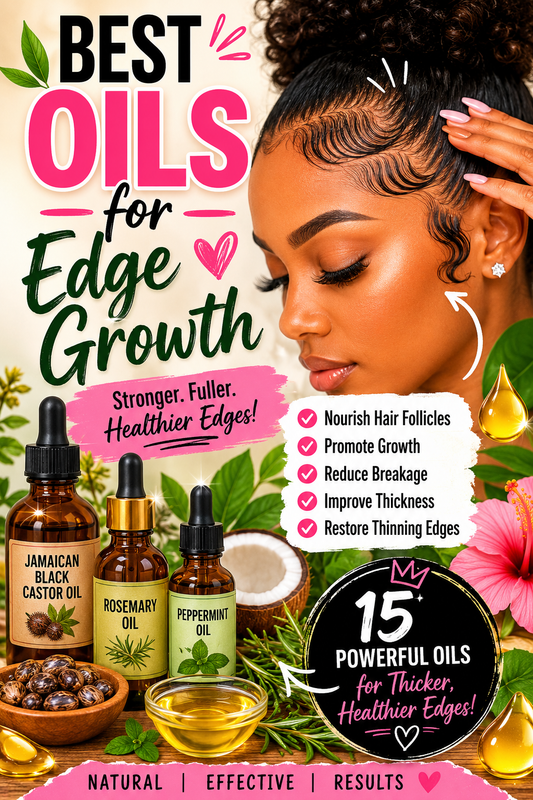
Healthy edges can completely transform the appearance of your hair. Whether you wear natural hair, braids, locs, wigs, weaves, or protective styles, strong edges frame your face and contribute to an overall healthy hairline. Unfortunately, many people struggle with thinning edges, breakage, traction alopecia, and slow regrowth.
One of the most effective natural solutions for edge restoration is using nutrient-rich oils. Certain oils help nourish the scalp, reduce inflammation, strengthen hair strands, and create an environment that supports healthy hair growth.
If you're searching for the best oils for edge growth, this comprehensive guide will walk you through the most effective oils, how they work, and how to use them properly for maximum results.
Why Edges Become Thin
Before discussing oils, it's important to understand why edges thin in the first place.
Common causes include:
- Tight hairstyles
- Braids installed too tightly
- Excessive use of edge control products
- Heat damage
- Chemical relaxers
- Stress
- Hormonal changes
- Poor nutrition
- Scalp inflammation
- Over-manipulation
- Sleeping without hair protection
The good news is that many of these causes can be addressed naturally through proper hair care and consistent scalp nourishment.
How Oils Help Edge Growth
Hair growth begins beneath the scalp.
The right oils can help:
- Improve scalp circulation
- Reduce inflammation
- Moisturize hair follicles
- Strengthen weak strands
- Prevent breakage
- Protect edges from environmental damage
- Support healthy follicle function
While oils cannot magically create new follicles, they can help maximize the performance of healthy follicles and create optimal conditions for growth.
1. Jamaican Black Castor Oil
When discussing edge growth, Jamaican Black Castor Oil is often the first oil mentioned.
Benefits
- Thick consistency coats fragile edges
- Rich in fatty acids
- Helps reduce breakage
- Supports moisture retention
- Strengthens hair strands
Many people notice their edges appear fuller after several months of consistent use.
How to Use
Apply a small amount directly to your edges 3–5 times weekly.
Massage gently for 2–3 minutes.
Consistency is key.
2. Rosemary Oil
Rosemary oil has become one of the most researched essential oils for hair growth.
Benefits
- Encourages scalp circulation
- Supports follicle health
- May help prolong the growth phase
- Reduces scalp irritation
Many users report thicker edges after several months of consistent use.
How to Use
Always dilute rosemary oil with a carrier oil such as:
- Castor oil
- Jojoba oil
- Coconut oil
Mix 3–5 drops with one tablespoon of carrier oil before applying.
3. Peppermint Oil
Peppermint oil creates a cooling sensation that many people love.
Benefits
- Stimulates blood flow
- Refreshes the scalp
- Helps reduce buildup
- Supports healthy follicles
The cooling effect may indicate increased circulation around the follicles.
How to Use
Mix:
- 2–3 drops peppermint oil
- 1 tablespoon carrier oil
Apply directly to thinning edges.
4. Jojoba Oil
Jojoba oil closely resembles the natural sebum produced by the scalp.
Benefits
- Lightweight
- Non-greasy
- Excellent moisturizer
- Supports scalp balance
- Reduces dryness
Dry edges often break before reaching their full potential length.
Jojoba oil helps keep them moisturized and flexible.
5. Coconut Oil
Coconut oil remains one of the most popular oils in natural hair care.
Benefits
- Deeply penetrates hair strands
- Reduces protein loss
- Strengthens weak hair
- Improves elasticity
Stronger edges are less likely to snap during styling.
Best Use
Apply before washing or use as an overnight treatment.
6. Batana Oil
Batana oil has gained significant attention in the hair growth community.
Benefits
- Rich in antioxidants
- Contains nourishing fatty acids
- Helps improve hair softness
- Supports healthy scalp conditions
Many users find batana oil especially useful for damaged edges.
7. Avocado Oil
Avocado oil contains numerous nutrients beneficial for hair health.
Benefits
- Vitamin E
- Vitamin A
- Amino acids
- Healthy fats
These nutrients help nourish fragile edge areas.
8. Argan Oil
Often called "liquid gold," argan oil is excellent for damaged hair.
Benefits
- Lightweight moisture
- Rich in antioxidants
- Helps reduce frizz
- Improves shine
Argan oil works particularly well for fine edges.
9. Grapeseed Oil
Many people overlook grapeseed oil.
Benefits
- Lightweight texture
- Rich in linoleic acid
- Moisturizes without buildup
- Great for low-porosity hair
Because it is so light, it won't weigh down delicate edges.
10. Sweet Almond Oil
Sweet almond oil is packed with nutrients that support healthy hair.
Benefits
- Vitamin E
- Magnesium
- Protein
- Healthy fatty acids
It helps soften brittle edges while reducing breakage.
11. Black Seed Oil
Black seed oil has been used traditionally for centuries.
Benefits
- Anti-inflammatory properties
- Rich nutrient profile
- Helps soothe irritated scalps
- Supports healthy follicles
Many people combine black seed oil with castor oil for enhanced edge care.
12. Olive Oil
Olive oil remains a staple in many natural hair routines.
Benefits
- Deep moisture
- Antioxidants
- Improved elasticity
- Reduced dryness
Healthy moisture levels are critical for retaining fragile edge hairs.
13. Tea Tree Oil
Tea tree oil helps create a healthier scalp environment.
Benefits
- Helps reduce buildup
- Refreshes scalp
- Supports follicle cleanliness
A clean scalp is essential for optimal edge growth.
Always dilute before use.
14. Lavender Oil
Lavender oil is popular because of its calming properties.
Benefits
- Helps reduce scalp irritation
- Supports relaxation
- Encourages healthy scalp conditions
Stress is often linked to hair thinning, making lavender a useful addition.
15. Cedarwood Oil
Cedarwood oil is frequently used in hair growth blends.
Benefits
- Supports scalp balance
- Encourages circulation
- Complements rosemary oil well
Many natural hair enthusiasts combine cedarwood, rosemary, and peppermint oils.
Best Oil Combinations for Edge Growth
Growth Blend #1
- Jamaican Black Castor Oil
- Rosemary Oil
- Peppermint Oil
Excellent for thinning edges.
Growth Blend #2
- Jojoba Oil
- Lavender Oil
- Rosemary Oil
Ideal for sensitive scalps.
Growth Blend #3
- Batana Oil
- Castor Oil
- Cedarwood Oil
Perfect for damaged hairlines.
How to Massage Edges for Faster Results
Scalp massage may enhance the effectiveness of oils.
Steps
- Apply oil.
- Use fingertips.
- Massage gently.
- Move in circular motions.
- Continue for 2–5 minutes.
Avoid aggressive rubbing.
Edge Growth Routine
Daily
- Protect edges
- Avoid tension
- Stay hydrated
3–5 Times Weekly
Apply growth oil blend.
Weekly
- Clarify scalp
- Deep condition
- Assess progress
Foods That Support Edge Growth
Healthy hair starts internally.
Focus on:
Protein
- Eggs
- Fish
- Chicken
- Beans
Iron
- Spinach
- Lean meats
- Lentils
Omega-3s
- Salmon
- Walnuts
- Flaxseeds
Vitamin C
- Citrus fruits
- Strawberries
- Bell peppers
Hairstyles That Protect Edges
Choose styles that minimize tension.
Best options include:
- Loose twists
- Low buns
- Large braids
- Loose loc styles
- Pineapple hairstyles
- Protective updos
Avoid styles that pull tightly around the hairline.
Mistakes That Prevent Edge Growth
Using Too Much Product
Heavy buildup can irritate the scalp.
Applying Oils Without Cleaning Scalp
Follicles need a clean environment.
Tight Protective Styles
Protection should never mean tension.
Constant Edge Control Use
Some edge controls contain drying ingredients.
Lack of Consistency
Hair growth takes time.
How Long Does Edge Growth Take?
Growth rates vary.
Most people see:
2–4 Weeks
Improved moisture.
1–3 Months
Reduced breakage.
3–6 Months
Visible thickness improvements.
6–12 Months
Significant regrowth potential.
Patience is essential.
Signs Your Edges Are Recovering
You may notice:
- Less shedding
- Fewer broken hairs
- Increased density
- Better moisture retention
- Baby hairs appearing
- Stronger strands
These are positive indicators that your routine is working.
Frequently Asked Questions
What is the best oil for edge growth?
Jamaican Black Castor Oil and Rosemary Oil are among the most popular choices.
Can oils regrow completely bald edges?
If follicles remain healthy, oils may help support regrowth. If follicles are permanently damaged, results may be limited.
How often should I oil my edges?
Three to five times weekly works well for most people.
Should I use multiple oils?
Yes. Many people achieve excellent results using oil blends.
Can I use oils with braids?
Absolutely. Apply directly to exposed edge areas.
Final Thoughts
When it comes to restoring thinning edges naturally, consistency matters more than any single product. The best oils for edge growth work by nourishing the scalp, reducing breakage, improving moisture retention, and supporting healthy follicles.
Jamaican Black Castor Oil, Rosemary Oil, Peppermint Oil, Jojoba Oil, Batana Oil, and Black Seed Oil remain among the most effective options available. Combined with gentle styling, proper nutrition, scalp massage, and patience, these oils can help you achieve fuller, healthier edges over time.
Remember that edge growth is a journey. Stay consistent, protect your hairline, and focus on long-term scalp health for the best possible results.