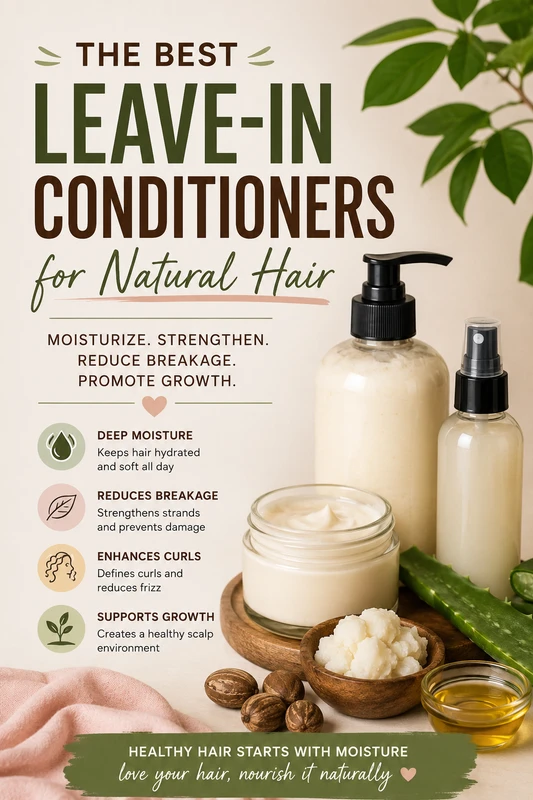
Natural hair thrives when it is properly moisturized, nourished, and protected. Whether you have loose curls, coils, kinks, locs, braids, or a combination of textures, one product can dramatically improve the health and appearance of your hair: a quality leave-in conditioner.
Many people spend hundreds of dollars on oils, growth serums, deep conditioners, and styling products while overlooking one of the most important steps in a healthy hair routine. A leave-in conditioner acts as the foundation of moisture retention, helping natural hair remain soft, manageable, and resistant to breakage.
Without adequate moisture, natural hair becomes dry, brittle, and prone to split ends. Over time, this leads to excessive shedding, breakage, thinning edges, and difficulty retaining length. A good leave-in conditioner helps solve these problems by continuously hydrating the hair throughout the day.
In this guide, you'll learn:
- What a leave-in conditioner is
- Why natural hair needs one
- Benefits of using leave-in conditioners
- How to choose the best leave-in conditioner
- Ingredients that promote hair growth
- Common mistakes to avoid
- How often to use leave-in conditioner
- The best leave-in conditioner for every natural hair type
Let's dive in.
What Is a Leave-In Conditioner?
A leave-in conditioner is a lightweight moisturizing treatment designed to remain on the hair after washing rather than being rinsed out.
Unlike traditional conditioners that are removed after a few minutes, leave-in conditioners continue working throughout the day by:
- Hydrating the hair shaft
- Reducing friction
- Improving elasticity
- Softening curls
- Preventing tangles
- Protecting hair from damage
Think of a leave-in conditioner as daily skincare for your hair.
Just as your skin benefits from moisturizer, your natural hair benefits from continuous hydration.
Why Natural Hair Needs Leave-In Conditioner
Natural hair is uniquely structured.
The curls and coils make it difficult for natural scalp oils to travel down the hair shaft. As a result, natural hair often experiences dryness more quickly than straight hair.
This is especially true for:
- 4A Hair
- 4B Hair
- 4C Hair
- Locs
- Braids
- Color-treated hair
A leave-in conditioner helps compensate for the lack of natural oil distribution by providing ongoing moisture and nourishment.
Without a leave-in conditioner, many people experience:
- Dry hair
- Excessive shedding
- Split ends
- Frizz
- Breakage
- Dullness
- Difficulty retaining length
Benefits of Leave-In Conditioners for Natural Hair
1. Increases Moisture Retention
Hydration is one of the most important aspects of healthy hair.
Leave-in conditioners contain humectants and moisturizing ingredients that help attract and retain water.
This keeps curls hydrated for longer periods.
2. Reduces Breakage
Dry hair snaps easily.
When hair is moisturized, it becomes more flexible and less likely to break during:
- Combing
- Detangling
- Styling
- Protective styling
Less breakage means greater length retention.
3. Improves Detangling
Natural hair can easily become tangled.
A leave-in conditioner provides slip that allows knots to release more easily.
This reduces manipulation and minimizes hair loss during detangling sessions.
4. Enhances Curl Definition
Hydrated curls naturally clump together better.
Leave-in conditioners help define:
- Waves
- Curls
- Coils
- Twist-outs
- Braid-outs
Resulting in smoother, shinier styles.
5. Helps Retain Length
Many people believe their hair isn't growing.
In reality, their hair is growing but breaking at the same rate.
Leave-in conditioners reduce breakage and improve moisture retention, helping hair retain more length over time.
6. Protects Against Environmental Damage
Natural hair faces daily stress from:
- Wind
- Sun exposure
- Dry air
- Pollution
- Heat styling
A leave-in conditioner acts as a protective barrier against environmental stressors.
Key Ingredients to Look For
Not all leave-in conditioners are created equal.
The best products contain nourishing ingredients that support healthy hair growth and moisture retention.
Aloe Vera
Aloe vera:
- Hydrates hair
- Soothes scalp irritation
- Reduces dryness
- Enhances shine
It's one of the best natural moisturizers available.
Jojoba Oil
Jojoba oil closely resembles natural scalp oils.
Benefits include:
- Softening hair
- Improving moisture retention
- Reducing breakage
- Supporting scalp health
Jamaican Black Castor Oil
One of the most popular ingredients in natural hair care.
Benefits include:
- Strengthening strands
- Supporting thicker-looking hair
- Improving moisture retention
- Reducing breakage
Coconut Oil
Coconut oil penetrates the hair shaft more effectively than many oils.
Benefits include:
- Reduced protein loss
- Increased strength
- Better moisture retention
Shea Butter
Shea butter helps:
- Seal moisture
- Improve softness
- Reduce frizz
- Protect hair from dryness
Marshmallow Root
Provides exceptional slip for detangling.
Especially helpful for:
- Thick hair
- Coily hair
- 4C hair
Rosemary Oil
Popular for supporting scalp health.
Often used in hair growth routines because it helps create a healthy environment for stronger hair.
Ingredients to Avoid
Some leave-in conditioners contain ingredients that can cause problems.
Consider avoiding products with:
Drying Alcohols
Examples include:
- Alcohol Denat
- Isopropyl Alcohol
These can strip moisture from the hair.
Heavy Mineral Oil
Can create buildup and block moisture absorption.
Harsh Sulfates
Often unnecessary in leave-in products and may contribute to dryness.
Excessive Artificial Fragrance
May irritate sensitive scalps.
Best Leave-In Conditioner for 4C Hair
4C hair typically requires maximum moisture retention.
Look for leave-in conditioners that contain:
- Shea butter
- Aloe vera
- Castor oil
- Jojoba oil
- Coconut oil
Ideal characteristics:
- Thick consistency
- Long-lasting hydration
- Excellent slip
4C hair often benefits from layering leave-in conditioner with a sealing oil.
Best Leave-In Conditioner for Curly Hair
Curly hair requires hydration without excessive weight.
Choose products that:
- Define curls
- Reduce frizz
- Provide moisture
- Enhance shine
Lightweight botanical formulas often work exceptionally well.
Best Leave-In Conditioner for Locs
Locs require hydration without heavy buildup.
The best leave-in conditioners for locs:
- Are lightweight
- Absorb quickly
- Hydrate without residue
- Reduce itching
Spray leave-in conditioners are often preferred by people with locs.
Best Leave-In Conditioner for Braids
Braided styles can lead to dryness if neglected.
A leave-in conditioner helps:
- Moisturize natural hair underneath
- Reduce scalp dryness
- Prevent itching
- Minimize breakage after takedown
Liquid leave-in sprays are ideal for braided styles.
Best Leave-In Conditioner for Hair Growth
No leave-in conditioner can magically force hair growth.
However, the right formula can support healthy hair by reducing breakage.
Look for ingredients such as:
- Rosemary oil
- Castor oil
- Aloe vera
- Peppermint oil
- Jojoba oil
The key is length retention.
Healthier hair retains more of the growth you already produce naturally.
How to Use Leave-In Conditioner Correctly
Step 1: Start With Clean Hair
Apply after washing and conditioning.
Hair should be damp rather than soaking wet.
Step 2: Section Hair
Divide hair into manageable sections.
This ensures even distribution.
Step 3: Apply Leave-In Conditioner
Focus on:
- Mid-lengths
- Ends
- Dry areas
Avoid overloading the scalp.
Step 4: Seal Moisture
For very dry hair, follow with:
- Jojoba oil
- Castor oil
- Hair butter
This helps lock moisture into the hair shaft.
Step 5: Style As Desired
Leave-in conditioners work well before:
- Twist-outs
- Wash-and-gos
- Braid-outs
- Protective styles
Common Leave-In Conditioner Mistakes
Using Too Much
More product doesn't always mean better results.
Excess product can cause:
- Buildup
- Flaking
- Heavy hair
Applying to Dry Hair Only
Leave-in conditioner performs best on damp hair.
Water helps distribute moisture throughout the strand.
Ignoring Ingredients
Always read labels.
Quality ingredients matter.
Not Clarifying Hair Regularly
Even good leave-in conditioners can create buildup over time.
Clarify periodically to maintain moisture absorption.
How Often Should You Use Leave-In Conditioner?
The answer depends on your hair type.
Fine Hair
2–3 times weekly.
Curly Hair
3–5 times weekly.
4C Hair
Daily or every other day as needed.
Locs
2–4 times weekly.
Braids
Several times weekly using a spray leave-in.
Signs Your Hair Needs More Leave-In Conditioner
Your hair may need additional moisture if you notice:
- Excessive dryness
- Dull appearance
- Frizz
- Breakage
- Difficulty detangling
- Rough texture
These are common indicators that hydration levels are too low.
Creating a Moisture Routine Around Leave-In Conditioner
A complete moisture routine may look like this:
- Cleanse
- Deep Condition
- Apply Leave-In Conditioner
- Apply Oil
- Style
- Protect Hair at Night
Consistency is key.
Why Hairobics Leave-In Treatment Is a Great Choice for Natural Hair
For those seeking a natural moisture-rich formula, Hairobics Leave-In Treatment combines botanical ingredients designed to support healthy hair care routines.
Benefits include:
- Lightweight hydration
- Helps soften hair
- Supports moisture retention
- Enhances manageability
- Suitable for natural hair textures
- Helps reduce dryness and breakage
When used consistently as part of a healthy regimen, a quality leave-in conditioner can dramatically improve the appearance and feel of natural hair.
Frequently Asked Questions
Can Leave-In Conditioner Replace Regular Conditioner?
No.
Both products serve different purposes.
Regular conditioner restores moisture immediately after washing, while leave-in conditioner maintains moisture throughout the day.
Can I Use Leave-In Conditioner Daily?
Yes.
Many people with natural hair use leave-in conditioner daily or every other day.
Does Leave-In Conditioner Help Hair Grow?
Indirectly, yes.
It reduces breakage and supports healthier hair, helping retain length.
Can Leave-In Conditioner Cause Buildup?
Yes.
Using excessive amounts may lead to buildup.
Regular cleansing helps prevent this issue.
Is Leave-In Conditioner Good for Low Porosity Hair?
Yes.
Lightweight formulas work particularly well for low porosity hair.
Final Thoughts
A quality leave-in conditioner is one of the most important products in any natural hair routine. It provides essential hydration, improves manageability, reduces breakage, and helps support long-term hair health.
Whether you have curls, coils, locs, braids, or 4C hair, consistent use of a leave-in conditioner can make a significant difference in moisture retention and length retention.
When choosing a leave-in conditioner, focus on nourishing ingredients such as aloe vera, jojoba oil, castor oil, shea butter, and botanical extracts that help keep hair soft, healthy, and resilient.
Healthy natural hair starts with moisture—and a great leave-in conditioner is often the first step toward achieving stronger, longer, and healthier hair.