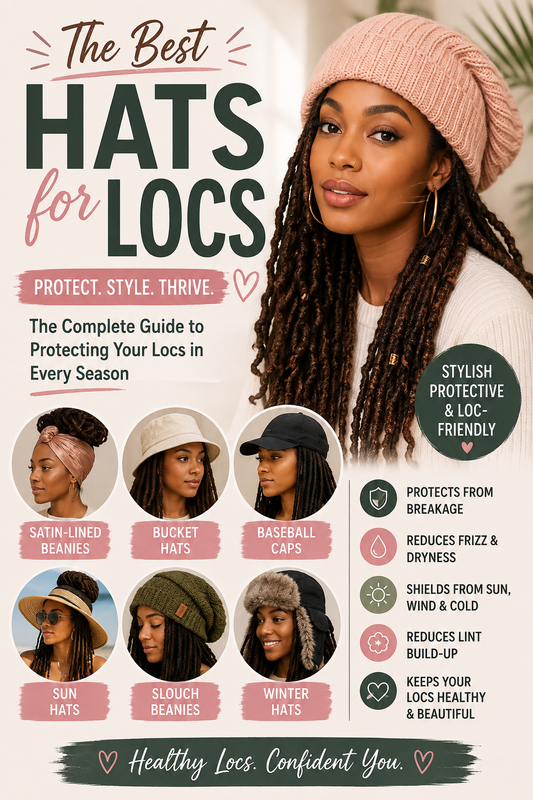
Locs are one of the most versatile and beautiful hairstyles, offering endless styling options while promoting healthy, low-manipulation hair care. Whether you've recently started your loc journey or have waist-length mature locs, choosing the right hat is just as important as choosing the right shampoo or moisturizer.
Not every hat is created equal. Some hats protect your locs from harsh weather while reducing friction and moisture loss. Others can flatten your hair, cause lint buildup, create breakage around the hairline, and leave your scalp dry.
The good news is that you don't have to sacrifice style to protect your locs. Today's hats are available in countless designs, materials, and sizes that accommodate every stage of your loc journey.
In this guide, you'll learn:
- What makes a hat loc-friendly
- The best hats for short, medium, and long locs
- Which materials protect hair best
- Which hats to avoid
- How to prevent flattening and lint
- How to keep your locs healthy while wearing hats every day
Let's dive in.
Why Wearing the Right Hat Matters for Locs
Your locs are constantly exposed to environmental stressors including:
- Sun exposure
- Wind
- Cold temperatures
- Dust
- Pollution
- Rain
- Snow
- Dry indoor heat
A quality hat acts like a protective barrier between your hair and the environment.
Benefits include:
- Reduces moisture loss
- Protects your scalp
- Shields hair from UV damage
- Keeps locs cleaner longer
- Prevents excessive dryness
- Reduces frizz
- Protects edges
- Keeps styles looking fresh
The wrong hat, however, can do the exact opposite.
Problems the Wrong Hat Can Cause
Many people don't realize their favorite baseball cap or knit beanie could be damaging their locs every day.
Poor-quality hats may cause:
Hair Breakage
Tight hats place constant tension around your hairline.
Over time this can weaken:
- Baby hairs
- Edges
- Temple areas
- Crown
Repeated friction eventually leads to thinning.
Lint Build-Up
One of the biggest frustrations for people with locs is lint.
Cheap cotton hats constantly shed tiny fibers.
These fibers become trapped inside mature locs where they're difficult to remove.
Dark-colored locs often show lint more clearly.
Flat Locs
Wearing tight hats all day compresses your locs.
This can cause:
- Flattened roots
- Misshapen locs
- Loss of volume
- Uneven appearance
While temporary flattening usually resolves after removing the hat, wearing overly tight hats daily may make certain sections more compressed over time.
Dry Hair
Many fabrics absorb moisture.
Your locs naturally contain oils and water.
Cotton removes both.
This leaves your locs:
- Brittle
- Rough
- Frizzy
- Dull
Itchy Scalp
Poor ventilation traps:
- Sweat
- Oil
- Dirt
- Heat
This creates irritation and itching.
Breathable hats reduce this problem significantly.
What Makes a Hat Good for Locs?
When shopping, look for five important features.
1. Satin or Silk Lining
This is the gold standard.
Satin creates less friction than cotton.
Benefits include:
- Less breakage
- More moisture retention
- Reduced frizz
- Better shine
- Healthier edges
Whenever possible, choose satin-lined hats.
2. Stretch
Locs need room.
Choose hats with flexible construction.
Stretch allows:
- Less pressure
- Better circulation
- Greater comfort
- Better fit for thicker locs
3. Breathability
Your scalp needs airflow.
Look for materials that allow heat to escape.
Examples include:
- Bamboo
- Linen
- Lightweight performance fabrics
- Mesh panels
4. Large Interior Space
As locs mature they become thicker.
Your hat should have enough depth for:
- Starter locs
- Shoulder-length locs
- Waist-length locs
- Thick traditional locs
- Freeform locs
Avoid hats that squeeze your hair.
5. Adjustable Fit
Adjustable hats work better because they:
- Prevent headaches
- Reduce tension
- Improve comfort
- Fit different hairstyles
Best Materials for Hats
Material matters just as much as style.
Let's compare the most common fabrics.
Satin
Pros:
- Excellent moisture retention
- Minimal friction
- Great for edges
- Prevents frizz
Cons:
- Less warm by itself
- Often used only as a lining
Rating: ★★★★★
Silk
Pros:
- Extremely gentle
- Luxurious
- Breathable
- Excellent moisture retention
Cons:
- More expensive
Rating: ★★★★★
Bamboo
Pros:
- Lightweight
- Breathable
- Moisture-wicking
- Soft
Cons:
- Less common
Rating: ★★★★★
Wool
Pros:
- Very warm
- Durable
- Great winter option
Cons:
- Can be itchy without satin lining
- May cause friction
Rating: ★★★★☆
Cotton
Pros:
- Affordable
- Breathable
- Widely available
Cons:
- Absorbs moisture
- Can create lint
- Causes friction
Rating: ★★☆☆☆
Acrylic
Pros:
- Warm
- Inexpensive
- Stretchy
Cons:
- Can generate static
- Often traps heat
Rating: ★★★☆☆
Best Hats for Short Locs
Short locs are lightweight and easy to manage.
Almost every style works.
Recommended options include:
Baseball Caps
Perfect for:
- Running errands
- Casual outfits
- Outdoor events
Look for:
- Adjustable back strap
- Satin lining
- Soft sweatband
Bucket Hats
Bucket hats have become increasingly popular.
Benefits include:
- Excellent sun protection
- Relaxed fit
- Doesn't compress locs
Great for:
- Summer
- Festivals
- Vacations
- Beach trips
Dad Hats
Dad hats have softer crowns than structured baseball caps.
Advantages:
- Less pressure
- Comfortable fit
- Stylish
- Easy to wear
Lightweight Beanies
Perfect during cool mornings.
Choose:
- Satin-lined
- Loose fitting
- Breathable knit
Avoid oversized compression.
Best Hats for Medium-Length Locs
Medium locs need slightly more room.
Choose hats with deeper crowns.
Excellent choices include:
Slouch Beanies
These provide extra space.
Benefits:
- Comfortable
- Stylish
- Prevents flattening
Ideal for shoulder-length locs.
Wide Bucket Hats
Extra depth allows your locs to rest naturally.
Perfect for:
- Travel
- Everyday wear
- Outdoor activities
Snapback Hats
Snapbacks provide:
- Adjustable sizing
- Extra headroom
- Stylish appearance
Avoid overly structured versions that press tightly against your locs.
Trucker Hats
Mesh backs increase airflow.
Ideal for:
- Hot weather
- Yard work
- Hiking
- Sports
They also reduce sweat buildup.
Best Hats for Long Locs
Long locs require hats with generous space and flexibility.
Consider these options:
Oversized Slouch Beanies
Designed with extra room, these hats allow long locs to rest comfortably without excessive compression.
Benefits:
- Protects loc shape
- Reduces tension
- Accommodates thicker, mature locs
Satin-Lined Turban Hats
Turban-style hats offer full coverage while minimizing friction.
Great for:
- Everyday wear
- Travel
- Running errands
- Protective styling
Extra-Deep Knit Caps
Deep knit caps provide warmth without forcing locs into a tight space.
Look for:
- Stretchy construction
- Satin lining
- Breathable knit
- Relaxed fit
Large Bucket Hats
Bucket hats with deeper crowns can comfortably hold longer locs gathered into a loose bun or ponytail, making them an excellent choice for sunny days.
Best Winter Hats for Locs
Cold weather can be especially hard on locs. Low humidity, freezing temperatures, indoor heating, and winter winds all pull moisture from your hair. A good winter hat should keep you warm while protecting your locs from friction and dryness.
1. Satin-Lined Beanies (Best Overall)
If you only buy one winter hat for your locs, make it a satin-lined beanie.
Benefits include:
- Helps retain moisture
- Reduces frizz
- Protects edges
- Prevents lint buildup
- Comfortable for daily wear
- Suitable for all loc lengths
Choose a beanie with a relaxed fit rather than one that compresses your locs tightly.
2. Slouch Beanies
Slouch beanies provide additional room, making them ideal for thicker or longer locs.
They help:
- Preserve volume
- Reduce flattening
- Minimize scalp pressure
- Accommodate high buns or ponytails
They're also one of the most fashionable options for loc wearers.
3. Fleece-Lined Winter Hats
Fleece adds warmth without excessive bulk.
Look for hats with:
- Satin inner lining
- Stretch fabric
- Breathable panels
- Moisture-wicking material
Avoid hats where rough fleece directly rubs against your locs.
4. Trapper Hats
For extremely cold climates, trapper hats provide excellent insulation.
Advantages include:
- Ear protection
- Wind resistance
- Full-head coverage
- Comfortable fit for outdoor activities
Choose larger sizes if you have long locs.
Best Summer Hats for Locs
Sun exposure can dry your locs, fade color-treated hair, and irritate your scalp.
Lightweight hats help protect both your hair and skin.
Wide-Brim Hats
Wide-brim hats provide excellent protection from harmful UV rays.
Perfect for:
- Gardening
- Beach trips
- Outdoor festivals
- Vacations
- Long walks
Choose breathable straw or woven styles with smooth interior bands.
Bucket Hats
Bucket hats remain one of the best summer choices because they:
- Allow airflow
- Provide shade
- Offer a relaxed fit
- Protect the scalp
They're also easy to fold and pack.
Mesh Trucker Hats
Mesh panels improve ventilation.
These hats help:
- Reduce sweating
- Keep your scalp cool
- Prevent heat buildup
They're ideal for:
- Hiking
- Sports
- Yard work
- Casual wear
Lightweight Sun Hats
UPF-rated sun hats provide extra protection from ultraviolet rays.
Features to look for:
- Moisture-wicking fabric
- Adjustable chin strap
- Wide brim
- Breathable construction
Best Hats for Working Out
Exercise increases sweat production.
The right hat should help manage moisture without trapping heat.
Recommended options include:
Performance Caps
Look for moisture-wicking fabrics.
Benefits:
- Lightweight
- Breathable
- Quick drying
- Comfortable
Sweat-Wicking Head Wraps
Many people with locs prefer athletic wraps instead of traditional hats.
Advantages include:
- Less compression
- Better airflow
- Reduced slipping
- Comfortable under helmets
Running Caps
Running hats are lightweight and help shield your face from the sun.
Choose adjustable versions that don't squeeze your locs.
Best Hats for Work
Professional environments often require practical yet polished headwear.
Great options include:
Fedora Hats
Fedoras provide a stylish appearance while allowing room for neatly styled locs.
Ideal for:
- Business casual settings
- Events
- Church
- Professional gatherings
Newsboy Caps
Newsboy caps offer timeless style and are often deeper than standard flat caps.
They're particularly flattering for medium-length locs.
Soft Berets
Berets create a sophisticated look without excessive pressure.
Wear them slightly tilted for added style while keeping tension low.
Best Hats for Traveling
Travel exposes your locs to changing weather, airplane cabins, and long hours of sitting.
The best travel hats should be:
- Comfortable
- Packable
- Lightweight
- Easy to clean
Excellent travel choices include:
- Satin-lined beanies
- Bucket hats
- Soft baseball caps
- Foldable sun hats
Pack two or three options so you're prepared for different conditions.
Hats to Avoid
Not every fashionable hat is healthy for your locs.
Tight Knit Caps
These compress your locs and may:
- Flatten hair
- Cause headaches
- Increase breakage
Rough Wool Hats
Untreated wool creates friction.
This may result in:
- Frizz
- Dryness
- Lint
- Breakage
Always wear a satin scarf underneath if necessary.
Cheap Cotton Beanies
Cotton absorbs moisture and sheds lint.
Over time, this combination can make your locs feel dry and look dull.
Small Baseball Caps
Standard baseball caps sometimes lack enough depth for mature locs.
If your locs are squeezed tightly inside the cap, choose a larger or adjustable style.
How to Wear Hats Without Damaging Your Locs
A few simple habits can make a big difference.
Moisturize Before Wearing a Hat
Dry hair experiences more friction.
Lightly mist your locs with water or a hydrating leave-in product before putting on your hat.
Avoid over-saturating your hair.
Wear Satin Underneath
If your favorite hat isn't satin-lined, wear a satin bonnet, scarf, or durag underneath.
This creates a protective barrier between your locs and rough fabrics.
Change Hat Position
Don't wear your hat in the exact same position every day.
Rotating placement reduces constant pressure on the same areas of your scalp and hairline.
Remove Your Hat Periodically
If possible, take your hat off every few hours to allow your scalp to breathe and your locs to regain their natural shape.
Keep Hats Clean
Dirty hats collect:
- Sweat
- Oils
- Dust
- Bacteria
Wash hats regularly according to the manufacturer's instructions to help maintain a healthy scalp.
How Often Should You Wash Your Hats?
Frequency depends on use.
Daily wear: Every 1–2 weeks
Workout hats: After every few workouts
Winter hats: Every 2–4 weeks
Occasional hats: As needed
Always let hats dry completely before wearing them again.
Can Wearing Hats Cause Hair Loss?
Many people worry that hats directly cause hair loss.
In most cases, simply wearing a hat does not cause hair loss.
Problems arise when hats are:
- Too tight
- Worn constantly without breaks
- Dirty
- Made from rough materials
- Causing repeated friction on the edges
These factors can contribute to traction-related breakage or irritation, especially around the hairline.
Choosing well-fitting, breathable, and satin-lined hats greatly reduces these risks.
Seasonal Hat Rotation for Healthy Locs
Changing your hats throughout the year helps protect your locs from different environmental conditions.
Spring
- Lightweight bucket hats
- Breathable baseball caps
- Soft berets
Summer
- Wide-brim sun hats
- Mesh trucker hats
- Bucket hats
Fall
- Dad hats
- Light knit beanies
- Newsboy caps
Winter
- Satin-lined beanies
- Slouch beanies
- Fleece-lined winter hats
Using the right hat for each season can help maintain moisture, reduce breakage, and keep your locs looking their best.
Complete Buying Guide: How to Choose the Best Hat for Your Locs
Shopping for hats may seem simple, but choosing the wrong one can leave your locs flattened, dry, or full of lint. Before purchasing your next hat, consider these important factors.
1. Choose the Right Size
One of the biggest mistakes people with locs make is buying hats that fit snugly on a freshly cut hairstyle but become too tight as locs mature.
A properly fitting hat should:
- Feel comfortable without squeezing your scalp
- Allow your locs to move naturally
- Stay in place without leaving deep marks on your forehead
- Accommodate protective styles like buns or ponytails
If you're between sizes, choose the larger option.
2. Look for Satin or Silk Linings
A satin-lined hat is one of the best investments you can make for your locs.
Benefits include:
- Less breakage
- Less frizz
- Better moisture retention
- Reduced lint
- Protection for your edges
- Healthier-looking locs
If your favorite hat isn't lined, wear a satin bonnet or scarf underneath.
3. Consider Your Lifestyle
Think about when you'll wear the hat most often.
Everyday Wear
Choose:
- Dad hats
- Bucket hats
- Slouch beanies
Outdoor Work
Choose:
- Wide-brim hats
- Trucker hats
- Performance caps
Exercise
Choose:
- Moisture-wicking athletic caps
- Running hats
- Breathable head wraps
Winter
Choose:
- Satin-lined beanies
- Fleece-lined hats
- Slouch knit hats
4. Think About Your Loc Length
Different lengths benefit from different hat styles.
Starter Locs
Almost any adjustable hat works well.
Shoulder-Length Locs
Look for:
- Deeper crowns
- Stretch fabrics
- Slouch styles
Long Locs
Choose:
- Oversized hats
- Deep bucket hats
- Large beanies
- Turban-style hats
5. Select Breathable Materials
The more breathable the hat, the healthier your scalp will remain.
Excellent choices include:
- Bamboo
- Satin-lined cotton blends
- Linen
- Performance fabrics
- Lightweight knit materials
Avoid heavy synthetic materials in hot weather.
Frequently Asked Questions
Can I Wear a Hat Every Day With Locs?
Yes.
As long as the hat fits properly and doesn't create excessive friction, daily wear is generally fine. Give your scalp breaks when possible and keep both your hair and hat clean.
Will Hats Make My Locs Smell?
Not necessarily.
Odor usually develops when sweat builds up in dirty hats.
To prevent this:
- Wash hats regularly.
- Let your locs dry completely after washing.
- Avoid storing damp hats.
Can Hats Slow Hair Growth?
No.
Hair grows from the scalp, not from the ends of your locs.
However, hats that are too tight can contribute to breakage around the hairline, making it appear as though your hair isn't growing.
Are Satin-Lined Hats Really Worth It?
Absolutely.
Satin-lined hats help:
- Reduce friction
- Retain moisture
- Minimize breakage
- Protect edges
- Reduce lint accumulation
Many people notice healthier, shinier locs after switching to satin-lined hats.
Can I Wear a Hat With Freshly Retwisted Locs?
Yes, but choose a loose-fitting hat.
Avoid tight caps immediately after a retwist because they can flatten your roots and disturb the fresh pattern.
Can I Wear Hats During Summer?
Definitely.
Choose lightweight hats that allow airflow.
Great options include:
- Bucket hats
- Sun hats
- Mesh trucker hats
- Lightweight baseball caps
Can Hats Help Protect Color-Treated Locs?
Yes.
UV rays can fade hair color over time.
A quality hat helps shield your locs from direct sunlight and keeps color looking vibrant longer.
Additional Ways to Protect Your Locs While Wearing Hats
A hat is only one part of a healthy loc care routine. Pair it with these habits for even better results.
Keep Your Scalp Moisturized
A dry scalp can lead to itching and flaking.
Use a lightweight oil or moisturizing scalp treatment as needed, focusing on the scalp rather than saturating the locs.
Cleanse Regularly
Product buildup, sweat, and environmental debris can collect around your scalp and inside your locs.
Maintain a regular wash schedule based on your activity level and hair needs.
Stay Hydrated
Healthy hair starts from within.
Drinking enough water supports overall scalp health and helps maintain your hair's natural moisture balance.
Sleep on Satin
Protect your locs at night by using:
- Satin pillowcases
- Satin bonnets
- Satin scarves
This reduces overnight friction and helps preserve moisture.
Avoid Excessive Tension
Whether from hats, ponytails, or tight hairstyles, constant tension can stress your hairline over time.
Rotate styles and choose accessories that don't pull on your roots.
Styling Ideas for Hats and Locs
One of the best things about locs is their versatility. Try pairing your hats with different hairstyles:
Baseball Cap
- Low ponytail
- Low bun
- Side-swept locs
Bucket Hat
- Loose locs
- Half-up style
- Shoulder-length locs
Slouch Beanie
- Long locs tucked inside
- High bun
- Free-flowing locs
Wide-Brim Hat
- Soft curls on loc ends
- Elegant low bun
- Side part
Trucker Hat
- Low ponytail
- Braided locs
- Casual loose style
Final Thoughts
The best hats for locs do much more than complete your outfit—they help protect your hair from the elements, reduce friction, preserve moisture, and support healthy loc maintenance. Whether you prefer a classic baseball cap, a relaxed bucket hat, or a cozy satin-lined beanie, choosing hats designed with your hair's needs in mind can make a noticeable difference.
By selecting breathable materials, avoiding overly tight styles, and incorporating healthy hair care habits into your routine, you can enjoy fashionable headwear without compromising the health of your locs.
Remember, healthy locs are built through consistent care. Pairing the right hats with a balanced hair routine will help keep your locs strong, clean, moisturized, and looking their best all year long.
Conclusion
Finding the best hats for locs doesn't have to be difficult. Prioritize comfort, breathable materials, and satin or silk linings whenever possible. The right hat can protect your locs from weather, reduce breakage, and help maintain your hairstyle throughout every season.
Whether you're heading to work, the gym, the beach, or simply running errands, there is a loc-friendly hat that combines style with protection.
With the tips in this guide, you'll be able to choose hats that keep your locs healthy while expressing your personal style with confidence.