The Ultimate Guide to Protecting Your Hair Overnight
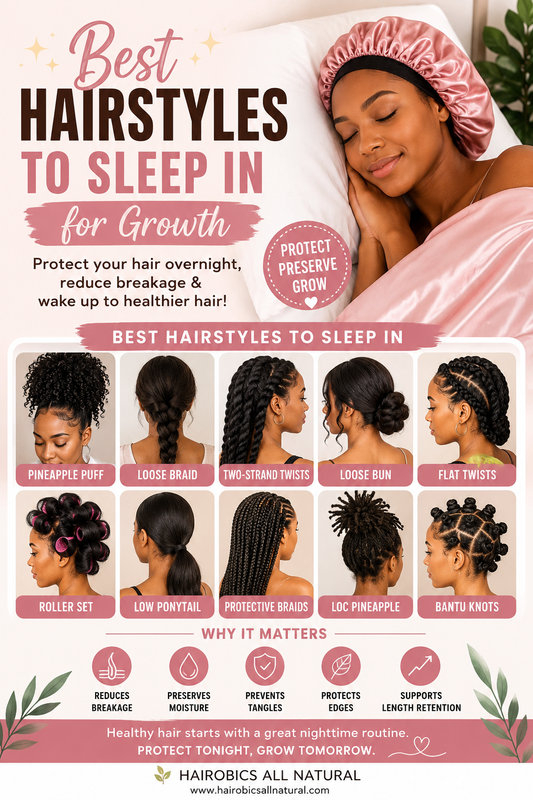
Your nighttime hair routine matters far more than most people realize. While you sleep, your hair experiences hours of friction, tension, dryness, and pressure against pillows and bedding. If you are waking up with tangles, breakage, dryness, thinning edges, or flattened curls, your nighttime hairstyle may be damaging your progress without you even noticing.
The good news is that the right protective sleep hairstyle can help retain length, reduce breakage, preserve moisture, and support healthier hair growth over time.
Whether you have natural hair, curly hair, braids, locs, relaxed hair, fine hair, or thick textured hair, choosing the best hairstyles to sleep in for growth can make a major difference in the health and appearance of your hair.
In this complete guide, you’ll learn:
- Why nighttime hairstyles affect hair growth
- The best protective hairstyles for sleeping
- Hairstyles to avoid overnight
- How to protect edges while sleeping
- The best nighttime routine for longer, healthier hair
- Common mistakes that cause breakage overnight
- Tips for curly hair, braids, locs, and natural hair
Let’s dive in.
Why Your Sleep Hairstyle Matters for Hair Growth
Hair growth starts at the scalp, but retaining length depends on preventing breakage. Many people think their hair “isn’t growing,” when in reality, their hair is growing but breaking off at the same rate.
Overnight damage is one of the biggest causes of breakage.
When hair rubs against cotton pillowcases or becomes tangled during sleep, the hair cuticle weakens. This can lead to:
- Split ends
- Dryness
- Knotting
- Breakage
- Frizz
- Thinning edges
- Hair loss around stress points
Protective sleep hairstyles help minimize friction and tension while keeping the hair moisturized and secure.
Benefits of Sleeping in Protective Hairstyles
1. Reduces Breakage
Protective hairstyles keep strands contained and prevent excessive movement during sleep.
2. Preserves Moisture
Hair loses moisture overnight, especially when rubbing against absorbent cotton fabrics. Protective styles help lock in hydration.
3. Prevents Tangles
Tangles weaken hair and lead to unnecessary shedding and breakage during detangling.
4. Protects Edges
Loose hair rubbing against pillows can weaken delicate edges and temples.
5. Helps Retain Length
Less breakage means better length retention over time.
6. Maintains Hairstyles Longer
Protective sleep styles help preserve curls, braids, silk presses, twists, and blowouts.
Best Hairstyles to Sleep In for Hair Growth
1. Loose Pineapple Puff
The pineapple method is one of the best hairstyles for curly and natural hair.
How to Do It
- Gather hair loosely at the top of the head
- Use a satin scrunchie
- Avoid pulling tightly
Benefits
- Protects curls
- Reduces flattening
- Prevents tangles
- Minimizes friction
This style works especially well for:
- Curly hair
- Coily hair
- Wash-and-go styles
- Twist-outs
Pro Tip
Apply a lightweight moisturizer or a few drops of oil before creating the pineapple.
2. Loose Braids
Braids are one of the best protective sleep hairstyles for hair growth.
Why Loose Braids Work
- Keep hair stretched
- Reduce tangles
- Prevent friction
- Help retain moisture
Best Types
- One loose braid
- Two loose braids
- Low braided pigtails
Avoid braiding too tightly, especially near the edges.
Best For
- Natural hair
- Relaxed hair
- Wavy hair
- Thick hair
3. Two-Strand Twists
Twists are excellent for protecting natural hair overnight.
Benefits
- Reduce manipulation
- Prevent tangles
- Stretch hair gently
- Preserve moisture
How to Sleep With Twists
- Use medium or large twists
- Avoid overly tight roots
- Cover with a satin bonnet
Twists are especially effective for:
- Type 3 curls
- Type 4 hair
- Dry hair
- Fragile hair
4. Loose Bun
A low loose bun can protect hair while minimizing stress on the scalp.
Best Practices
- Keep the bun low
- Avoid tight elastics
- Use satin scrunchies
Benefits
- Prevents tangles
- Protects ends
- Reduces friction
Avoid sleeping with tight ballerina buns because constant tension can damage edges.
5. Flat Twists
Flat twists are ideal for stretching natural hair while sleeping.
Benefits
- Minimize shrinkage
- Protect strands
- Maintain curl definition
Flat twists are a great alternative to tight cornrows because they place less stress on the scalp.
6. Satin-Wrapped Roller Sets
If you want smooth hair without heat damage, roller wrapping can preserve styles overnight.
Best For
- Silk presses
- Relaxed hair
- Blowouts
Why It Helps Growth
Less heat styling means less breakage over time.
7. Loose Low Ponytail
A low ponytail can work if done properly.
Important Tips
- Use soft scrunchies
- Keep it loose
- Avoid rubber bands
Tight ponytails can cause traction alopecia and thinning edges.
8. Protective Braids
Sleeping in properly installed protective braids can help reduce daily manipulation.
Examples
- Box braids
- Knotless braids
- Cornrows
- Fulani braids
Night Protection Tips
- Wrap braids with a satin scarf
- Use braid spray before bed
- Avoid sleeping with wet braids
9. Loose Loc Pineapple
People with locs also benefit from protective sleep styles.
Benefits
- Prevents flattening
- Reduces lint buildup
- Protects roots
Use satin caps or loc socks for extra protection.
10. Bantu Knots
Loose Bantu knots can preserve curl patterns while protecting hair.
Benefits
- Reduces tangles
- Creates heatless curls
- Protects ends
Make sure knots are not too tight.
Hairstyles to Avoid While Sleeping
Some hairstyles can seriously damage hair over time.
Tight Ponytails
These place stress on the hairline and scalp.
Tight Buns
Constant tension weakens follicles and edges.
Tight Braids
Overly tight braids can lead to:
- Hair loss
- Scalp inflammation
- Breakage
Loose Hair on Cotton Pillows
Cotton absorbs moisture and increases friction.
Wet Hair
Sleeping with soaking wet hair weakens the hair shaft and increases breakage risk.
Best Fabrics for Sleeping With Hair
Satin
Satin reduces friction and helps preserve moisture.
Silk
Silk is gentle and luxurious but usually more expensive.
Benefits of Satin and Silk
- Reduce breakage
- Prevent frizz
- Help retain moisture
- Protect hairstyles
Use:
- Satin pillowcases
- Satin bonnets
- Satin scarves
The Best Nighttime Hair Routine for Growth
Step 1: Moisturize
Dry hair breaks easily.
Use:
- Leave-in conditioners
- Lightweight oils
- Hydrating sprays
Products like Hairobics All Natural Hair & Scalp Booster can help nourish the scalp and support healthy hair maintenance overnight.
Step 2: Seal the Moisture
Apply oils to help lock hydration into the hair.
Popular oils include:
- Jamaican Black Castor Oil
- Rosemary oil
- Peppermint oil
- Jojoba oil
Step 3: Use a Protective Hairstyle
Choose a style that matches your hair type and texture.
Step 4: Cover Your Hair
Always use:
- Satin bonnet
- Satin scarf
- Satin pillowcase
Step 5: Protect Your Edges
Apply edge-safe oils or lightweight moisturizers around the hairline.
Avoid tight wrapping around edges.
Best Sleep Hairstyles by Hair Type
Natural Hair
Best Options:
- Twists
- Braids
- Pineapple puff
- Flat twists
Natural hair benefits greatly from low-manipulation styles.
Curly Hair
Best Options:
- Pineapple
- Loose braid
- Satin bonnet
These styles preserve curl definition overnight.
Fine Hair
Best Options:
- Loose braid
- Low ponytail
- Silk wrap
Avoid heavy oils and tight styles.
Thick Hair
Best Options:
- Chunky twists
- Loose braids
- Pineapple
Relaxed Hair
Best Options:
- Roller wraps
- Silk wraps
- Loose buns
Avoid tension and friction.
Locs
Best Options:
- Loose pineapple
- Loc sock
- Satin bonnet
Protect locs from lint and flattening.
How to Protect Edges While Sleeping
Edges are fragile and easy to damage.
Best Practices
- Avoid tight styles
- Use satin scarves
- Moisturize edges regularly
- Sleep on satin pillowcases
Never tie scarves too tightly around the hairline.
Common Nighttime Hair Mistakes
1. Sleeping Without Protection
Bare hair against cotton creates friction.
2. Tight Hairstyles
Tension damages follicles.
3. Skipping Moisture
Dry hair becomes brittle overnight.
4. Sleeping With Wet Hair
Wet strands are weaker and more elastic.
5. Using Rubber Bands
Rubber bands snag and break hair.
How Often Should You Change Your Sleep Hairstyle?
Avoid wearing the exact same tension pattern every night.
Rotating styles helps prevent:
- Weak spots
- Edge thinning
- Breakage
Does Sleeping in Protective Hairstyles Actually Help Hair Grow?
Protective sleep hairstyles do not directly speed up hair growth from the scalp.
However, they help retain the hair you grow by reducing:
- Breakage
- Friction
- Tangles
- Dryness
Length retention is one of the biggest secrets behind long healthy hair.
Best Products to Use Before Bed
Lightweight Oils
Help seal moisture overnight.
Leave-In Conditioners
Prevent dryness and brittleness.
Scalp Oils
Support scalp hydration and massage.
Satin Accessories
Essential for minimizing friction.
Overnight Hair Growth Tips
Massage Your Scalp
Scalp massage may improve circulation.
Stay Hydrated
Dehydration affects hair health.
Protect Ends
The ends are the oldest part of the hair.
Sleep Consistently
Poor sleep may affect overall hair health.
Avoid Over-Manipulation
Too much styling weakens strands.
Frequently Asked Questions
Is it better to sleep with hair up or down?
Usually up in a loose protective style is better because it reduces tangles and friction.
Can sleeping with loose hair damage it?
Yes, especially on cotton pillowcases.
What is the healthiest hairstyle to sleep in?
Loose braids, twists, or a pineapple puff are among the healthiest options.
Should I oil my hair before bed?
Light oils can help lock in moisture overnight.
Is a satin bonnet necessary?
Yes, satin bonnets help reduce friction and preserve moisture.
Final Thoughts
Choosing the best hairstyles to sleep in for growth can dramatically improve the health, strength, and appearance of your hair over time. Small nighttime habits make a major difference in reducing breakage and retaining length.
Protective sleep hairstyles work best when combined with:
- Consistent moisture
- Gentle handling
- Satin protection
- Healthy scalp care
Whether you prefer braids, twists, buns, pineapples, or loc styles, the key is keeping your hair protected without excessive tension.
Healthy hair growth is not just about what you do during the day — it is also about how you protect your hair at night.
By creating a consistent nighttime routine and choosing gentle protective hairstyles, you can help your hair stay stronger, longer, healthier, and more manageable over time.
Shop Hairobics All Natural for nourishing hair care products designed to help support healthy-looking hair, scalp hydration, moisture retention, and protective styling routines.