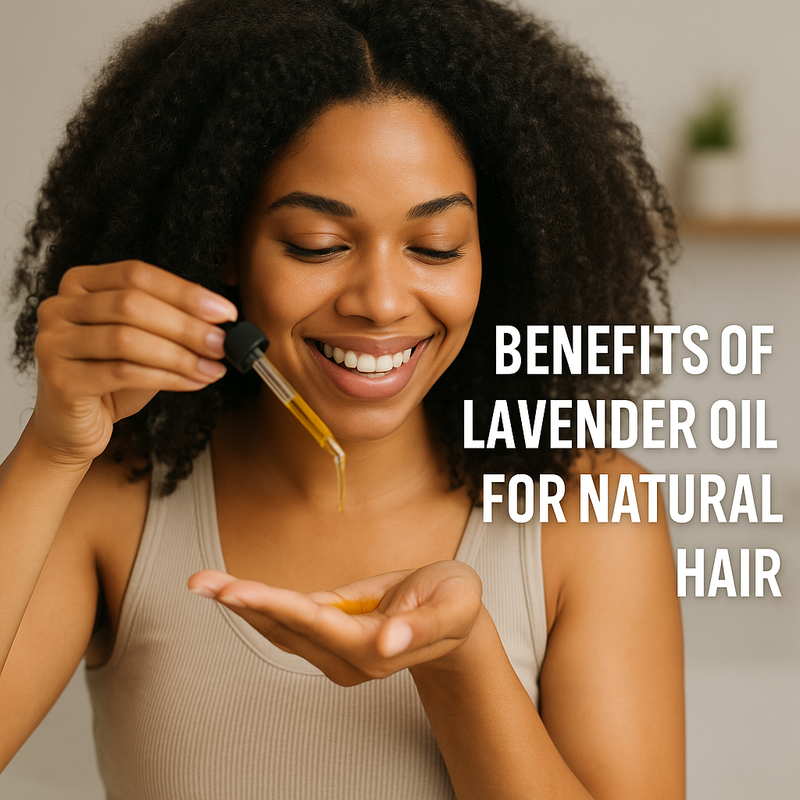
When it comes to natural hair care, essential oils have become a powerful part of healthy routines — and lavender oil stands out as one of the most versatile and underrated options. Known for its calming scent and soothing properties, lavender oil does far more than just smell good.
For natural hair, lavender oil supports scalp health, moisture retention, hair growth, breakage prevention, and stress-related shedding. Whether you wear your hair loose, braided, twisted, or locked, lavender oil can play a valuable role in maintaining strong, healthy hair.
In this article, we’ll explore:
-
What lavender oil is and how it works
-
The science-backed benefits of lavender oil for natural hair
-
How lavender oil supports scalp health and growth
-
How to use lavender oil safely and effectively
-
Common mistakes to avoid
-
Who benefits most from lavender oil
What Is Lavender Oil?
Lavender oil is an essential oil extracted from the flowers of the Lavandula angustifolia plant. It has been used for centuries in aromatherapy, skincare, and hair care due to its antimicrobial, anti-inflammatory, and calming properties.
Unlike many essential oils, lavender oil is:
-
Gentle
-
Well tolerated by most scalp types
-
Suitable for regular use when properly diluted
These qualities make it especially beneficial for natural hair, which thrives on balance and gentle care.
Why Scalp Health Is the Foundation of Natural Hair Growth
Healthy hair begins at the scalp. If the scalp is inflamed, dry, irritated, or clogged, hair growth slows and breakage increases — regardless of the products used on the strands.
Lavender oil supports scalp health by:
-
Reducing inflammation
-
Calming irritation and itching
-
Supporting a balanced scalp environment
-
Helping follicles function properly
This creates the ideal conditions for stronger, healthier hair growth.
Top Benefits of Lavender Oil for Natural Hair
Let’s break down the specific ways lavender oil benefits natural hair and why it works so well across hair textures.
1. Promotes Hair Growth
Lavender oil is often associated with hair growth — and for good reason.
Studies suggest lavender oil may:
-
Improve blood circulation to the scalp
-
Support follicle activity
-
Extend the hair growth (anagen) phase
Better circulation means more oxygen and nutrients reach the hair follicles, which supports healthier and potentially faster growth over time.
While lavender oil is not a “miracle growth oil,” consistent use can help create the right environment for hair to grow and thrive.
2. Helps Reduce Hair Shedding and Breakage
Excessive shedding is often linked to:
-
Scalp inflammation
-
Stress
-
Hormonal imbalance
-
Poor scalp circulation
Lavender oil’s calming and anti-inflammatory properties help reduce scalp stress, which can minimize unnecessary shedding. When the scalp is calm and balanced, hair strands are less likely to weaken and fall prematurely.
For natural hair — which is already prone to dryness and breakage — this added protection is essential.
3. Soothes Itchy, Irritated, or Inflamed Scalp
One of lavender oil’s most powerful benefits is its ability to calm the scalp.
Lavender oil helps:
-
Reduce itching
-
Soothe dryness
-
Calm redness and irritation
-
Ease scalp discomfort
This makes it especially helpful for people who experience:
-
Itchy scalp
-
Tight braids or protective styles
-
Dry scalp flakes
-
Sensitivity to styling products
A calm scalp supports healthier hair retention.
4. Supports a Healthy Scalp Microbiome
Lavender oil has natural antimicrobial and antifungal properties, which help maintain a healthy balance of bacteria and yeast on the scalp.
This can help prevent or reduce:
-
Dandruff
-
Fungal scalp issues
-
Product buildup–related irritation
-
Odor under protective styles
Keeping the scalp clean and balanced allows hair follicles to function properly.
5. Helps Retain Moisture in Natural Hair
Dry hair breaks — period.
Lavender oil helps improve moisture retention by:
-
Supporting scalp oil balance
-
Reducing dryness-related inflammation
-
Enhancing the effectiveness of moisturizing routines
While lavender oil itself is not a moisturizer, it works well when paired with water-based hydration to help seal in moisture and prevent dryness.
6. Reduces Stress-Related Hair Issues
Stress plays a major role in hair loss and shedding. Lavender oil is widely known for its stress-reducing and calming effects.
Using lavender oil regularly — whether through scalp massage or aromatherapy — may help:
-
Lower stress levels
-
Improve sleep quality
-
Reduce stress-induced shedding
This makes lavender oil especially beneficial during postpartum periods, high-stress seasons, or lifestyle changes.
7. Strengthens Hair at the Root
Healthy follicles produce stronger strands.
By supporting circulation, reducing inflammation, and calming the scalp, lavender oil helps strengthen hair at the root — where breakage often begins.
Stronger roots mean:
-
Less thinning
-
Better length retention
-
Healthier regrowth
8. Adds Natural Shine and Softness
When used correctly, lavender oil can help:
-
Smooth the hair cuticle
-
Improve softness
-
Add a natural sheen
This is especially beneficial for natural hair textures that tend to look dull when dry.
How to Use Lavender Oil for Natural Hair
Lavender oil should always be used properly diluted. Essential oils are highly concentrated and should never be applied directly to the scalp on their own.
1. Lavender Oil Scalp Massage
Mix:
-
2–3 drops lavender oil
-
1 tablespoon carrier oil (jojoba, grapeseed, or almond oil)
Massage gently into the scalp for 3–5 minutes.
Benefits:
-
Improves circulation
-
Soothes scalp
-
Supports growth
Use 2–3 times per week.
2. Lavender Oil in a Moisturizing Spray
Add a few drops of lavender oil to a water-based spray to refresh hair and scalp.
This works well for:
-
Daily hydration
-
Protective styles
-
Locs and braids
A formula like Hairobics Raaw Roots Moisturizing Spray pairs well with essential oils because it hydrates without buildup.
3. Lavender Oil for Protective Styles
Lavender oil is excellent for braids, twists, and locs.
Benefits include:
-
Reduced itching
-
Fresher scalp
-
Less irritation under styles
Apply lightly to the scalp 2–3 times per week.
4. Lavender Oil for Nighttime Hair Care
Using lavender oil at night can:
-
Calm the scalp
-
Reduce dryness
-
Promote relaxation and better sleep
Light scalp application before bed works well when paired with satin or silk protection.
Who Benefits Most From Lavender Oil?
Lavender oil is especially helpful for:
-
Natural hair prone to dryness
-
Itchy or sensitive scalps
-
Stress-related shedding
-
Protective style wearers
-
Loc wearers
-
Postpartum hair care routines
It works across all curl patterns, from loose curls to tight coils.
Common Mistakes to Avoid
❌ Applying lavender oil directly to the scalp without dilution
❌ Using too much oil (leads to buildup)
❌ Expecting instant growth results
❌ Ignoring moisture and scalp cleansing
❌ Using low-quality or synthetic lavender oils
Quality and consistency matter.
How Long Does It Take to See Results?
With consistent use:
-
Scalp comfort improves within days
-
Itching and dryness reduce within 1–2 weeks
-
Shedding improves over several weeks
-
Growth support becomes noticeable over months
Essential oils work gradually — patience is key.
Lavender Oil vs Other Essential Oils for Natural Hair
Lavender oil stands out because it:
-
Is gentle and versatile
-
Supports both scalp and hair health
-
Helps with stress-related hair concerns
-
Works well for sensitive scalps
While oils like peppermint or tea tree are more stimulating, lavender offers a balanced, calming approach to hair care.
Final Thoughts: Lavender Oil Is a Powerful Ally for Natural Hair
Lavender oil isn’t just a pleasant scent — it’s a functional, science-backed ingredient that supports healthy natural hair from the scalp up.
When used correctly, lavender oil can:
-
Promote healthier growth
-
Reduce shedding and breakage
-
Calm itchy or irritated scalp
-
Improve moisture retention
-
Support long-term hair health
The key is consistent, gentle use as part of a complete routine.
Healthy hair doesn’t come from harsh treatments — it comes from balance, patience, and care.