If you’ve ever asked yourself, “Why does my hair grow… but never seem to retain length?” — the answer isn’t random. It’s structural.
Black hair doesn’t break because it’s weak.
It breaks because of how it’s built.
Understanding the anatomy of a single strand completely changes how you approach growth, moisture, protein, styling, and long-term retention. When you understand what’s happening on a microscopic level, your entire routine becomes more strategic — especially if you’re building a length-retention focused regimen for Hairobics readers.
Let’s break it down from the inside out.
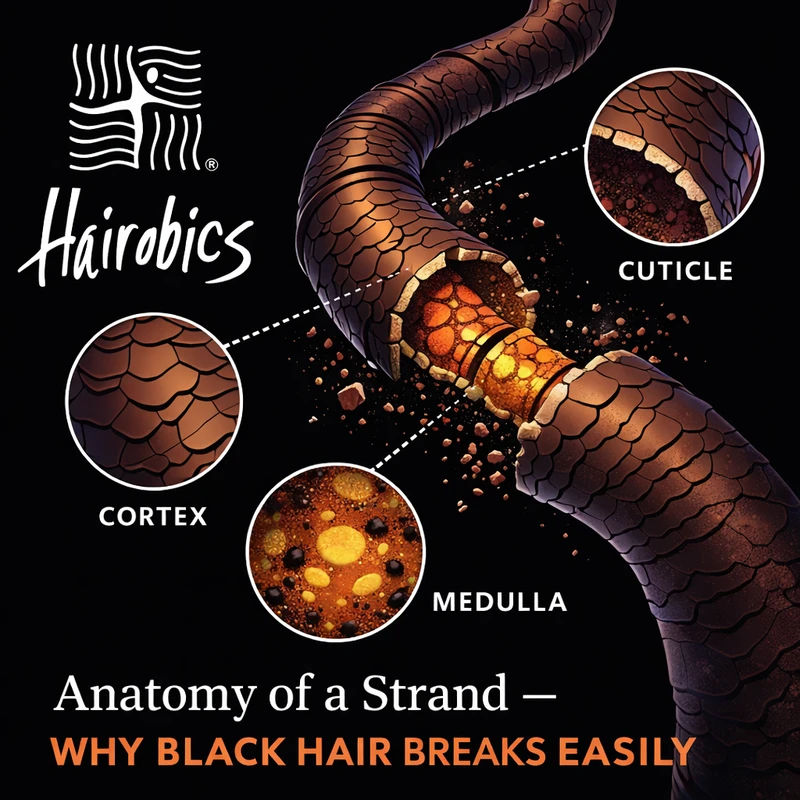
1. The Three Layers of a Hair Strand


Every strand of hair — including tightly coiled Black hair — has three primary layers:
1. The Cuticle (Outer Layer)
The cuticle is made of overlapping, scale-like cells — similar to shingles on a roof.
Its job:
-
Protect the inner layers
-
Control moisture movement
-
Prevent internal damage
When the cuticle lifts, chips, or erodes, breakage begins.
2. The Cortex (Middle Layer)
This is the strength center of the hair strand.
It contains:
-
Keratin protein chains
-
Elastic bonds
-
Melanin (hair color)
The cortex determines:
-
Strength
-
Elasticity
-
Thickness
-
Curl pattern
If the cortex becomes weak (from dryness, protein loss, or stress), hair snaps.
3. The Medulla (Inner Core)
In many curly and coily strands, the medulla is fragmented or even absent.
That matters.
Why? Because when the medulla is inconsistent, structural balance is lower — which can make the strand more vulnerable to bending stress.
2. The Unique Shape of Black Hair


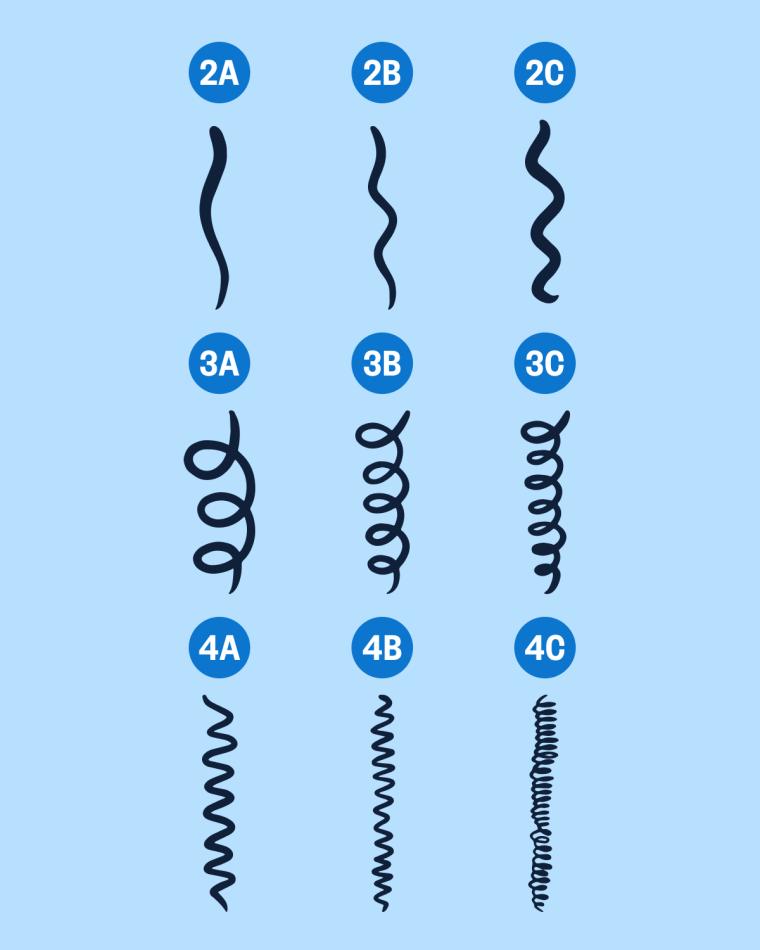

The number one reason Black hair breaks more easily is not weakness — it’s geometry.
Hair Shape Matters
Straight hair grows from a round follicle.
Wavy hair grows from an oval follicle.
Tightly coiled hair grows from a flattened or elliptical follicle.
This creates:
-
Sharp bends
-
Curves
-
Twist points
Each bend is a stress point.
Imagine bending a paperclip repeatedly in the same spot. Eventually, it snaps — not because it’s bad metal, but because of repeated stress at one curve.
Your curls are made of hundreds of micro-bends.
That means:
More bends = more weak points = higher breakage risk.
3. Why Coily Hair Has Fewer Cuticle Layers
Studies show that tightly coiled strands often have:
-
Fewer cuticle layers
-
Thinner cuticle coverage at bend points
-
More cuticle lifting
This leads to:
• Faster moisture loss
• Higher porosity in some areas
• Easier surface damage
When the protective barrier is thinner, daily friction becomes destructive.
4. Moisture Movement in Black Hair
Because of the spiral pattern:
-
Natural scalp oils struggle to travel down the strand
-
Mid-lengths and ends dry faster
-
Ends experience the most weathering
Dryness weakens keratin bonds in the cortex.
When elasticity decreases, breakage increases.
This is why moisture retention — not just growth — is the real goal.
5. Mechanical Stress: The Silent Breakage Trigger
Black hair is strong in tension but fragile in bending.
Common breakage triggers:
-
Tight braids
-
Rough detangling
-
Over-manipulation
-
Sleeping without protection
-
Excessive brushing
-
High-tension ponytails
-
Repeated edge styling
Every time a curl is stretched and released without lubrication, internal bonds strain.
Over time, that stress becomes breakage.
6. The Role of Elasticity
Healthy hair stretches up to 30% of its length and returns to shape.
Low elasticity = snapping
Balanced elasticity = length retention
Elasticity depends on:
-
Moisture balance
-
Protein balance
-
Scalp health
-
Internal nutrition
Too much protein makes hair rigid.
Too much moisture makes hair mushy.
Balance matters.
7. Why the Ends Break First
The ends of your hair are the oldest part.
If your hair grows 6 inches per year, your ends could be:
-
2 years old
-
3 years old
-
5+ years old
That means:
They’ve experienced:
-
Sun exposure
-
Wind friction
-
Fabric rubbing
-
Styling tension
-
Detangling stress
-
Heat damage
And because coily hair already has structural bends, those aged ends become the most fragile.
8. Chemical Damage & Structural Weakening
Relaxers, bleach, and repeated heat styling break down:
-
Disulfide bonds
-
Hydrogen bonds
-
Protein chains
Once these internal bonds are compromised, the cortex loses integrity.
The strand may look shiny — but internally, it’s hollowed out.
That’s why breakage can happen even when hair appears “healthy.”
9. Porosity & Breakage Connection
Low porosity hair:
-
Resistant to moisture entry
-
Prone to surface dryness
High porosity hair:
-
Absorbs moisture quickly
-
Loses moisture quickly
Both can break — but for different reasons.
Porosity determines how well your strand holds structural stability.
10. Scalp Health = Strand Health
The strand begins at the follicle.
Inflamed scalp = weakened growth
Clogged follicles = disrupted cycle
Poor circulation = reduced nutrient delivery
Healthy strands begin before they even emerge.
11. Why Black Hair Shrinkage Contributes to Breakage
Shrinkage is elasticity in action — but constant stretching and restretching:
-
Strains bend points
-
Weakens stress areas
-
Creates tension fatigue
Protective styles that minimize manipulation reduce repeated stress.
12. Environmental Damage
Black hair is highly reactive to:
-
Humidity
-
Dry air
-
Cold weather
-
UV exposure
Because of the curl structure, environmental shifts impact internal moisture balance more quickly than straight hair types.
13. Length Retention vs Growth
Most people don’t have a growth problem.
They have a retention problem.
If hair grows ½ inch per month but breaks at the same rate, length appears stagnant.
Understanding strand anatomy shifts focus from “growth oils” to:
-
Cuticle protection
-
Moisture preservation
-
Bond strength
-
Reduced manipulation
14. The Science of Protective Styling
Protective styles reduce:
-
Friction
-
Daily bending
-
Environmental exposure
But tension-heavy styles can create traction stress at the root.
Balance matters.
15. The Real Reason Black Hair Breaks Easily
It’s not weakness.
It’s:
-
Structural curvature
-
Fewer protective cuticle layers
-
Increased bend points
-
Slower sebum distribution
-
Higher mechanical stress
Once you understand this, your routine changes from random product testing to intentional structure preservation.
How to Reduce Breakage Based on Strand Anatomy
1. Reduce Dry Friction
Always detangle on damp, lubricated hair.
2. Protect Bend Points
Avoid tight styles that pull at curl curves.
3. Seal Moisture Strategically
Focus on mid-lengths and ends.
4. Balance Protein & Moisture
Do not overload either side.
5. Trim Strategically
Remove split ends before splits travel upward.
6. Protect at Night
Use satin or silk to reduce cuticle abrasion.
Final Thoughts
Black hair does not break because it is inferior.
It breaks because it is:
• Structurally unique
• Geometrically complex
• Beautifully engineered
The same coils that create volume, texture, and versatility also create stress points.
When you understand the anatomy of a strand, you stop blaming your hair — and start protecting it properly.
Length retention becomes predictable.
Moisture becomes strategic.
Breakage becomes preventable.
And that’s when true long-term hair health begins.