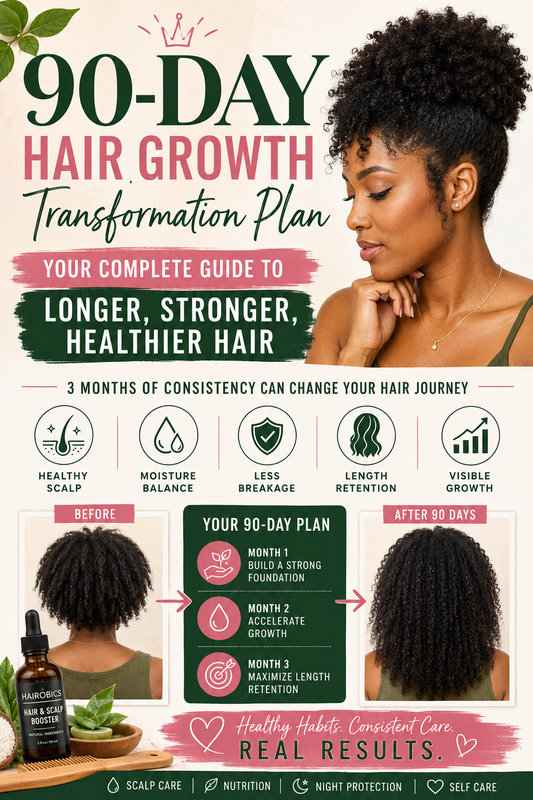
Growing healthier hair isn't about finding a miracle product or trying the latest viral trend. Real hair transformation comes from consistency, healthy habits, proper scalp care, and protecting the hair you already have. Whether you have natural hair, curly hair, braids, locs, or relaxed hair, a structured 90-day plan can help you build stronger strands, reduce breakage, and maximize length retention.
Many people become discouraged because they expect dramatic results within a few weeks. However, healthy hair growth is a gradual process. On average, hair grows about half an inch (1.25 cm) each month, though genetics, age, nutrition, overall health, and hair care habits all influence the rate of growth.
A 90-day transformation isn't just about growing longer hair—it's about creating an environment where your scalp and hair can thrive. During these three months, your focus should be on:
- Creating a healthy scalp
- Preventing unnecessary breakage
- Improving moisture balance
- Protecting hair from damage
- Developing consistent hair care habits
- Supporting overall wellness through nutrition and hydration
By following the strategies in this guide, you'll not only improve the appearance of your hair but also establish routines that support long-term hair health.
Why 90 Days Is the Perfect Hair Growth Timeline
Hair doesn't grow overnight. Every strand follows a natural growth cycle that includes growth, transition, resting, and shedding phases. While you can't completely change your natural growth rate, you can reduce the factors that prevent you from retaining the length your hair produces.
Ninety days gives your scalp and hair enough time to respond to healthier habits. During this period, you may notice:
- Less shedding
- Reduced breakage
- Softer hair
- Better moisture retention
- Healthier scalp condition
- Improved curl definition
- Stronger edges
- Fuller-looking hair
- Increased shine
- Better length retention
Many people mistake breakage for slow growth. In reality, their hair is growing, but damage prevents them from seeing progress.
Understanding the Hair Growth Cycle
Every hair follicle operates independently through four distinct stages.
Anagen (Growth Phase)
This is when active hair growth occurs. Depending on genetics, this phase can last anywhere from two to seven years. The longer your anagen phase, the longer your hair has the potential to grow.
Healthy habits help support this phase by maintaining a healthy scalp environment.
Catagen (Transition Phase)
This short stage lasts only a few weeks. Hair growth slows as the follicle prepares to rest.
Telogen (Resting Phase)
Hair remains in place while the follicle rests.
Exogen (Shedding Phase)
Old hairs naturally shed, making room for new growth.
Losing 50–100 hairs per day is generally considered normal. Excessive breakage, however, is different from normal shedding.
What Results Can You Expect in 90 Days?
Everyone's journey is different.
Factors affecting progress include:
- Genetics
- Age
- Hormones
- Nutrition
- Stress
- Medical conditions
- Hair care routine
- Protective styling habits
- Heat usage
- Chemical treatments
With consistent care, many people notice:
Stronger Hair
Hair becomes more resilient to brushing, styling, and washing.
Less Breakage
Reducing friction and dryness helps preserve the hair you grow.
Healthier Scalp
A balanced scalp supports healthy follicles and comfortable hair growth.
Better Moisture Retention
Hair feels softer, smoother, and remains hydrated longer.
Fuller Appearance
Reduced breakage often makes hair appear thicker over time.
Before You Begin Your Transformation
Preparation is essential.
Think of Day 1 as your reset.
Take Progress Photos
Photograph your hair from:
- Front
- Back
- Left side
- Right side
- Crown
- Hairline
Take pictures in natural lighting and use the same hairstyle each month for accurate comparisons.
Measure Your Hair
Use a soft measuring tape.
Record:
- Front length
- Crown
- Sides
- Back
- Hairline thickness
Keep a journal to monitor monthly changes.
Assess Your Hair
Ask yourself:
Is my scalp itchy?
Does my hair feel dry?
Am I experiencing breakage?
Are my ends splitting?
Do my styles stay moisturized?
How often do I use heat?
Identifying weaknesses helps build a better routine.
Hair Growth Goals for the Next 90 Days
Instead of focusing only on inches, create healthy habit goals.
Examples include:
- Drink more water daily
- Moisturize consistently
- Deep condition weekly
- Reduce heat styling
- Massage scalp regularly
- Eat more protein
- Wear protective styles correctly
- Sleep on satin pillowcases
- Trim damaged ends when necessary
- Reduce stress
Healthy habits produce lasting results.
Week 1–2: Build the Foundation
Your first two weeks are all about creating a healthier environment for hair growth.
Step 1: Cleanse Your Scalp
Healthy hair starts with a clean scalp.
Product buildup, sweat, oils, and environmental debris can make the scalp uncomfortable and harder to manage.
Wash according to your hair's needs. For many people with natural hair, cleansing every one to two weeks helps maintain a balanced scalp without over-drying the hair.
Focus on gently massaging the scalp with your fingertips rather than scratching with your nails.
Step 2: Hydrate Thoroughly
Moisture is one of the biggest factors in reducing breakage.
After cleansing:
- Apply a moisturizing conditioner.
- Rinse thoroughly.
- Use a leave-in conditioner if it works well for your hair.
- Seal moisture with a lightweight oil or butter if desired.
Hydrated hair bends more easily and is less likely to snap.
Step 3: Begin Scalp Massages
Spend five minutes each day gently massaging your scalp.
Potential benefits include:
- Relaxation
- Improved scalp awareness
- Even distribution of natural oils
Use clean fingertips and avoid excessive pressure.
Step 4: Protect Hair at Night
Nighttime friction causes significant breakage.
Protect your hair by:
- Sleeping on a satin pillowcase.
- Wearing a satin bonnet or scarf.
- Loosely braiding or twisting longer hair before bed.
- Avoiding tight hairstyles while sleeping.
This simple habit alone can dramatically reduce breakage over time.
Step 5: Hydrate Your Body
Hair health reflects overall health.
Aim to drink water consistently throughout the day and eat a balanced diet that includes:
- Lean protein
- Fruits
- Vegetables
- Healthy fats
- Whole grains
Proper hydration supports overall wellness, including healthy skin and scalp.
Week 3–4: Strengthen the Hair
By the third week, your routine should start feeling more natural. Now it's time to focus on strengthening the hair you've already grown.
Continue Weekly Deep Conditioning
Deep conditioning replenishes moisture and helps improve manageability.
Look for conditioners containing ingredients such as:
- Aloe vera
- Shea butter
- Coconut oil
- Avocado oil
- Jojoba oil
- Glycerin
Leave the treatment on according to the product directions before rinsing thoroughly.
Reduce Heat Styling
Frequent use of flat irons, curling irons, and blow dryers can increase dryness and contribute to breakage.
If you use heat:
- Apply a heat protectant.
- Use the lowest effective temperature.
- Limit heat styling whenever possible.
Air-drying or stretching hair with low heat can reduce unnecessary stress on the hair shaft.
Handle Hair Gently
One of the quickest ways to lose length is through rough handling.
Practice gentle habits such as:
- Detangling from the ends upward.
- Using a wide-tooth comb or fingers when appropriate.
- Avoiding aggressive brushing.
- Separating curls carefully instead of pulling through knots.
- Being patient during wash day.
Gentle handling helps preserve the length your hair naturally grows.
Month 2: Accelerate Healthy Hair Growth
Congratulations! By the beginning of your second month, you've established the foundation for healthier hair. Your scalp is cleaner, your routine is becoming consistent, and your hair has likely become easier to manage.
Now your focus shifts toward maximizing length retention, because retaining the hair you grow is just as important as encouraging new growth.
Week 5–6: Focus on Moisture Balance
One of the biggest reasons people don't see longer hair is because dry strands break before they can retain length.
Hair needs an appropriate balance of moisture and strength.
Signs your hair may need more moisture include:
- Hair feels rough or brittle
- Ends tangle easily
- Hair snaps during detangling
- Dull appearance
- Lack of elasticity
During Weeks 5 and 6:
- Continue weekly deep conditioning.
- Use a moisturizing leave-in conditioner after wash day.
- Refresh dry hair with a water-based moisturizer between washes if needed.
- Avoid excessive product buildup by not layering too many heavy products.
Remember that healthy moisture starts with water. Oils help reduce moisture loss, but they don't hydrate hair on their own.
Week 7–8: Prioritize Length Retention
Many people say their hair "won't grow," when the real issue is that it breaks at the same rate it grows.
Length retention requires protecting the oldest parts of your hair—your ends.
Trim Only When Necessary
Split ends cannot repair themselves.
If left untreated, splits can travel upward and cause additional breakage.
Instead of trimming on a fixed schedule, inspect your ends regularly for:
- Excessive splitting
- White dots
- Single-strand knots
- Fraying
- Tangling
Only remove damaged ends when necessary.
Reduce Mechanical Damage
Everyday activities can damage hair more than people realize.
Avoid:
- Tight ponytails
- Rough towel drying
- Excessive brushing
- Tight elastics without fabric covering
- Pulling hairstyles too tightly
Replace cotton towels with microfiber towels or soft cotton T-shirts to reduce friction.
Choose Protective Styles Wisely
Protective styles can help retain length when installed and maintained properly.
Good options include:
- Loose twists
- Two-strand twists
- Flat twists
- Moderate-sized braids
- Wigs (properly installed)
- Buns that aren't too tight
Avoid styles that cause pain or excessive tension around the hairline.
Month 3: Maximize Your Results
The final month focuses on consistency.
This is when many people begin noticing:
- Fuller-looking hair
- Softer texture
- Better curl definition
- Healthier scalp
- Less breakage
- Improved moisture retention
- Increased confidence
Don't abandon your routine now.
Healthy hair is built through repeated habits.
Create a Daily Hair Growth Routine
Consistency matters more than perfection.
Morning Routine
Check your hair for dryness.
If needed:
- Lightly mist with water.
- Apply a small amount of moisturizer.
- Seal if appropriate for your hair type.
- Style gently.
Avoid excessive manipulation.
Throughout the Day
Protect your hair from unnecessary stress.
Examples include:
- Avoid constantly touching your hair.
- Protect hair during workouts.
- Wear hats carefully to reduce friction.
- Stay hydrated.
Evening Routine
Before bed:
- Remove accessories.
- Finger-detangle if needed.
- Loosely braid or twist longer hair.
- Wear a satin bonnet or scarf.
- Sleep on a satin pillowcase.
Night protection is one of the simplest ways to improve length retention.
Weekly Hair Growth Schedule
Consistency creates results.
Monday
Moisturize if needed.
Perform a quick scalp massage.
Tuesday
Low-manipulation styling.
Avoid excessive brushing.
Wednesday
Refresh curls or protective style.
Hydrate hair lightly if necessary.
Thursday
Scalp massage.
Inspect ends.
Friday
Prepare for wash day.
Detangle gently.
Saturday
Wash day.
- Shampoo
- Deep condition
- Moisturize
- Style gently
Sunday
Leave hair alone.
Allow it to rest.
Monthly Hair Growth Checklist
At the end of each month, ask yourself:
✓ Is my scalp healthier?
✓ Am I experiencing less breakage?
✓ Is my hair easier to detangle?
✓ Have I been drinking enough water?
✓ Have I reduced heat styling?
✓ Am I sleeping with satin protection?
✓ Have I been deep conditioning consistently?
✓ Is my hair retaining moisture better?
Tracking progress helps keep you motivated.
Nutrition for Healthy Hair
Hair is made primarily of protein, so nutrition plays an important role in supporting healthy hair.
A balanced diet that includes adequate protein, vitamins, and minerals supports overall health, including healthy hair.
Helpful foods include:
Protein
Examples:
- Eggs
- Fish
- Chicken
- Turkey
- Greek yogurt
- Beans
- Lentils
Iron-Rich Foods
Examples:
- Spinach
- Lean beef
- Lentils
- Pumpkin seeds
Iron helps support normal oxygen transport throughout the body.
Healthy Fats
Examples:
- Avocados
- Salmon
- Walnuts
- Flaxseed
- Olive oil
Healthy fats support overall wellness and scalp health.
Vitamin C Foods
Examples:
- Oranges
- Strawberries
- Bell peppers
- Kiwi
- Broccoli
Vitamin C helps support normal collagen production.
Zinc Sources
Examples:
- Pumpkin seeds
- Chickpeas
- Cashews
- Oysters
Zinc plays a role in many normal body functions.
Hydration Matters
Even mild dehydration can affect your skin and scalp.
Aim to drink water consistently throughout the day.
Water supports:
- Healthy skin
- Overall wellness
- Normal body functions
- Scalp comfort
Exercise and Hair Health
Exercise improves overall circulation and supports general health.
Benefits include:
- Stress reduction
- Improved cardiovascular health
- Better sleep quality
- Overall wellness
Sweat itself doesn't damage healthy hair, but cleansing your scalp regularly after heavy workouts helps maintain comfort and reduce buildup.
Manage Stress
High stress can contribute to increased hair shedding in some individuals.
Healthy stress-management strategies include:
- Walking
- Meditation
- Prayer
- Journaling
- Exercise
- Deep breathing
- Adequate sleep
Reducing stress benefits both your overall health and your hair care routine.
Protect Your Hair During Workouts
If you exercise regularly:
- Wear loose protective styles.
- Avoid tight ponytails.
- Cleanse the scalp after excessive sweating when needed.
- Moisturize after washing.
Your fitness routine and healthy hair goals can absolutely work together.
Hair Growth Supplements
Some people choose supplements to help fill nutritional gaps.
However:
- Supplements work best when paired with a healthy diet.
- More isn't always better.
- Certain nutrients can be harmful in excessive amounts.
If you suspect a nutritional deficiency or have concerns about hair loss, consult a healthcare professional before beginning supplements.
Build Healthy Habits That Last
At the end of your 90-day transformation, don't stop.
Continue:
- Weekly deep conditioning
- Gentle detangling
- Healthy eating
- Hydration
- Protective styling
- Scalp care
- Night protection
- Consistent routines
Hair transformation is a lifestyle—not a temporary challenge.
Common Mistakes That Can Slow Your Hair Growth Progress
Even with a consistent routine, certain habits can make it difficult to retain length and keep hair looking healthy. Identifying these habits is one of the fastest ways to improve your results.
1. Skipping Wash Day
Some people avoid washing their hair because they worry it will become dry or frizzy. However, allowing excessive product buildup, sweat, and debris to remain on the scalp for long periods can make hair harder to manage and may contribute to scalp discomfort.
Instead:
- Wash your hair based on your hair type and lifestyle.
- Use a gentle shampoo that cleanses without stripping.
- Always follow with a moisturizing conditioner.
A clean scalp creates a healthier environment for your hair.
2. Wearing Hairstyles That Are Too Tight
Protective styles should protect your hair—not damage it.
Styles that are installed too tightly can lead to:
- Hairline breakage
- Scalp soreness
- Broken strands
- Increased shedding
- Difficulty styling after removal
If a hairstyle hurts, feels overly tight, or causes bumps around your hairline, it's a sign that the tension may be excessive.
3. Overusing Heat
Flat irons, curling irons, and high-heat blow dryers can weaken the hair shaft over time.
To reduce heat damage:
- Limit heat styling.
- Always use a heat protectant.
- Choose the lowest effective temperature.
- Avoid repeated passes with hot tools.
Saving heat for special occasions can help preserve your hair's natural strength.
4. Detangling Too Aggressively
Hair is most vulnerable when wet.
Avoid:
- Ripping through knots
- Starting from the roots
- Using very fine-tooth combs on tangled hair
Instead:
- Apply conditioner or a detangling product.
- Separate sections.
- Begin detangling at the ends.
- Work upward gradually.
Gentle detangling helps minimize unnecessary breakage.
5. Ignoring Your Ends
The oldest part of your hair is the most fragile.
Healthy ends help retain length.
Protect them by:
- Moisturizing regularly
- Wearing protective styles
- Avoiding excessive heat
- Sleeping with satin protection
- Trimming damaged ends when needed
90-Day Plan for Natural Hair
Natural hair thrives when moisture, strength, and gentle handling are balanced.
Weekly Routine
- Cleanse every 1–2 weeks, depending on your needs.
- Deep condition weekly.
- Moisturize throughout the week as needed.
- Keep styles low manipulation.
Daily Routine
- Check moisture levels.
- Avoid unnecessary manipulation.
- Protect hair at night with satin.
Monthly Goals
Month 1:
- Improve moisture retention.
Month 2:
- Reduce breakage.
Month 3:
- Retain visible length while maintaining healthy ends.
90-Day Plan for Braids
Braids can help reduce daily manipulation, but they still require maintenance.
While Wearing Braids
- Keep the scalp clean.
- Moisturize the scalp and exposed hair.
- Avoid heavy buildup.
- Sleep with a satin bonnet or scarf.
After Removing Braids
- Detangle gently.
- Wash thoroughly.
- Deep condition.
- Allow your scalp and hair time to recover before reinstalling another protective style.
Healthy maintenance between installs can help support long-term hair health.
90-Day Plan for Locs
Healthy locs begin with a healthy scalp.
During Your Transformation
- Cleanse your scalp consistently.
- Avoid excessive product buildup.
- Separate new growth carefully when appropriate.
- Moisturize according to your routine.
- Protect locs while sleeping.
Avoid over-retwisting, as excessive tension may contribute to breakage around the roots.
90-Day Plan for Curly Hair
Curly hair often benefits from routines that emphasize moisture and gentle styling.
Focus Areas
- Regular conditioning
- Gentle detangling
- Reduced heat use
- Low-manipulation styles
- Satin nighttime protection
Healthy curls often become more defined when breakage is reduced and moisture balance improves.
Frequently Asked Questions
Can hair really grow in 90 days?
Yes. Hair naturally grows over time, although the amount varies from person to person. While you cannot dramatically change your natural growth rate, healthy habits can improve scalp health and help you retain more of the length you grow.
How much hair grows in three months?
On average, many people grow about 1 to 1½ inches of hair over a three-month period, though individual growth rates vary.
Should I trim my hair during the challenge?
Trim only when needed. Removing severely damaged ends can help prevent further splitting and make it easier to retain healthy length.
Do protective styles make hair grow faster?
Protective styles do not speed up the natural rate of hair growth, but they can reduce breakage and help you keep more of the hair that grows.
Does drinking more water make hair grow faster?
Staying hydrated supports overall health, including healthy skin and scalp. While water alone won't speed up hair growth, proper hydration is an important part of a healthy hair-care routine.
Can stress affect hair?
Yes. Significant physical or emotional stress can contribute to increased hair shedding in some people. Managing stress and maintaining healthy lifestyle habits can support overall well-being.
Is it okay to wash my hair every week?
Many people benefit from washing weekly or every other week, but the ideal schedule depends on your hair type, scalp condition, activity level, and personal preferences.
Your 90-Day Hair Growth Checklist
Use this checklist to stay on track throughout your transformation.
Daily
✔ Drink water consistently.
✔ Eat balanced meals.
✔ Protect your hair from unnecessary friction.
✔ Avoid excessive manipulation.
✔ Wear satin protection while sleeping.
Weekly
✔ Wash your scalp.
✔ Deep condition.
✔ Moisturize.
✔ Perform gentle detangling.
✔ Inspect your ends.
✔ Massage your scalp.
Monthly
✔ Take progress photos.
✔ Measure your hair.
✔ Review your routine.
✔ Replace worn-out hair accessories.
✔ Assess your goals and make adjustments if needed.
Staying Motivated Throughout Your Journey
Hair transformation doesn't happen overnight. There may be weeks when your hair seems unchanged, but consistency is what leads to long-term progress.
Celebrate the small wins, such as:
- Less shedding
- Easier detangling
- Softer texture
- Better moisture retention
- Reduced breakage
- Improved manageability
These improvements often come before noticeable increases in length.
Avoid comparing your journey to someone else's. Hair growth is influenced by many factors, including genetics, health, and lifestyle. Focus on building habits you can maintain well beyond 90 days.
Conclusion: Your Hair Transformation Starts Today
A successful 90-day hair growth transformation isn't about finding a miracle solution—it's about creating a routine that supports healthy hair over time.
By cleansing your scalp regularly, moisturizing consistently, protecting your strands from damage, eating a balanced diet, staying hydrated, reducing unnecessary heat, and practicing gentle hair care, you can create the conditions that help your hair look and feel its best.
Remember, healthy hair is a journey, not a race. The habits you build over these 90 days can continue to benefit your hair long after the challenge ends.
If you're looking to complement your routine, consider incorporating a high-quality hair and scalp product that fits your needs. For readers of Hairobics All Natural, the Hairobics Hair & Scalp Booster can be used as part of a consistent scalp-care routine alongside healthy lifestyle habits and proper hair maintenance.
Continue learning by exploring more articles on Hairobics All Natural, including:
- Hair Growth Routine for Busy Moms
- What Causes Bald Edges?
- Gym Hair Routine for Natural Hair
- Travel Hair Care Routine
- Night Routine for Braids
- Night Routine for Locs
- How Water Intake Affects Hair Growth
- Smoking and Hair Loss
- How Hormones Affect Natural Hair
The next 90 days can be the beginning of healthier, stronger, more resilient hair—one consistent step at a time.