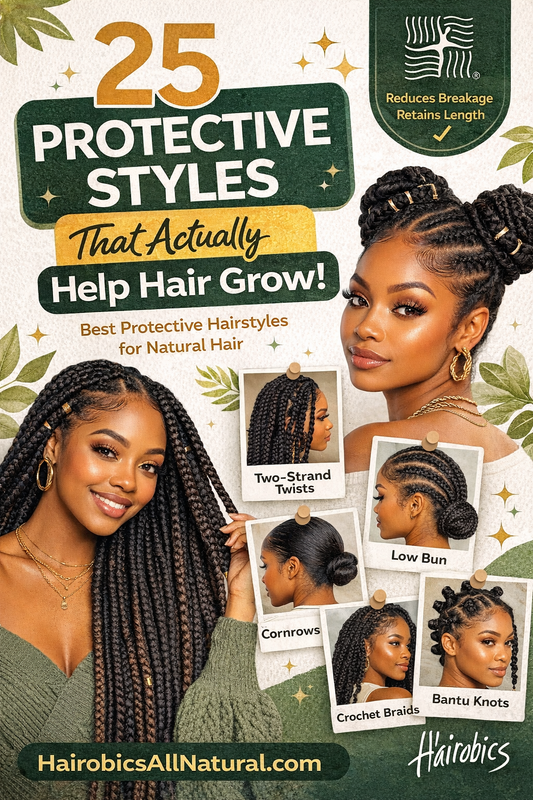
The Science-Backed Guide to Protective Hairstyles for Natural Hair Growth
Protective styles have been a cornerstone of Black hair care for centuries. From traditional African braiding techniques to modern low-manipulation styles, protective hairstyles can help reduce breakage, retain length, and promote healthier hair growth.
But here’s the truth many people overlook:
Not every protective style actually protects your hair.
Some styles cause tension, scalp stress, and breakage — which can slow growth or even lead to hair loss.
In this complete guide, we’ll cover:
• The science behind protective styles
• 25 protective hairstyles that actually support hair growth
• How to wear protective styles without damaging your edges
• How long to keep protective styles in
• How to maintain your hair while protective styling
If your goal is longer, thicker, healthier natural hair, this guide will show you the styles that actually help you get there.
What Is a Protective Style?
A protective style is a hairstyle designed to minimize:
• Daily manipulation
• Breakage
• Environmental damage
• Friction
• Tangling
Protective styles work by tucking away the ends of the hair, which are the oldest and most fragile part of the strand.
When done correctly, protective styling allows your hair to:
• Retain moisture
• Reduce breakage
• Grow without interruption
But remember:
Hair grows from the scalp — protective styles help you retain the length you grow.
Why Protective Styles Help Hair Grow
Protective styles support hair growth by reducing three major causes of hair breakage.
1. Reduced Manipulation
Combing, brushing, and styling daily can cause mechanical damage.
Protective styles limit handling.
2. Moisture Retention
Natural hair is more prone to dryness.
Protective styles help lock in moisture, which reduces breakage.
3. Reduced Environmental Damage
Wind
Sun exposure
Cold weather
Clothing friction
Protective styles help shield hair from these factors.
The 25 Protective Styles That Actually Help Hair Grow
1. Box Braids
Box braids are one of the most popular protective styles for natural hair.
Benefits:
• Low manipulation
• Versatile styling
• Protects ends
Tips:
• Avoid tight braiding
• Moisturize scalp regularly
2. Knotless Braids
Knotless braids reduce tension on the scalp compared to traditional box braids.
Benefits:
• Less scalp stress
• More natural appearance
• Lower risk of breakage
3. Two-Strand Twists
Two-strand twists are one of the best protective styles for natural hair growth.
Benefits:
• Minimal tension
• Easy installation
• Great for moisture retention
4. Flat Twists
Flat twists are similar to cornrows but gentler.
Benefits:
• Less tension
• Elegant style options
• Ideal for fine natural hair
5. Cornrows
Cornrows are a traditional African protective style.
Benefits:
• Low maintenance
• Long-lasting
• Great base for wigs
6. Goddess Braids
Goddess braids are thicker cornrow-style braids.
Benefits:
• Low manipulation
• Elegant look
• Protective for edges when done loosely
7. Passion Twists
Passion twists combine twists and curly extensions.
Benefits:
• Lightweight
• Protective for natural hair
• Trendy appearance
8. Senegalese Twists
These rope-like twists offer excellent protection.
Benefits:
• Low friction
• Smooth hair surface
• Long-lasting style
9. Marley Twists
Marley twists mimic natural hair texture.
Benefits:
• Natural look
• Lightweight
• Protective for fragile hair
10. Faux Locs
Faux locs provide the look of locs without commitment.
Benefits:
• Long-term style
• Minimal manipulation
• Protective coverage
11. Crochet Braids
Crochet styles reduce installation tension.
Benefits:
• Faster installation
• Less stress on hair
• Versatile styling
12. Halo Braid
A halo braid wraps around the head.
Benefits:
• Elegant style
• Protects ends
• Low daily manipulation
13. Crown Twists
Crown twists keep hair tucked away and protected.
Benefits:
• Great for moisture retention
• Easy to maintain
14. Low Bun
A simple low bun is a powerful protective style.
Benefits:
• Minimal tension
• Quick styling
• Protects ends
15. Braided Bun
Braided buns combine protection and elegance.
Benefits:
• Low manipulation
• Ideal for professional environments
16. Wig Protective Style
Wigs can protect natural hair when used correctly.
Tips:
• Cornrow hair underneath
• Moisturize scalp
17. Headwrap Style
Headwraps can serve as temporary protective styles.
Benefits:
• Reduces environmental damage
• Protects fragile ends
18. Mini Twists
Mini twists can last weeks with proper care.
Benefits:
• Great moisture retention
• Minimal manipulation
19. Twist-Out Base Style
Twist-outs start as protective twists.
Benefits:
• Protects hair during twisting phase
20. Bantu Knots
Bantu knots are both protective and stylish.
Benefits:
• Tucks ends away
• Creates curl definition
21. Pineapple Style
Ideal for protecting curls overnight.
Benefits:
• Prevents friction
• Maintains curl pattern
22. Low Tension Ponytail
Loose ponytails reduce manipulation.
Benefits:
• Easy daily styling
23. Braided Crown Updo
Protects ends and minimizes friction.
24. Loose French Braids
Gentle braids with minimal tension.
25. Silk Press with Protective Maintenance
Even straight styles can be protective if:
• Minimal heat is used
• Hair is wrapped at night
How Long Should You Keep Protective Styles?
General rule:
• Braids: 4–8 weeks
• Twists: 2–6 weeks
• Cornrows: 2–4 weeks
Keeping styles too long can cause:
• Matting
• Breakage
• Product buildup
How to Maintain Hair While Wearing Protective Styles
Protective styles still require proper hair care.
Moisturize Regularly
Use lightweight oils or leave-ins to keep hair hydrated.
Clean Your Scalp
Use diluted shampoo or scalp cleansers.
Protect Hair at Night
Sleep with:
• Satin bonnet
• Silk scarf
• Satin pillowcase
Protective Style Mistakes That Cause Hair Loss
Many people damage their hair while trying to protect it.
Avoid:
• Tight braiding
• Leaving styles in too long
• Skipping scalp care
• Heavy extensions
The Best Hair Care Routine for Protective Styles
To maximize growth while protective styling:
-
Moisturize scalp
-
Massage scalp regularly
-
Clean scalp weekly
-
Protect hair at night
Do Protective Styles Make Hair Grow Faster?
Protective styles do not increase hair growth speed.
However, they increase length retention.
Average hair growth:
0.5 inches per month
With reduced breakage, you retain more of that growth.
How to Choose the Best Protective Style for Your Hair
Consider:
• Hair density
• Hair porosity
• Hair thickness
• Lifestyle
For example:
Low density hair → loose twists
Thick hair → braids or cornrows
The Best Protective Styles for 4C Hair
4C hair thrives with low-manipulation styles.
Best options:
• Two-strand twists
• Box braids
• Cornrows
• Mini twists
Protective Styling for Hair Growth: The Golden Rules
Follow these rules for maximum growth.
-
Avoid tight styles
-
Moisturize regularly
-
Protect hair at night
-
Don't leave styles too long
-
Keep scalp healthy
Final Thoughts
Protective styles can be one of the most powerful tools for growing long, healthy natural hair — when done correctly.
The key is choosing styles that:
• Reduce tension
• Protect the ends
• Maintain moisture
• Support scalp health
When combined with a consistent hair care routine, protective styling can help you retain inches of growth over time.
✔ Reduce breakage
✔ Retain length
✔ Protect fragile ends
✔ Support healthy hair growth
And that’s why protective styles remain a core strategy in natural hair care.